

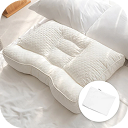
What if your nightly rest is actually the primary cause of your morning neck pain and stuffy nose? Most people wonder how often should you replace pillows only after they notice a visible stain or a flat surface. By then, the structural support has likely been gone for months, leaving your neck in a compromised position for eight hours a night. With 3 in 10 people reporting that pain interrupts their sleep, your choice of bedding is more than a decor decision; it's a medical necessity.
We understand the frustration of waking up feeling more tired than when you went to bed. You deserve a restorative experience that doesn't involve constant sneezing or a stiff cervical spine. You've likely tried to fluff your way out of the problem, but a worn-out pillow can't be revived by a quick shake. It's time to stop guessing and start sleeping better.
This guide provides a clear timeline for replacement based on the latest 2026 health standards. You'll learn exactly how to test your current pillow for hidden collapse and discover which materials, such as premium latex, provide the longest-lasting anatomical support. We'll help you move past the cycle of cheap, yearly replacements toward a cleaner, more supportive sanctuary.
Key Takeaways
- Learn exactly how often should you replace pillows based on your specific material to avoid sleeping on collapsed support.
- Spot the five red flags of an expired pillow, from permanent lumps to recurring morning tension headaches.
- Compare the lifespans of polyester, memory foam, and natural latex to make a smarter, longer-lasting investment in your rest.
- Discover how proper cervical support prevents micro-strains in your neck muscles and protects your spinal health.
- Explore why 100% natural latex offers superior longevity and hygiene compared to traditional synthetic fills.
The General Rule: How Often Should You Replace Pillows?
Most of us hold onto our pillows far longer than we should. We wait for the fabric to yellow or the stuffing to spill out before even considering a change. However, the industry standard for budget pillows is much shorter than you might think: typically 1 to 2 years. This isn't just a marketing tactic. It's a guideline based on the physical limits of materials and the accumulation of microscopic debris. While the history and types of pillows have evolved from ancient stone headrests to modern ergonomic tools, the fundamental need for consistent support remains the same.
Bedding quality directly dictates the speed of material degradation. A cheap polyester fill might lose its loft in six months, while high-quality materials last significantly longer. You need to understand the difference between visible wear and support collapse. Your pillow might look fluffy on the bed, but if it no longer keeps your spine neutral, it has failed its primary job. It's frustrating to realize your "comfortable" pillow is actually causing your morning stiffness. It becomes a health hazard long before it feels flat to the touch.
Why Most Experts Recommend the 1-2 Year Mark
Hygiene is the most invisible reason to swap your bedding. Every night, your body sheds dead skin cells, oils, and sweat. These substances seep through the pillowcase and settle deep into the core. This creates a heavy, damp environment that attracts dust mites. For many, this leads to the stuffy nose or skin breakouts that ruin a fresh morning. Synthetic fibers also lose their "spring" over time. They undergo permanent compression, meaning they can no longer rebound to cradle your neck. Washing can help the surface, but it rarely reaches the deep-fill contaminants that compromise your health.
The Hidden Cost of "Frugal" Sleep Habits
Choosing to keep an old pillow to save a few dollars often backfires. There is a real, hidden cost to "frugal" sleep habits. When your head isn't properly supported, your neck muscles work overtime all night to compensate. This leads to chronic tension and, eventually, expensive physical therapy or chiropractic visits. Poor sleep quality also drains your daily productivity. You can't perform at your best when your brain is foggy from a restless night. There is also an environmental toll. Buying cheap pillows every year creates a cycle of waste. Investing in one high-quality, long-lasting solution is better for your body and the planet. Understanding how often should you replace pillows is the first step toward reclaiming your health.
5 Warning Signs Your Current Pillow Has Expired
Do you wake up feeling like you need a massage before your first cup of coffee? It's a common struggle that many dismiss as a normal part of aging. While experts recommend replacing pillows every one to two years, your body often sends distress signals much sooner. If you are questioning how often should you replace pillows, look for these five definitive warning signs of material failure.
Lumps and sagging are the most obvious indicators of an expired pillow. If you find yourself constantly punching and fluffing the material to get comfortable, the internal structure has collapsed. You can verify this with the "Fold Test." Fold your pillow in half and squeeze out the air. When you let go, a healthy pillow should snap back into its original shape instantly. If it stays folded or limps back slowly, the fibers are dead. This loss of resilience means your head is likely sinking too close to the mattress, creating a painful angle for your spine.
Morning neck stiffness and tension headaches are your body's way of screaming for help. When a pillow loses its ability to cradle your cervical spine, your neck muscles must work all night to keep your head stable. This lead to chronic fatigue and daily discomfort. You should also watch for hygiene red flags. Noticeable yellowing, permanent odors, or a sudden increase in morning allergy symptoms suggest your pillow is no longer a clean environment. If you've noticed these issues, it might be time to upgrade to a premium latex pillow that naturally resists these common failures.
The Physical Support Test: Is Your Neck at Risk?
You can perform a simple "Wall Test" to check your alignment at home. Stand against a wall in your usual sleeping posture and have someone place the pillow behind your head. If your chin tilts toward your chest or up toward the ceiling, your neck is at risk. Check for "hollowing," which is a permanent indentation where your head rests. Another subtle sign of failure is "arm tucking." If you are constantly sliding your arm under the pillow to gain extra height, your pillow has lost the loft required for your frame.
Hygiene Red Flags: Beyond the Pillowcase
A heavy pillow is often a dirty pillow. Over time, the accumulation of dead skin cells and oils can make a pillow significantly heavier than when it was new. Check for "micro-clumping" in synthetic fills. These tiny, hard balls of fiber feel like grit through the fabric. This happens when moisture and oils bond the fibers together, creating a perfect environment for dust mite colonization. Understanding how often should you replace pillows involves recognizing that hygiene and support are two sides of the same coin.
Material Matters: Lifespan by Pillow Type
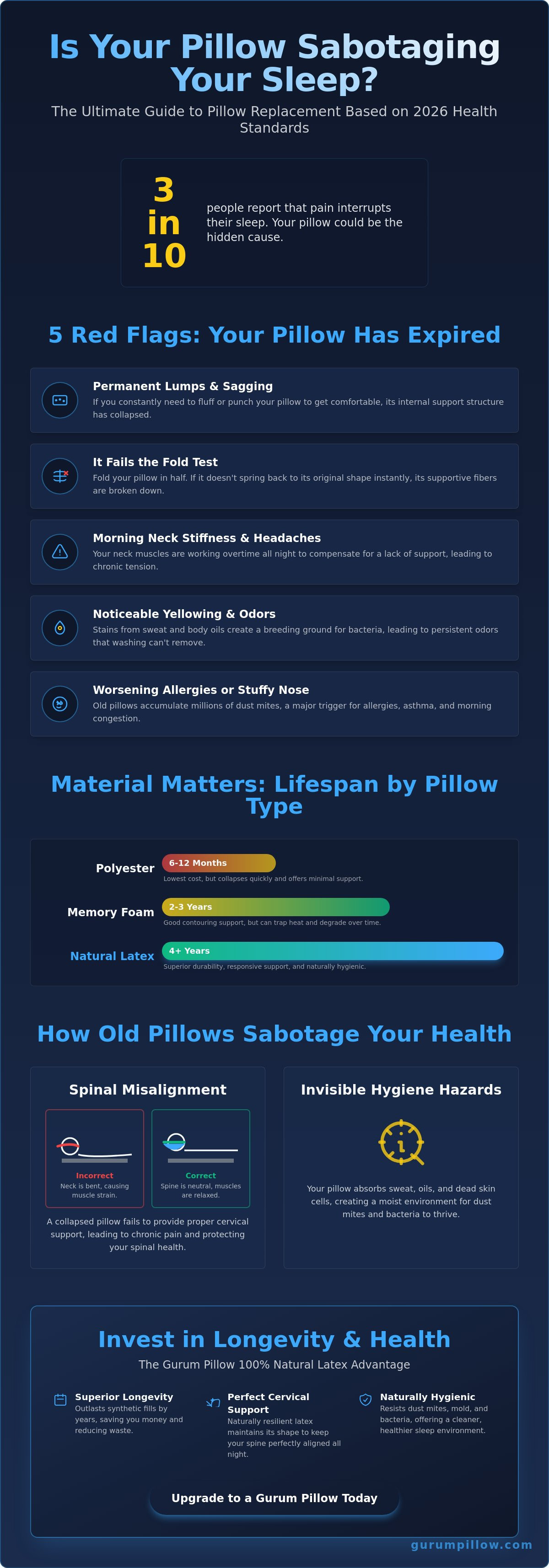
Determining how often should you replace pillows depends entirely on what's inside the cover. Not all fills are created equal. While general expert recommendations for pillow replacement suggest a two-year cycle, this timeline shifts dramatically based on material quality. Polyester and down alternative pillows are the "fast fashion" of the bedding world. They're affordable but have the shortest lifespan, often failing within 6 to 12 months. Once the synthetic fibers clump, the support is gone forever.
Memory foam offers a mid-range durability of 2 to 3 years. It's popular for its contouring, but it's prone to heat-related softening. Natural down and feather pillows can last 5 years or more, provided you're willing to invest in professional cleaning. However, natural latex is the undisputed gold standard for longevity. A high-quality cervical pillow made from 100% natural latex can maintain its resilient support for 5 to 10 years. It's a rare investment that pays for itself through years of consistent spinal alignment.
Synthetic vs. Natural: The Durability Gap
The difference lies in the molecular level. Synthetic fibers are like tiny plastic springs. Every time you lay your head down, you apply pressure that eventually causes these fibers to plateau. They lose their "loft" and ability to rebound. In contrast, natural latex has an open-cell structure. It's inherently bouncy and resists permanent compression. Moisture also plays a role. Synthetic foams trap sweat and humidity, which accelerates material rot. Breathable natural materials allow air to circulate, keeping the core dry and structurally sound for years longer than their synthetic counterparts.
Why Memory Foam Fails Faster Than You Think
Memory foam is designed to react to heat and pressure. This is its greatest strength and its fatal flaw. Over time, that "memory" effect becomes a permanent indentation. You'll find yourself trapped in a "valley" that no longer provides the necessary lift for your neck. Constant exposure to body heat causes the foam to lose its structural integrity. There's also the issue of chemical off-gassing. As volatile organic compounds break down, the foam becomes brittle and less supportive. If you've ever noticed a lingering chemical smell or a yellowing core, your foam is likely decomposing. Understanding how often should you replace pillows means recognizing when these chemical bonds have finally reached their limit.
How Old Pillows Sabotage Your Health and Spinal Alignment
Your old pillow is doing more than just feeling flat. It is actively working against your body's natural alignment. When the internal structure of a pillow collapses, it fails to fill the gap between your head and the mattress. This leads to an unnatural spinal curvature that strains your vertebrae for hours every night. If you've been wondering how often should you replace pillows, the answer is often found in the quality of your posture. A degraded cervical pillow can't maintain the neutral position your body requires for healing. Instead, it forces your neck into awkward angles. These micro-strains in the neck muscles accumulate into chronic daily pain that follows you into your afternoon.
Poor head positioning also has systemic effects on your breathing. When your head sinks too low or tilts back too far, your airways can become partially obstructed. This often exacerbates snoring and can worsen sleep apnea symptoms. You aren't just losing sleep; you're losing oxygen. Replacing an expired pillow is a simple, effective intervention for these complex health issues. It's about more than comfort. It's about ensuring your body can function at its peak while you rest.
The Impact on Cervical Health and Chronic Pain
Many people suffer from "Military Neck," a condition where the natural curve of the cervical spine is lost. Poor support during sleep prevents the spine from recovering its healthy shape. When your pillow collapses, your shoulders are forced to take the weight of your head. This tension radiates through your upper back. This is why many people wake up with "knots" that never seem to go away. You can find more specific advice on choosing the best latex pillow for neck pain to help reverse these effects and restore your natural alignment. Your body shouldn't have to fight your bedding for a neutral position.
Allergies, Dust Mites, and Skin Irritation
Hygiene is just as critical as support. Old pillows harbor millions of microscopic triggers. Dust mites thrive in traditional fills, feeding on the dead skin cells that collect over time. This leads to nighttime respiratory distress. You might wake up with a stuffy nose or a scratchy throat and assume it's a seasonal cold. In reality, it's your pillow. Then there is "pillow acne." Bacteria and oils trapped in old foam transfer back to your skin, causing breakouts that won't go away. Switching to inherently hypoallergenic materials, like those found in a Premium Latex Pillow, creates a cleaner, safer environment for your face and lungs. It's a simple change that delivers immediate relief for your skin and your spirit.
Investing in Longevity: The Gurum Latex Advantage
Breaking the cycle of yearly pillow shopping is a relief for your wallet and your neck. While we've discussed how often should you replace pillows in the context of budget fills, choosing a superior material changes the timeline entirely. Gurum's 100% natural latex is engineered to outlast traditional foams by several years. It doesn't rely on chemical additives for its structure. Instead, it uses the inherent resilience of botanical latex to provide a surface that stays supportive night after night. You won't find yourself waking up at 3:00 AM to punch your pillow back into a usable shape. It simply works.
The secret lies in the breathable, open-cell structure. Traditional pillows trap moisture and body heat, which accelerates the breakdown of the internal fibers. Our latex design allows constant airflow. This prevents the humid environment that leads to material rot and hygiene issues. By maintaining a dry, cool core, the pillow preserves its anatomical integrity far longer than synthetic alternatives. It's a professional-grade tool for your home that prioritizes your long-term wellness over a quick, cheap fix.
The Gurum Difference: 100% Natural Latex Support
Our ergonomic shape is designed to provide consistent best pillow for side sleepers alignment. It cradles the head while firmly supporting the cervical spine. This resilience is backed by rigorous standards. High-quality natural latex is often tested for up to 100,000 compressions to ensure it doesn't lose its height or "bounce back" ability. This makes our pillows a "one-and-done" investment for your health. You can finally stop worrying about how often should you replace pillows and start focusing on the quality of your rest. Our Premium Latex Pillow is built to be the last one you'll need for a decade.
Sustainable Sleep: Reducing Waste with Durable Materials
There is a significant environmental cost to "disposable" bedding. Most polyester pillows end up in landfills every 12 to 18 months because they simply stop working. This creates a massive amount of non-biodegradable waste. Choosing a pillow with a 5 to 10 year lifespan drastically reduces your carbon footprint. It's a more sustainable way to sleep. Before you settle for another temporary solution, use this final checklist to see if it's time to upgrade:
- Does your current pillow require constant fluffing to stay high?
- Are you waking up with recurring neck tension or "weight" in your shoulders?
- Has your pillow lost its original snap during the fold test?
- Do you want a hypoallergenic solution that stays clean for years?
If you answered yes to any of these, your current sleep setup is likely expired. Upgrading to a durable, natural solution is the kindest thing you can do for your body and the environment. It's time to invest in a rest that lasts.
Reclaim Your Rest with Lasting Support
Your sleep environment is the foundation of your daily wellness. We've explored the hidden dangers of expired bedding and the science behind support collapse. Understanding how often should you replace pillows is only half the battle. The real transformation happens when you choose materials that prioritize your anatomical health over a quick fix. By moving away from synthetic fills that plateau within months, you protect your cervical spine and your respiratory health.
You don't have to settle for another year of morning stiffness or stuffy noses. An investment in high-quality materials is an investment in your future self. Designed by Ji H. Won for chronic pain relief, our 100% Natural Latex pillows offer the resilient bounce your body craves. It's time to stop guessing and start healing. Rest is a necessity, not a luxury.
Stop the cycle of yearly replacements; upgrade to a Gurum Premium Latex Pillow today. We offer free shipping within the USA to help you start your journey toward pain-free mornings. You deserve to wake up feeling refreshed, empowered, and ready for the day ahead.
Frequently Asked Questions
Can I wash my pillow to make it last longer?
Washing can improve hygiene but won't restore the internal support of a degraded pillow. While it removes surface oils, it can actually accelerate the clumping of synthetic fibers. If you are wondering how often should you replace pillows, remember that cleanliness doesn't equal structural integrity. A clean, flat pillow still fails to protect your neck. Focus on material quality rather than just frequent washing cycles.
What happens if I don't replace my pillow for 5 years?
Keeping a standard pillow for five years often leads to chronic cervical misalignment and significant allergen buildup. Most budget pillows lose their ability to support your head within 24 months. By year five, you are sleeping on a surface that has likely doubled in weight due to dead skin and dust mites. Knowing how often should you replace pillows is vital to avoiding this long term neglect.
Do latex pillows really last 10 years?
High-quality 100% natural latex pillows are designed to maintain their shape and resilience for up to 10 years. Unlike memory foam, which softens with heat, natural latex has an open-cell structure that resists permanent indentations. This longevity makes it a superior investment for your health. You'll enjoy the same level of anatomical support on night 3,000 as you did on night one without the need for constant replacements.
Is it better to have a firm or soft pillow for neck pain?
A medium-firm pillow that provides consistent cervical support is generally superior for relieving neck pain. A pillow that is too soft allows the head to sink, while one that is too firm can create pressure points. The goal is neutral spinal alignment. Look for ergonomic designs that cradle the head while firmly supporting the natural curve of your neck to prevent muscle strain throughout the night.
How do I know if my pillow is the cause of my morning headaches?
Morning headaches that dissipate within an hour of waking are a classic sign of poor overnight spinal alignment. If your pillow is too flat or too high, it strains the suboccipital muscles at the base of your skull. This tension often manifests as a dull ache across your forehead or behind your eyes. If you find relief once you start moving, your pillow is likely the culprit.
Can an old pillow cause skin breakouts and acne?
Old pillows trap oils, sweat, and bacteria that can lead to persistent skin irritation and "pillow acne." As materials break down, they become more porous and hold onto contaminants that transfer back to your face. This creates a cycle of breakouts that topical treatments can't fix. Switching to a hypoallergenic surface or a fresh pillow often clears the skin remarkably fast by providing a sanitary resting place.
What is the fold test for pillows?
The fold test is a simple diagnostic tool where you fold your pillow in half to see if it snaps back to its original shape. If the pillow stays folded or moves slowly, the internal fibers have collapsed. This failure indicates that the material can no longer support the weight of your head. It is a quick, reliable way to determine if your current bedding has finally reached its expiration date.
Does a pillow protector extend the life of my pillow?
Using an Anti-Allergy Pillow Cover significantly extends your pillow's life by preventing sweat and oils from reaching the core. These barriers block dust mites and moisture, which are the primary causes of material degradation. While a protector won't stop structural collapse, it keeps the environment sanitary and fresh. It is an essential layer for maintaining both hygiene and comfort over several years of use.