

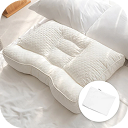
Your pillow is a structural bridge for your cervical spine, not just a soft place to rest your head. Finding the best pillow for side sleepers is a game of physics that 69% of U.S. adults are currently losing every night. You likely know the frustration of waking up with a sharp "crick" in your neck or shoulder numbness from a pillow that bottomed out by midnight. It's exhausting to feel like you're constantly fighting your bedding just to get comfortable.
We understand the struggle of searching for relief and feeling let down by products that don't deliver. We promise that once you learn how to perfectly fill your shoulder gap, you can finally wake up without neck pain. This guide explains how to achieve neutral spinal alignment using materials that stay supportive and comfortable, not rock-hard. You're about to discover how the right loft and breathability can end the tossing and turning for good and help you maintain your alignment all night long.
Key Takeaways
- Master the simple technique to measure your shoulder width and calculate the exact loft needed to bridge your unique shoulder gap.
- Compare the "sinking" heat of foam against the breathable, buoyant lift of natural latex for lasting orthopedic support.
- Find the best pillow for side sleepers by selecting an ergonomic contour that mirrors your body's natural shape rather than a traditional flat design.
- Adjust your pillow choice based on your mattress "sinkage" to ensure your spine remains neutral and your shoulders stay pressure-free.
- See how 100% natural latex provides the responsive height necessary to prevent your head from bottoming out during the night.
Understanding the Side Sleeper’s Shoulder Gap
Side sleeping is a structural challenge for the human body. It creates a significant physical void between your ear and the mattress surface. We call this the "Shoulder Gap." If you don't fill this space correctly, gravity takes over. Your head tilts downward for eight hours straight. This position places immense pressure on your cervical vertebrae. Finding the best pillow for side sleepers isn't about luxury. It's about engineering a structural bridge for your spine.
Throughout the history and types of pillows, designs have shifted from simple headrests to orthopedic tools. Modern side sleepers need "Active Support" to maintain health. Many traditional pillows only offer "Passive Compression." They feel soft at first, but they quickly flatten. Your head eventually hits the mattress. This is known as "bottoming out." A proper solution provides a buoyant lift that stays consistent. It maintains its height until the sun comes up.
The Physics of Spinal Alignment
Your spine should look like a straight line from your nose to your tailbone. When a pillow collapses, your neck enters a lateral bend. This stretch strains the muscles on one side while compressing the nerves on the other. This mechanical failure is why many people wake up with chronic morning headaches. Proper alignment requires a pillow that matches your specific shoulder width. It must be supportive, and comfortable (not rock-hard), to keep the C1 through C7 vertebrae in a neutral position.
Signs Your Current Pillow Is Too Low
Your body tells you when your alignment is failing. Do you wake up with your arm tucked under your head? You're subconsciously trying to increase the loft because your pillow can't do the job. Do you find yourself "fluffing" the center of the pillow at 3:00 AM? That's a sign of material fatigue. If you're scrunching your shoulders toward your ears, you're compensating for a lack of support. These are clear signals that you haven't found the best pillow for side sleepers yet. Your body is doing the work that your bedding should be doing. You deserve a solution that lets your muscles actually relax.
Latex vs. Memory Foam: Which Material Wins for Side Sleepers?
Side sleeping is a game of millimeters. The best pillow for side sleepers must provide a consistent height that doesn't change as the night goes on. Most people assume memory foam is the peak of comfort, but it's often a "passive" material. It reacts to your weight and heat by giving way. Natural latex is an "active" material. It provides what we call "Responsive Loft." This ensures your head stays elevated in that perfect neutral position from the moment you lie down until you wake up. While some of Good Housekeeping's top-rated pillows include various synthetic blends, natural latex offers a unique buoyant lift that foam simply can't replicate.
The Memory Foam Trap
Memory foam relies on heat to contour. This means the longer you lie on it, the softer it gets. It's a slow-motion collapse of your spinal alignment. For someone with average or broad shoulders, this softening causes the neck to tilt toward the mattress by 3:00 AM. This "bottoming out" effect is a primary cause of shoulder impingement. Durability is another concern. Research shows that synthetic foams often lose 15% to 20% of their structural integrity within the first 24 months. You're also dealing with chemical off-gassing, which can be irritating if you have a sensitive nose or allergies.
Why Natural Latex is the Gold Standard
Natural latex is harvested from rubber trees and is inherently resilient. Its cellular structure acts like thousands of tiny, breathable springs. These cells allow for constant airflow, making latex 4 times more breathable than traditional memory foam. This is vital for side sleepers who have their face pressed directly against the pillow surface. You get a distinct "push-back" factor that is supportive, and comfortable (not rock-hard). It holds its shape for 10 years or more, so you won't find yourself fluffing it in the middle of the night. It's also naturally hypoallergenic, keeping dust mites away from your breathing zone. If you're tired of the "sink and sweat" cycle, switching to a premium natural latex pillow is a life-changing adjustment for your sleep quality.
The difference is felt immediately. When you move, the latex moves with you. There's no "crater" to climb out of when you change positions. You get the orthopedic support your neck requires with the soft, airy feel you crave. It's the ultimate solution for anyone who has felt let down by pillows that go flat after just a few months of use.

The Best Pillows for Side Sleepers in 2026: Top Categories
Finding the best pillow for side sleepers isn't a one size fits all task. Your height, weight, and shoulder width dictate the specific support you need. A pillow that feels like a cloud to a petite sleeper will likely cause a 200 pound person to bottom out by midnight. We categorize the top solutions by firmness levels to ensure the "Shoulder Gap" remains structurally supported. Medium-firm is the gold standard for average builds. Firm is the necessary choice for those with broader frames who require a more substantial pillar of support.
Shape is just as critical as firmness. Traditional "soap bar" pillows are symmetrical and flat. They don't account for the human anatomy. Ergonomic contouring is the modern answer to this design flaw. These pillows feature a raised edge to support the cervical spine and a recessed center for the head. This specialized geometry is also a lifesaver for combination sleepers. It provides the necessary loft for the side but remains comfortable when you roll onto your back. Unlike adjustable-fill pillows that shift and lose their shape during the night, a solid ergonomic core stays consistent.
Hygiene plays a silent but vital role in your sleep quality. Since side sleepers have their nose and mouth inches from the material all night, a clean surface is mandatory. Using an anti-allergy pillow cover prevents dust mites and allergens from settling into the core. It ensures your breathing zone stays clear and your sleep remains uninterrupted by sneezing or congestion. Combining the right shape with a protective barrier is the only way to truly Wake Up Without Neck Pain.
Best for Neck Pain: The Ergonomic Contour
A flat pillow is a compromise that your neck eventually pays for. If you're searching for the pillow for side sleepers with neck pain, a contoured shape is the only logical choice. It provides a dedicated cradle that follows the natural curve of your neck. This allows your head to rest in a neutral position rather than being pushed upward or falling downward. It eliminates the muscle tension that leads to chronic stiffness and ensures your upper vertebrae stay aligned while you rest.
Best for Broad Shoulders: High-Loft Firmness
Broad shoulders create a deep void between the ear and the mattress. If your pillow is too soft, your shoulder will collapse under your weight. This often leads to numbness or tingling in the arms. You need a high-loft, firm support system that won't buckle. When learning how to choose the best ergonomic pillow for side sleepers, frame size should be your first consideration. A substantial lift ensures your shoulder isn't bearing the full weight of your torso, allowing your muscles to finally relax.
How to Find Your Perfect Pillow Loft and Firmness
Stop guessing which loft you need. Finding the best pillow for side sleepers is a measurement-driven process, not a trial-and-error experiment. You can find your ideal height in four simple steps at home. First, grab a ruler and measure the distance from the base of your neck to the outside edge of your shoulder bone, also known as the humerus. If this distance is 13 centimeters, that's your baseline loft. This measurement represents the physical space your pillow must occupy to keep your head from tilting.
Next, account for your mattress. A soft mattress allows your shoulder to sink deeper into the surface, which effectively reduces the shoulder gap. If you sink 4 centimeters into your bed, you should subtract that from your initial measurement. Third, consider your posture. Fetal sleepers who curl their shoulders forward require a slightly different support profile than those who sleep with straight legs. Finally, perform the "Wall Test." Stand sideways against a wall in your sleeping posture. The distance between your ear and the wall is the exact thickness your pillow needs to be to achieve neutral alignment.
The 14-Night Adjustment Period
Your muscles have memory, and they've likely spent years compensating for poor support. When you switch to a cervical pillow, your neck might feel slightly tender for the first few days. This is often "healing soreness" as your vertebrae return to their natural position. Stay consistent for at least 14 nights. If the pain is sharp or causes numbness, the loft is likely wrong. However, a dull ache that fades by mid-morning is a sign your body is finally relearning what it feels like to be aligned.
Testing Firmness at Home
Firmness is about more than just feel. Perform the "Hand Press" test by pushing your palm into the center of the pillow. It should rebound instantly. If it leaves a deep handprint that lingers, it won't provide the active support your neck requires. Check for ear pressure while lying on your side. The material should be supportive, and comfortable (not rock-hard). Ensure your chin isn't tucked toward your chest. If your chin is close to your sternum, the pillow is too high. If your head tilts back, it's too low. You want a clear, open airway for restorative sleep. Ready to end the guesswork? Shop our orthopedic latex collection to find your perfect match today.
Why the Gurum Premium Latex Pillow is the Side Sleeper’s Ultimate Solution
Finding the best pillow for side sleepers often feels like an endless cycle of trial and error. You've likely tried the "as seen on TV" brands and the expensive department store options, only to wake up with the same familiar stiffness. We understand that frustration. The Gurum Premium Latex Pillow was created to end that search by focusing on the specific physics of the shoulder gap. It's not just a soft cushion. It's a structural bridge designed to support your head while protecting your shoulders from the weight of your own body.
Our mission is simple: Wake Up Without Neck Pain. We achieve this through a unique ergonomic curve that mirrors the natural contour of your neck and head. Unlike traditional pillows that are symmetrical, our design acknowledges that side sleepers need more height at the edge and a gentle cradle in the center. We also provide free shipping across the United States to ensure this professional-grade tool is accessible to everyone. When you choose natural latex, you're choosing a material that stays supportive, and comfortable (not rock-hard), for over 3,650 nights of sleep.
Engineered for Alignment
The development of the best latex pillow for neck pain was a labor of clinical insight. Developed by Ji H. Won, this pillow addresses the specific density requirements needed for cervical health. If a pillow is too soft, you bottom out. If it's too firm, your ear feels crushed. We found the precise middle ground. This specialized latex density provides a buoyant lift that remains consistent regardless of room temperature. Our community frequently shares that they "finally stopped waking up sneezing" after making the switch. This is because 100% natural latex is inherently hypoallergenic. It prevents the buildup of dust mites that often thrive in synthetic memory foam or down alternatives.
A Lifetime of Better Sleep
Think of your pillow as an investment in your daily performance. A premium latex pillow offers a superior cost-per-sleep value because it doesn't sag or clump over time. While synthetic pillows usually need replacing every 18 months, our latex core remains effective for a decade. To ensure the longest lifespan, pair your pillow with our Anti-Allergy Pillow Cover. This keeps the core pristine while allowing the open-cell latex to breathe. You deserve to wake up feeling restored, not restricted by lingering aches. Take the final step in your journey to better spinal health. Transform your sleep and wake up refreshed with a solution built for your body's needs. The best pillow for side sleepers is finally within reach.
Take the First Step Toward Restorative Sleep
You now have the tools to bridge your shoulder gap and reclaim your nights. We've explored how proper loft and the buoyant support of natural latex prevent the "bottoming out" that causes chronic neck stiffness. Finding the best pillow for side sleepers is the most effective way to align your spine and allow your muscles to finally relax. It's time to stop settling for pillows that flatten by midnight and start investing in your long-term health.
Our 100% natural latex pillows were designed by experts to solve chronic neck pain with a singular, perfected solution. They provide the breathable, orthopedic support you need to wake up refreshed every day. This material ensures your head stays perfectly aligned while remaining supportive, and comfortable (not rock-hard). With free shipping in the USA and materials built to last a decade, there's no reason to wait for the relief you deserve. Experience the difference of a Gurum Premium Latex Pillow, Shop Now. You're just one night away from the restorative rest you've been searching for. We're here to help you finally Wake Up Without Neck Pain.
Frequently Asked Questions
What is the best pillow loft for a side sleeper?
The ideal loft usually ranges between 10 and 15 centimeters, depending on your shoulder width and mattress firmness. Broad-shouldered sleepers require a higher loft to keep the head from tilting toward the mattress. If your mattress is soft, you'll sink deeper and need a slightly lower loft. Finding the best pillow for side sleepers requires matching this height to your unique "shoulder gap" for neutral alignment.
Can a pillow really fix side sleeper shoulder pain?
Yes, the right pillow prevents your shoulder from collapsing under the weight of your torso. When a pillow is too low, the shoulder bears the brunt of your body weight, leading to numbness and impingement. A supportive pillow acts as a structural bridge. It carries the weight of your head so your shoulder can rest without being crushed against the mattress surface all night.
Is a firm or soft pillow better for side sleepers?
A medium-firm pillow is the superior choice because it provides the necessary resistance to maintain its height. Soft pillows often feel comfortable initially but bottom out within minutes, leaving your neck unsupported. You need a material that is supportive, and comfortable (not rock-hard), to ensure your spine doesn't bend laterally. Firmness ensures the loft stays consistent while you move in your sleep.
How often should side sleepers replace their pillows?
Natural latex pillows typically last 10 years, whereas polyester or low-density foam options often fail within 18 to 24 months. You should replace your pillow as soon as it loses its original loft or begins to clump. Side sleepers are particularly sensitive to material fatigue. Even a loss of 2 centimeters in height can lead to significant morning neck stiffness and poor sleep quality.
Why does my ear hurt when sleeping on my side?
Ear pain often results from high-pressure points caused by pillows that are too stiff or lack proper contouring. This can lead to conditions like chondrodermatitis nodularis helicis (CNH) or simple soreness. A responsive, open-cell material like natural latex distributes weight more evenly than rigid foam. Choosing a pillow with a recessed center helps alleviate this pressure while still providing the necessary lift for your neck.
What is the difference between Talalay and Dunlop latex for side sleepers?
Dunlop latex is denser and more supportive, while Talalay latex is generally airier and softer. Most side sleepers benefit from the durable, consistent lift of Dunlop latex to prevent their head from sinking too low. It provides the "Active Support" needed to keep the cervical spine in a straight line. Talalay is often used as a top layer for a plush feel, but it may lack the structural integrity side sleepers require.
Are contoured pillows better than traditional pillows for side sleeping?
Contoured pillows are significantly better because they are engineered to fit the human anatomy. A traditional "soap bar" pillow is flat and forces the neck into an unnatural position. An ergonomic contour provides a raised edge that fills the neck curve and a lower recess for the head. This specialized shape reduces muscle tension and is a primary feature of the best pillow for side sleepers in 2026.
How do I stop my pillow from going flat during the night?
Switching from loose-fill materials like down or shredded foam to a solid-core natural latex pillow is the only permanent solution. Loose fills shift and migrate to the edges of the pillow as you move, creating a flat spot under your head. A solid latex core doesn't clump, shift, or require midnight fluffing. It maintains its structural loft from the moment you lie down until you wake up.