

Your expensive orthopedic pillow is likely the reason you woke up with a tension headache this morning. It's a frustrating cycle. You spend more money on specialized foam, yet you still wake up with that familiar, dull ache in your cervical spine. Research from 2026 shows that 68% of people now buy pillows specifically to stop physical pain, but many are choosing materials that trap heat and sink under pressure. If you're searching for the best pillow for neck and shoulder pain, you need to stop looking for "softness" and start looking for active alignment.
We understand the exhaustion of a night spent flipping your pillow for a cool spot or feeling your shoulder collapse while side sleeping. You deserve a morning where you don't have to crack your neck just to get out of bed. This guide explains why your current setup is failing your spine and how to achieve restorative, uninterrupted rest. We'll explore why 100% natural latex provides the anatomical support memory foam lacks and how the right ergonomic structure can finally end your cycle of chronic stiffness.
You're about to learn the difference between passive sinking and active rebound, along with a curated look at the top-rated solutions for 2026. It's time to reclaim your sleep and wake up refreshed.
Key Takeaways
- Learn how filling the "cervical gap" prevents morning stiffness and why standard pillows fail to support your spine's natural curve.
- Discover why "active rebound" makes natural latex the best pillow for neck and shoulder pain by providing buoyant support that doesn't sag.
- Identify the specific loft requirements for your sleep position to eliminate shoulder collapse and tension headaches.
- Avoid the "cloud trap" by learning why initial softness often leads to 3 AM pain and how to find a pillow that actually holds its shape.
Why Most Pillows Fail the Neck and Shoulder Pain Test
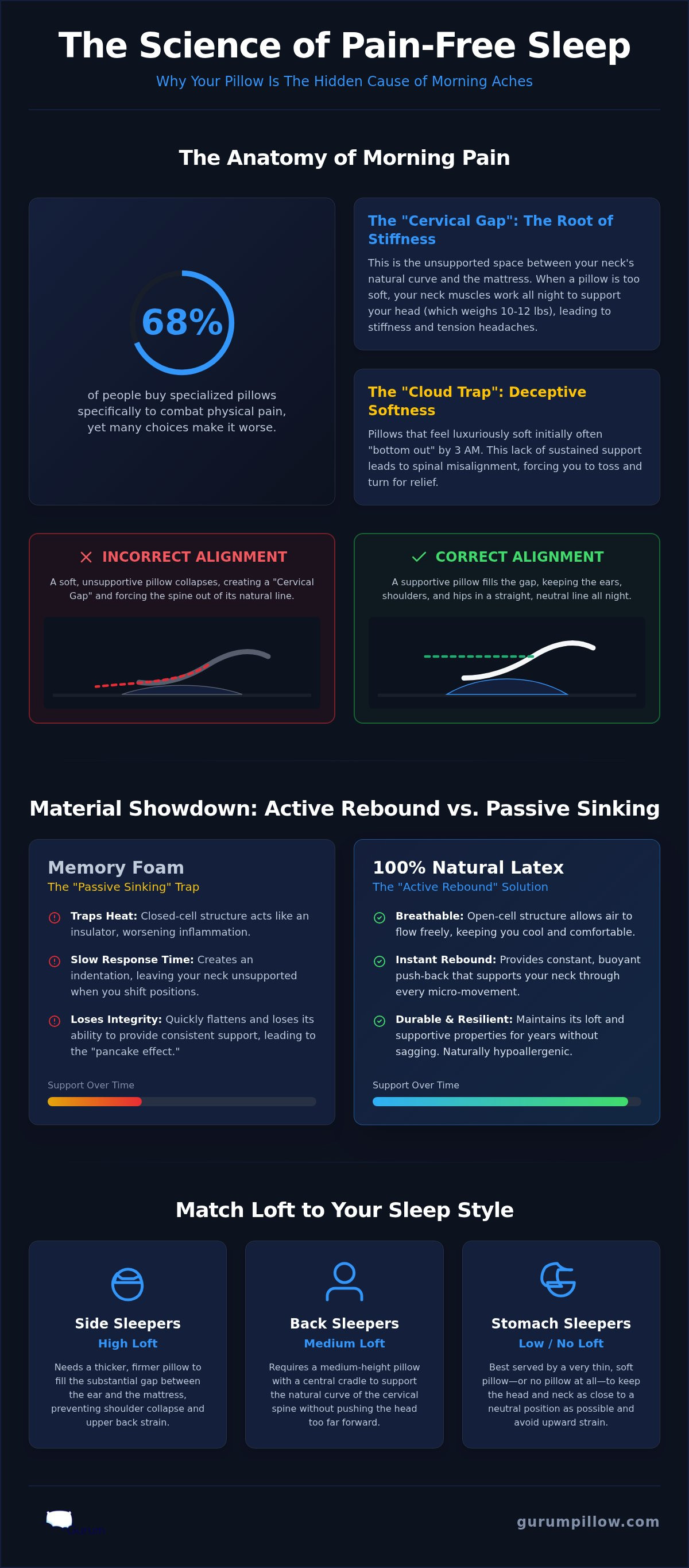
Most pillows are designed for the store shelf, not your spine. They prioritize that initial "squish" factor that feels luxurious for five minutes but fails for eight hours. This is the primary reason your search for the best pillow for neck and shoulder pain often leads to a graveyard of discarded bedding. The fundamental issue is the "Cervical Gap." This is the hollow space between your mattress and the curve of your neck. When a pillow is too soft or lacks structural integrity, it leaves this gap unsupported. Your neck muscles then have to perform a job they weren't meant for: holding up your head while you sleep.
Your head weighs roughly 10 to 12 pounds. Without a resilient material to push back, gravity wins. Most traditional pillows fall into the "Cloud Trap." They offer a soft, sinking sensation that feels like a relief initially. However, by 3 AM, the material has bottomed out. Your spine is now misaligned, and your body is in distress. This lack of support forces your internal systems to compensate, leading to a restless night of tossing and turning.
The Anatomy of Morning Stiffness
When your neck isn't supported, your levator scapulae and trapezius muscles stay "on" all night. They are essentially pulling a double shift to prevent your head from tilting into an unnatural angle. This constant contraction limits blood flow and causes the stiffness you feel at dawn. Often, this muscular strain radiates upward, triggering debilitating tension headaches before you've even had coffee. Spinal neutrality in sleep means your ears, shoulders, and hips remain in a straight, effortless line throughout the night. Achieving this requires more than just a soft surface; it requires a functional Orthopedic pillow designed for anatomical correction.
Shoulder Collapse: The Hidden Cause of Discomfort
Side sleepers face a unique challenge: the shoulder. If your pillow is too thin or loses its loft, your shoulder must bear the full weight of your torso. This leads to joint compression and a pins-and-needles sensation. The "hollow space" between your ear and the mattress is larger when you're on your side. If your pillow doesn't fill this void, your head drops toward the mattress. This forces your top shoulder to rotate forward and inward, straining the rotator cuff and the upper back. Finding the best pillow for neck and shoulder pain means finding a height that keeps your shoulder stacked and your neck elongated, rather than crushed.
Latex vs. Memory Foam: The Science of Active Rebound
Most sleepers believe memory foam is the gold standard for comfort. It feels soft. It contours. It remembers. But for those with chronic stiffness, memory foam is often a "passive sinking" material that traps the spine. It relies on your body heat to soften and mold. This creates a permanent indentation that makes it difficult to change positions without waking up. In contrast, 100% natural latex offers "active buoyancy." Instead of letting your head sink until it hits the mattress, latex pushes back. Finding the best pillow for neck and shoulder pain requires this immediate response to pressure, ensuring your vertebrae stay lifted rather than buried.
Durability is another critical factor where these materials diverge. Synthetic foams often lose their structural integrity within months, leading to the "pancake effect." Natural latex maintains its loft and resilience for years. It's also naturally hypoallergenic. It resists dust mites and mold without the need for harsh chemical fire retardants. This makes it a cleaner, more reliable choice for sensitive sleepers who need consistent support every single night.
Why Your Spine Needs Constant Rebound
Your neck doesn't stay still all night. Micro-movements are a natural part of sleep. When you use memory foam, the material takes several seconds to "reset" its shape. During that delay, your neck is left unsupported. Latex adjusts instantly. It provides constant "push-back" support for the cervical vertebrae, regardless of how many times you shift. A systematic review and meta-analysis on pillow designs confirms that specific pillow shapes and heights are vital for reducing pain. High-rebound materials ensure that these ergonomic shapes actually stay functional throughout the night, rather than flattening under the weight of your head.
Thermal Regulation and Sleep Quality
Heat is the enemy of muscle relaxation. Synthetic memory foam is a closed-cell material. It acts like an insulator, trapping your body heat and potentially exacerbating inflammation in sore joints. Natural latex features an open-cell structure. It's essentially thousands of tiny air vents that allow for constant breathability. This thermal regulation is essential for deep sleep. When your head stays cool, your heart rate remains steady and your muscles can fully recover from the day's strain. Switching to a Premium Latex Pillow can provide the temperature-neutral, high-rebound support your spine has been missing.
Choosing the Best Pillow for Your Sleep Position
Your sleep position determines exactly where the pressure hits. It's the blueprint for your recovery. If you're using a pillow designed for a back sleeper while you lay on your side, you're inviting chronic misalignment. The best pillow for neck and shoulder pain isn't a universal shape. It's a calculated response to how your body interacts with the mattress. Understanding these mechanics is the first step toward waking up without that familiar, heavy tension in your upper back and neck.
The Side Sleeper's Guide to Shoulder Relief
Side sleepers face the most complex challenge. You must fill the wide gap between your ear and the edge of your shoulder. If the loft is too low, your head tilts down. This causes your shoulder to roll forward and collapse. To find your ideal height, measure from the base of your neck to the outside of your humerus bone. This measurement is your loft requirement. Using the best pillow for side sleepers framework ensures that your shoulder stays stacked. It prevents the joint compression that leads to morning numbness. A high-resilience material like the best latex pillow for neck pain maintains this height all night, keeping your ear perfectly aligned with your hip.
Back Sleeping and Cervical Support
Back sleepers need a different strategy. The goal here is to maintain the natural "C" curve of the cervical spine. Many people use pillows that are far too high. This creates a "chin-to-chest" tilt that strains the posterior neck muscles and can even restrict airways. You need a responsive center that allows your skull to settle while the lower edge supports the neck. If your pillow is a flat block, your neck is left hanging in mid-air. Our cervical pillow guide explains how specific ergonomic contours can bridge this gap. This support allows the trapezius muscles to finally go slack, ending the cycle of tension headaches.
Stomach sleeping is the most taxing position for your anatomy. It forces your head to turn 90 degrees, placing immense torque on the neck joints for hours. If you can't break the habit, you need an extremely low-profile pillow. Anything higher than two inches will overextend your spine. The best pillow for neck and shoulder pain for a stomach sleeper is often no pillow at all, or a very thin, breathable latex layer that prevents facial heat buildup while keeping the spine as flat as possible. By matching your pillow to your posture, you stop fighting your own body every night.
Loft, Firmness, and Longevity: What to Look For
Selecting the best pillow for neck and shoulder pain requires a clear understanding of two often-confused terms: loft and firmness. Loft refers to the uncompressed height of the pillow. Firmness describes how much resistance the material provides under weight. A high-loft pillow isn't necessarily firm, and a firm pillow can be quite thin. For true pain relief, you need a balance that prevents your head from "bottoming out." You can test this at home by placing your head on your pillow and checking if your neck remains parallel to the mattress. If the material compresses until your ear feels the hard surface beneath, it's failing to protect your spine.
One size never fits all in ergonomic bedding. A petite back sleeper requires significantly less loft than a broad-shouldered side sleeper. This is why 100% natural latex is superior to blended versions. Natural latex maintains its specific density and structural integrity for years, whereas blended foams often contain synthetic fillers that off-gas chemicals and break down within months. Choosing natural materials isn't just an environmental choice; it's a health necessity for those who want to avoid breathing in volatile organic compounds while they rest.
Investing in Long-Term Spinal Health
Think about your pillow in terms of cost-per-night. A cheap polyester or shredded foam pillow might cost less upfront, but these materials typically lose their shape after just three months. This leads to poor sleep, reduced focus, and recurring neck stiffness. Investing in the best latex pillow is a commitment to your long-term productivity. You'll know it's time to replace your current setup if you wake up needing to "crack" your neck or if the pillow no longer returns to its original shape after you get out of bed.
Anti-Allergy and Maintenance Tips
Dust mites thrive in the warm, humid environment of traditional pillows, which can exacerbate inflammation and respiratory issues. They can't survive in the naturally dense, open-cell structure of 100% natural latex. To keep your sleep environment pristine, follow these simple steps:
- Use a specialized Anti-Allergy Pillow Cover to create a barrier against moisture and skin cells.
- Spot clean the latex only when necessary; never submerge it in water.
- Air out your pillow in a shaded, well-ventilated area once a month to maintain its fresh, neutral scent.
By prioritizing high-quality materials and proper maintenance, you ensure that your ergonomic support remains effective for years rather than weeks. It's the most direct path to consistent, pain-free mornings.
The Gurum Difference: Engineered for Pain-Free Rest
Finding the best pillow for neck and shoulder pain isn't just a retail choice; it's about ending a personal struggle. For our founder, Ji H. Won, this wasn't an abstract business goal. It was a necessity born from years of chronic cervical pain and the frustration of finding only temporary relief. Most market solutions prioritize mass production over anatomical precision. Gurum was created to fill that gap. By focusing on 100% natural latex with a specific, calibrated density, we've developed a professional-grade tool for home wellness. It doesn't just feel good for a minute; it supports you for a lifetime.
Our commitment to quality means we never use blended foams or synthetic fillers. We rely on the breathable, open-cell structure of pure latex to regulate temperature and provide "active rebound." This is the same science we've packed into our Travel Latex Pillow. Pain shouldn't be a souvenir of your trips. By taking your spinal support on the road, you ensure that your recovery continues whether you're in a hotel or at home. You deserve consistency, regardless of your zip code.
Designed by Sufferers, for Sufferers
Personal experience informed every curve of our design. We didn't just guess where the neck needs support; we lived the frustration of pillows that were too high, too thin, or too soft. We chose buoyant support over sinking comfort because we know that a "soft" pillow is often a trap for your vertebrae. Our brand acts as a specialist that understands the intricate science of rest but speaks like a peer who has finally found the answer to a shared struggle. This empathy drives us to create products that prioritize anatomical health over retail trends.
Your Journey to Better Sleep Starts Tonight
If you've spent years on memory foam or polyester, your body might need a moment to recalibrate. It's normal to experience a 3-5 day adjustment period when you switch to our specific latex density. Your muscles are finally learning how to relax while the pillow handles the heavy lifting. There's a profound psychological relief that comes with knowing your spine is protected. You can stop the constant pillow-flipping. You can stop waking up to tension headaches. It's time to experience the deep, restorative sleep you've been missing. Invest in your health with the Premium Latex Pillow and reclaim your mornings today.
Reclaim Your Mornings with Targeted Support
Restorative sleep is within your reach. You've learned that true relief comes from filling the cervical gap and choosing materials that provide active rebound rather than passive sinking. By matching your pillow's loft to your specific sleep position, you can finally eliminate the shoulder collapse and tension headaches that have defined your mornings. You no longer have to settle for a surface that fails your spine by 3 AM.
Finding the best pillow for neck and shoulder pain is about more than just comfort. It's an investment in your long-term physical health and daily productivity. Our 100% natural, eco-friendly latex is designed by ergonomic specialists to ensure your spine remains in neutral alignment all night long. This professional-grade support means you won't wake up needing to crack your neck or shake off morning stiffness.
Experience the buoyant support of the Gurum Premium Latex Pillow today and enjoy free shipping on qualifying US orders. You deserve to wake up feeling refreshed, capable, and entirely pain-free. Your journey to better rest starts with one simple, specialized choice. We're here to help you finally find the relief you've been searching for.
Frequently Asked Questions
Is a firm or soft pillow better for neck and shoulder pain?
A medium-firm pillow is generally superior for managing chronic discomfort. It offers the necessary resistance to keep your spine aligned while providing enough surface give for comfort. Extremely soft pillows often fail because they allow the head to sink too far, which creates an unsupported gap. You need a material that maintains its structural integrity under the weight of your head all night long.
Can a pillow really fix chronic shoulder pain for side sleepers?
The right pillow can significantly reduce shoulder pain by preventing joint compression. For side sleepers, the goal is to keep the weight of your torso off your shoulder joint. By providing enough loft to fill the space between your ear and the mattress, a high-quality pillow stops the shoulder from rolling forward. This alignment is why many consider a buoyant latex model the best pillow for neck and shoulder pain.
How do I know if my pillow loft is too high or too low?
You can identify loft issues by checking your neck's alignment while lying down. If your chin is tilted toward your chest, the loft is too high. If your head tilts down toward the mattress, it is too low. Your neck should remain perfectly parallel to the bed. A neutral spine is the only way to ensure your muscles fully relax during the sleep cycle.
Why does my neck hurt more when I use a memory foam pillow?
Memory foam often causes pain because it is a passive material that relies on body heat to soften. This means it provides less support as the night goes on and you sink into a fixed position. This lack of active rebound forces your neck muscles to work overtime to maintain stability. It often leads to the familiar morning stiffness many sleepers struggle to escape.
What is the best pillow material for people with allergies and neck pain?
100% natural latex is the premier choice for allergy sufferers seeking orthopedic support. It is inherently resistant to dust mites, mold, and mildew without the use of harsh chemicals. Because it doesn't trap skin cells or moisture like traditional fibers, it stays cleaner for longer. This material combines a hypoallergenic environment with the structural integrity needed to soothe chronic physical tension.
How long does a natural latex pillow typically last compared to other types?
Natural latex pillows are exceptionally durable, typically lasting between five and ten years. In contrast, polyester and memory foam options usually lose their supportive loft within one to two years. While the initial investment is higher, the cost-per-night is significantly lower. You won't have to worry about your pillow flattening or developing permanent dips after just a few months of use.
Is it worth buying a travel pillow if I have chronic neck issues?
Investing in a Travel Latex Pillow is essential if you struggle with chronic stiffness. Hotel pillows are notoriously inconsistent and often lack the density required for cervical support. Bringing your own ergonomic tool ensures that your spine remains protected regardless of your location. It prevents a single night of poor sleep from triggering a multi-day flare-up of neck or shoulder tension.
Does the Gurum Premium Latex Pillow come with a washable cover?
Yes, our Premium Latex Pillow includes a high-quality cover that is easy to maintain. We understand that hygiene is a vital part of sleep quality. You can easily remove the cover for regular washing to keep your sleep surface fresh. For even greater protection against environmental sensitivities, we recommend pairing it with our specialized Anti-Allergy Pillow Cover.