
You finally invested in a premium ergonomic pillow, but now you're waking up at 3 AM to flip it over because the "protective" cover feels like sleeping on a plastic bag. It's a frustrating trade-off. You want to shield your bed from yellowing sweat stains and dust mites, yet you shouldn't have to sacrifice a cool, silent surface. When weighing the waterproof vs breathable pillow protector options, it often feels like you're choosing between hygiene and a good night's sleep.
We believe restorative rest requires both a clean environment and physical comfort. You shouldn't have to settle for trapped heat or annoying crinkles just to keep your bedding pristine. This guide explores how modern fabric technology bridges the gap between these two needs. We'll break down the critical differences in membrane construction, the impact of the new June 2026 OEKO-TEX® safety standards, and how to choose a shield that extends your pillow's life while keeping you perfectly cool.
Key Takeaways
- Learn how to navigate the waterproof vs breathable pillow protector choice to protect your investment without compromising on cooling comfort.
- Discover the science of thermoregulation and why airflow is critical for your body to drop its temperature for deeper rest.
- Avoid the "balloon effect" that can turn a supportive ergonomic pillow into a stiff, uncomfortable surface by choosing materials that allow air to escape.
- Identify why laminated membranes are the modern standard for blocking liquids and allergens while remaining completely silent and soft.
- Understand why protecting a latex pillow core is vital for long-term hygiene, especially since premium latex cannot be machine washed.
The Core Conflict: Waterproof vs. Breathable Pillow Protectors
Choosing between a waterproof vs breathable pillow protector often feels like a compromise between hygiene and comfort. On one side, you want to keep your pillow core pristine. On the other, you want to avoid waking up in a sweat at 3 AM. It's a common struggle for anyone who has invested in high-quality bedding. Your pillow is a sanctuary for rest, but without a Pillow protector, it quickly becomes a magnet for unwanted guests. Over time, an unprotected pillow can significantly increase in weight. This isn't just fluff; it's the accumulation of dead skin cells, body oils, and sweat. This buildup creates a breeding ground for bacteria and allergens that can disrupt your sleep and your health.
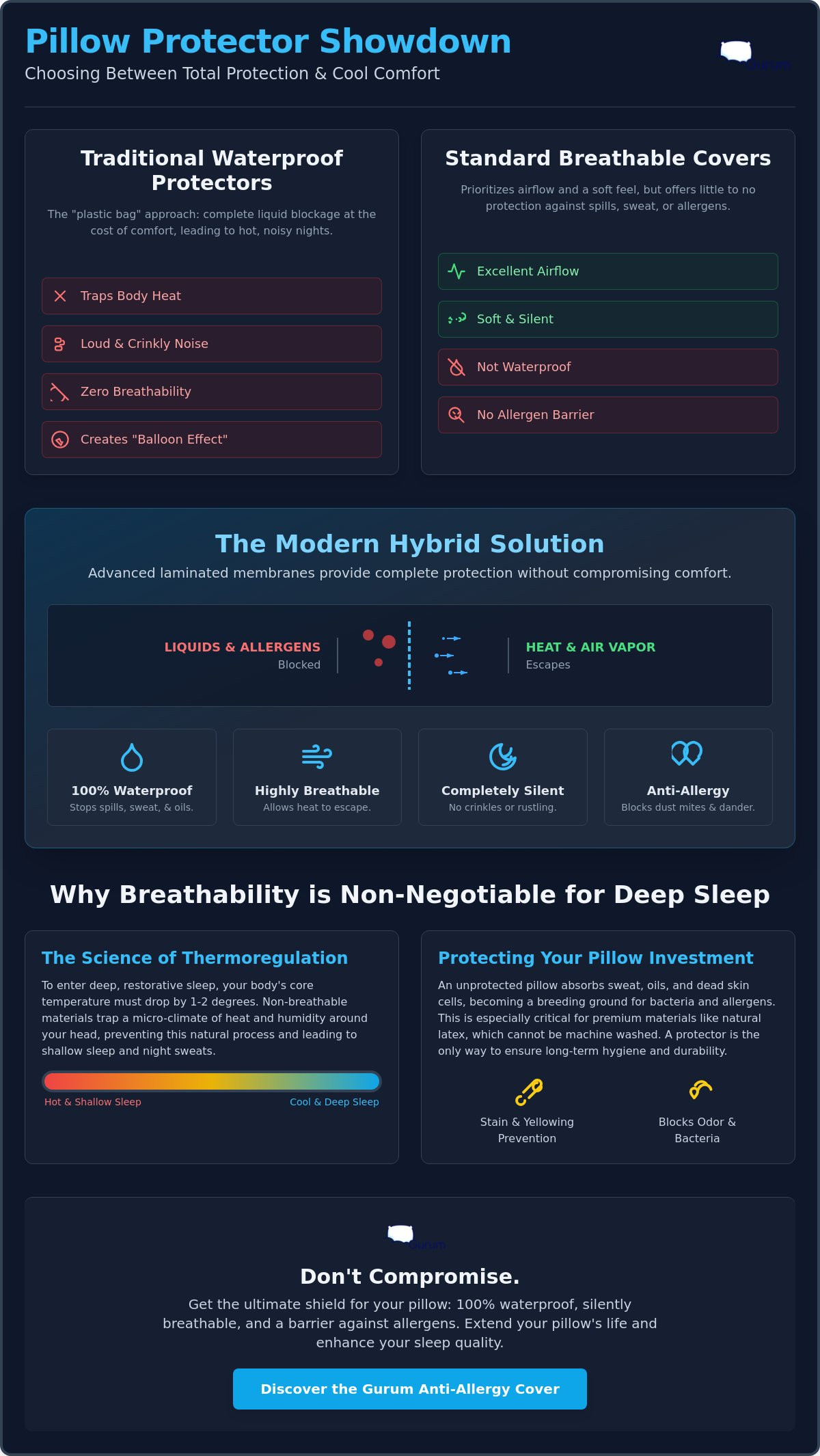
The traditional solution was a thick, plastic-like barrier. These older waterproof covers earned a "plastic bag" stigma for being loud, crinkly, and incredibly hot. They blocked liquids but also trapped every ounce of body heat. Modern sleep science has moved past these rigid materials. The secret lies in vapor permeability. This technology uses microscopic pores that are too small for liquid molecules to pass through but large enough to allow heat and air to escape. It's the hybrid approach that finally ends the debate between staying dry and staying cool.
What is a Waterproof Pillow Protector?
A waterproof protector acts as a definitive liquid barrier. Its primary job is to stop spills, sweat, and oils from reaching the pillow core. You should generally avoid older versions made from vinyl or PVC. These materials are non-porous and contain chemicals that have no place in a healthy sleep environment. A quality waterproof layer is essential for preventing "yellowing" and mold growth. Without it, moisture seeps into the filling, leading to permanent stains and unpleasant odors. The classic trade-off was a lack of airflow, but modern membranes have largely solved this heat-trap issue.
What is a Breathable Pillow Protector?
Breathable protectors prioritize the science of thermoregulation. They usually feature high-thread-count natural fibers like cotton, bamboo, or Tencel. These materials excel at moisture-wicking and facilitating constant airflow. This is a non-negotiable feature for "hot sleepers" who need their body temperature to drop to initiate deep, restorative sleep. The catch is that a standard fabric cover is rarely waterproof. While it might feel soft and airy, it offers zero defense against liquids. For those using our Anti-Allergy Pillow Cover, the goal is to combine this airy feel with a barrier that blocks microscopic triggers like dust mites.
Why Breathability is Non-Negotiable for Quality Sleep
Waking up with a damp face or a hot neck isn't just a minor annoyance. It's a biological signal that your sleep cycle has been compromised. Thermoregulation is the process by which the body maintains its core internal temperature during the transition to sleep. To fall asleep and stay asleep, your body needs to shed about one to two degrees of heat. When you're stuck in the waterproof vs breathable pillow protector debate, you have to consider how much airflow your head actually receives. If your protector acts as a thermal dam, your core temperature stays elevated. This often results in shallow sleep and frequent awakenings.
Creating a comfortable sleep environment requires more than just a soft surface. Non-breathable materials trap a micro-climate of humidity against your skin. This heat buildup can trigger night sweats, forcing your heart rate to stay higher as your body works to cool down. Instead of entering the deep, restorative stages of sleep, you remain in lighter stages, leaving you exhausted the next morning. Finding the right balance in a waterproof vs breathable pillow protector ensures that your hygiene needs don't interfere with your biological need for coolness.
The Moisture-Wicking Factor
It's vital to distinguish between breathability and moisture-wicking. Breathability refers to air movement, while moisture-wicking is the ability of a fabric to pull liquid away from the skin. High-quality materials like those found in our Anti-Allergy Pillow Cover do both. This is especially important for our Premium Latex Pillow. Latex is naturally cooling due to its ventilated structure, but a non-breathable protector will negate those benefits. Without proper wicking, moisture lingers, creating a clammy sensation that is particularly uncomfortable in humid climates.
Silent Sleep: The Noise Problem
Breathability doesn't just affect temperature; it affects the acoustic quality of your rest. Many heavy waterproof layers use stiff membranes that produce a sharp "crinkle" every time you shift. This noise can startle light sleepers out of REM cycles. Breathable protectors are typically bonded with thinner, more flexible layers that move silently. You can test this easily. Gently bunch the fabric in your hand near your ear. If it sounds like paper, it will likely disturb your sleep. A truly silent protector should feel like a natural, soft extension of the pillow itself.
Comparing the Three Main Types of Pillow Protection
Understanding the market helps you avoid wasting money on products that don't fit your sleep style. When you're browsing for a waterproof vs breathable pillow protector, you'll generally find three distinct categories. Each serves a specific purpose. Some prioritize a luxury feel, while others focus on total liquid isolation. Choosing the wrong one can turn a high-end pillow into a source of frustration.
Standard fabric protectors are the most basic option. Usually made from cotton or quilted polyester, they feel like a slightly thicker pillowcase. These are excellent for adding a soft layer and blocking surface dust. However, they offer zero defense against spills or sweat. If you spill a drink or deal with night sweats, the moisture goes straight into the core. These are best for those who don't have allergy concerns or hygiene risks.
On the opposite end are plastic or vinyl encasements. These are high-utility tools often used in medical settings or during bed bug outbreaks. They are 100% waterproof and create a total seal. The downside is the comfort level. They offer no breathability, which makes them incredibly hot. They also produce a loud, crinkling sound with every movement. For the average person looking for a restful night, these are usually a last resort reserved for emergencies.
Laminated membrane protectors are the modern standard. They use a thin layer of Polyurethane (PUL) heat-bonded to a soft face fabric. This membrane is the secret to a successful waterproof vs breathable pillow protector. It uses microscopic pores to block liquid while allowing air molecules to move freely. This technology provides a hygienic barrier without the "plastic bag" feel of older alternatives.
The Hybrid Solution: Breathable Waterproof Membranes
Modern PUL technology relies on micro-pore science. These pores are roughly 0.2 to 10 microns in size. A water droplet is about 100 microns, making it far too large to pass through. However, a water vapor molecule is only 0.0004 microns. This allows your body heat and moisture to escape while keeping the pillow dry. This is the gold standard for natural latex pillows because it protects the core without trapping heat. Just remember to avoid high heat in the dryer, as extreme temperatures can melt or crack these delicate membranes.
Allergy-Focused Encasements
Pore size is also the primary defense against allergens. To block dust mites and their waste, a protector needs a pore size smaller than 10 microns. There is also a difference between a standard cover and a zippered encasement. A cover protects the top and sides, but an encasement zips around the entire pillow. This creates a 360-degree barrier. High-quality anti-allergy pillow covers use this total-seal approach to ensure that nothing enters or leaves the pillow core, providing a secondary health barrier for sensitive sleepers.
How Your Protector Choice Impacts Neck Support and Spinal Alignment
You spend weeks researching the perfect ergonomic pillow to finally end your neck pain. You find the right height, the right density, and the right material. But then, you wrap it in a stiff, non-breathable cover. Suddenly, that expensive support feels like a firm, unyielding brick. This is where the waterproof vs breathable pillow protector choice becomes a vital orthopedic decision. A protector shouldn't just be a shield against stains. It must be a functional extension of your pillow’s design that allows for proper contouring.
If air can't escape through the fabric, it gets trapped inside the core. This creates what sleep experts call the "Balloon Effect." When you lay your head down, the trapped air pushes back against the fabric instead of allowing the pillow to cradle your neck. This pressure makes even the softest pillow feel rigid. It prevents the natural "sink" required for your spine to stay neutral. A protector with 4-way stretch is essential for maintaining the pressure-relieving properties of ergonomic latex.
Surface tension is another hidden enemy of alignment. A tight, non-stretchy protector acts like a bridge across the intended contours of your pillow. Instead of your head resting in the designated sweet spot, it sits on top of a taut layer of fabric. This small lift can be enough to throw your cervical spine out of alignment. If you want to experience the true benefits of your bedding, you can shop our flexible anti-allergy covers to maintain that perfect fit.
Preserving the Feel of Your Premium Latex
Latex is prized for its unique, responsive feel. It pushes back gently to support your weight while remaining incredibly soft. A thick, inflexible shield can dull this sensation entirely, turning a luxury experience into a clinical one. If you've invested in the best latex pillow for neck pain, you need a thin, flexible shield. This balance ensures you protect the material from oils without sacrificing the "squish" factor that makes latex so comfortable.
The Hidden Cause of Morning Neck Stiffness
Morning neck stiffness often starts with an improperly fitted cover. If the protector is too small or too rigid, it forces your head into an awkward angle. This is particularly problematic for cervical pillows designed with specific heights for side and back sleeping. A "one size fits all" approach often fails these specialized shapes. When the fabric doesn't move with the pillow, your muscles stay tense all night trying to find a stable position.
Choosing the Right Shield for Your Gurum Pillow
A premium latex pillow is a long-term investment in your health. Because the natural latex core cannot be machine washed, the right cover is your only line of defense. Without it, moisture and oils eventually degrade the material. When resolving the waterproof vs breathable pillow protector dilemma, we prioritize a hybrid approach. You need the security of a liquid barrier and the cooling comfort of airflow. This ensures your pillow stays hygienic for years without feeling like a clinical medical supply.
Finding the perfect match for your Gurum pillow requires looking for specific technical features. Avoid anything that feels stiff or sounds loud. Instead, look for these four essentials:
- Zippered Encasement: A full seal blocks dust mites and allergens from every angle.
- PUL Membrane: This allows vapor to escape while keeping liquid out.
- Silent Construction: High-quality bonding ensures no crinkling noises when you move.
- 4-Way Stretch: The fabric must move with the latex to maintain proper neck contouring.
If you live in a humid climate or struggle with night sweats, a waterproof-hybrid is the only logical choice. It protects the core from yellowing and mold. For those in very dry environments with zero risk of spills, a "breathable-only" fabric might suffice, but you lose the vital barrier against microscopic allergens. Most sleepers find that a modern hybrid provides the best balance of safety and luxury.
Maintenance Tips for Your Protector
Hygiene doesn't stop at the purchase. You should wash your protector every two weeks to remove surface oils and skin cells. Always follow the "Cold Water Rule." High temperatures can damage the delicate PUL membrane, causing it to crack or peel. Never use bleach, as it breaks down the waterproof layer. For the best results, air dry your protector or use the lowest heat setting on your dryer. This preserves the elasticity and the silent nature of the fabric.
Total Sleep Hygiene Strategy
Maximum comfort comes from layering. Combine your protector with a high-quality cotton or bamboo pillowcase for a soft, moisture-wicking surface. Our Anti-Allergy Pillow Cover is designed specifically to work with the responsive nature of latex. It provides a secondary health barrier that keeps your sleep environment fresh and free from triggers. Don't let a poor cover ruin your restorative rest. Protect your neck support with Gurum’s specialized covers and wake up feeling truly refreshed.
Secure Your Sanctuary for Better Rest
Your sleep environment is the foundation of your daily energy. The debate over a waterproof vs breathable pillow protector ends with the realization that you can actually have both. You don't have to choose between a stained pillow core and a sweaty night. A high-quality hybrid shield keeps your bedding pristine while facilitating the cooling airflow needed for deep REM cycles. It's a simple change that yields transformative results for your physical and emotional well-being.
Protecting your investment ensures your ergonomic support lasts for years. Our covers prioritize 100% Natural Latex Compatibility and remain Hypoallergenic & Dust Mite Resistant. We also offer Free Shipping on Qualifying US Orders to make your transition to better sleep even easier. Shop Gurum Anti-Allergy Pillow Covers for Silent, Breathable Protection. Invest in your comfort today. You've found the answer to a shared struggle; now it's time to enjoy the silent, restorative sleep you've been missing.
Frequently Asked Questions
Do waterproof pillow protectors make you sweat?
Modern waterproof protectors do not necessarily make you sweat if they use vapor-permeable technology. Older vinyl versions trapped heat, but current hybrid membranes allow microscopic heat molecules to escape while blocking liquid. This maintains a cool temperature against your skin. Choosing a protector with a natural fiber face, like bamboo or cotton, further helps by wicking away moisture before it can cause discomfort.
How often should I wash my pillow protector?
You should wash your pillow protector every two weeks to maintain optimal hygiene. While your pillowcase is washed weekly, the protector accumulates oils and dead skin cells that pass through the outer fabric. Regular cleaning prevents these particles from reaching the pillow core. It also ensures that the microscopic pores in the membrane remain clear for maximum breathability and airflow.
Can a pillow protector prevent dust mites and bed bugs?
A high-quality zippered encasement effectively prevents dust mites and bed bugs from colonizing your pillow. The fabric must have a pore size smaller than 10 microns to block these microscopic triggers. Unlike a standard slip-on cover, a full encasement seals all entry points. This is a vital step for anyone struggling with nighttime allergies or environmental sensitivities.
Will a waterproof protector change the feel of my latex pillow?
A waterproof protector will not change the feel of your latex pillow if it features 4-way stretch technology. Stiff, non-elastic covers can create surface tension that prevents the latex from contouring to your neck. By selecting a thin, flexible shield, you preserve the responsive "squish" and pressure relief of the core. It ensures your orthopedic support remains exactly as intended.
Is a breathable pillow protector the same as a waterproof one?
A breathable pillow protector is not the same as a waterproof one, although many modern products offer both features. Breathability refers to the movement of air and heat, while waterproofing refers to a total liquid barrier. When evaluating a waterproof vs breathable pillow protector, the goal is to find a hybrid that uses a thin laminated membrane to provide dual-action protection.
What is the best material for a cooling pillow protector?
The best materials for cooling are natural, moisture-wicking fibers like Tencel or bamboo-derived rayon. These fabrics are exceptionally soft and draw heat away from the body more efficiently than polyester. When paired with a microscopic polyurethane layer, they provide a dry, cool surface. This combination is ideal for hot sleepers who need a hygienic barrier that doesn't compromise their comfort.
Can I put a waterproof pillow protector in the dryer?
You can put most modern protectors in the dryer, but you must use the lowest heat setting available. High heat is the primary cause of membrane failure, as it can melt or crack the waterproof lining. For maximum longevity, many experts recommend air drying. If you must use a machine, ensure the cycle is gentle and avoid adding heavy items like jeans that could cause friction.
Do I need a pillowcase if I have a pillow protector?
You still need a pillowcase even if you use a high-quality pillow protector. The protector serves as a functional health barrier for the pillow core, while the pillowcase provides the primary sensory experience for your face. Using both layers allows you to wash the outer case frequently for skin health while the inner shield handles the heavy-duty task of blocking moisture and allergens.