

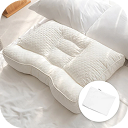
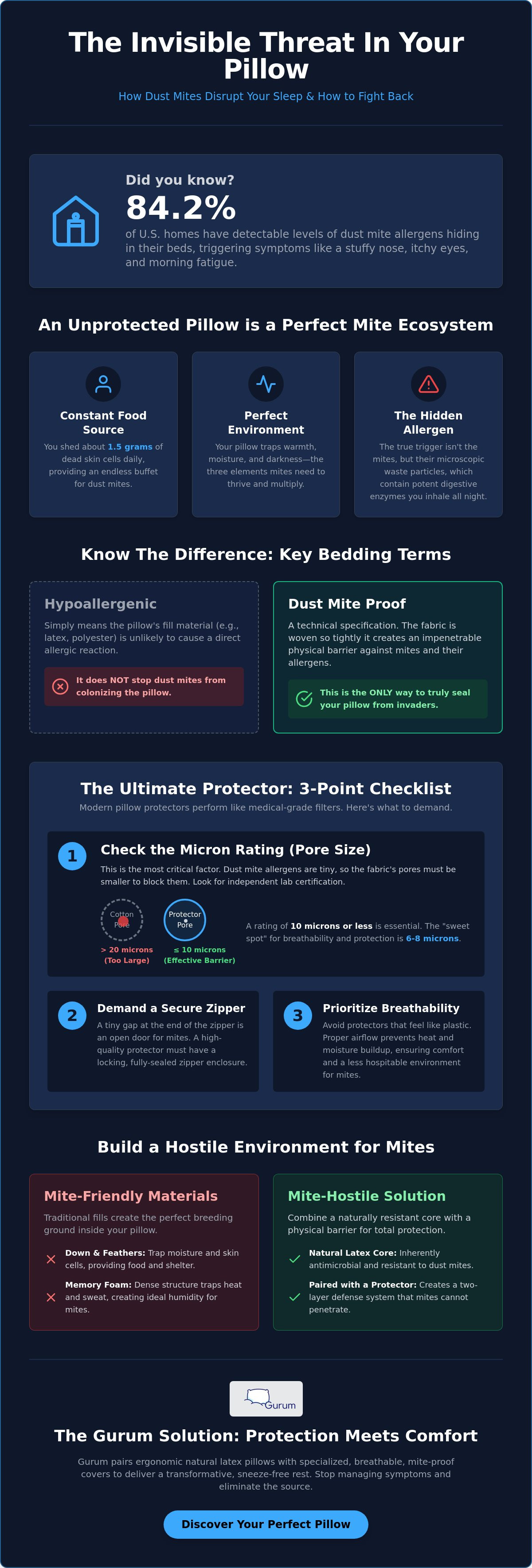
Did you know that 84.2% of U.S. homes have detectable levels of dust mite allergens hiding in their beds? If you wake up every morning with a stuffy nose or itchy eyes, you aren't just "not a morning person." You're likely reacting to microscopic pests that have made a home in your bedding. Finding a high-quality pillow protector for dust mites is the most effective way to stop this cycle and reclaim your respiratory health.
It's exhausting to spend your nights worrying about what's living in your pillow. You want a solution that is breathable, silent, and actually works without feeling like you're sleeping on a plastic bag. We understand the frustration of trying generic products that fail to deliver real relief. This guide will show you how the right material combination can eliminate allergens and restore your sleep health. You'll learn about the latest 2026 PFAS-free standards, the importance of pore size, and how to maintain a truly clean bedroom for deeper, uninterrupted rest.
Key Takeaways
- Learn why a micron rating of 10 or less is essential for creating a physical barrier that microscopic allergens cannot penetrate.
- Discover how a high-quality pillow protector for dust mites works alongside a natural latex core to create a hostile environment for pests.
- Identify why traditional materials like down and memory foam often trap moisture and skin cells, fueling colony growth.
- Master the exact washing cadence and temperature requirements needed to keep your sleep sanctuary sterile and allergen-free.
- See how the Gurum solution pairs ergonomic comfort with specialized covers to provide a transformative, sneeze-free rest.
Understanding the Invisible Threat: Why Dust Mites Love Your Pillow
Dust mites are the invisible roommates you never invited. These microscopic arachnids are distant relatives of spiders and ticks. They don't bite or live on your skin; instead, they live on what you leave behind. They crave warmth, darkness, and humidity. Your pillow provides all three in abundance. Without a high-quality pillow protector for dust mites, your head rests on a thriving colony every single night.
Think of your pillow as a complex ecosystem. As you sleep, you shed roughly 1.5 grams of dead skin cells daily. This is the primary food source for mites. When you add the moisture from your breath and perspiration, you've created a perfect breeding ground. Over several years, an unprotected pillow can actually gain significant weight. That extra mass isn't just stuffing; it's a dense accumulation of live mites, dead mites, and their microscopic waste products.
The real danger isn't the mites themselves. It's their digestive enzymes. These specific proteins, found in their excrement, are what trigger Understanding Dust Mite Allergies and chronic respiratory distress. When you shift your head during the night, these microscopic particles puff into the air. You inhale them, and your immune system goes into overdrive. It's a cycle of irritation that happens inches from your nose for eight hours a day.
Allergic Rhinitis and Sleep Fragmentation
Waking up exhausted isn't always about how many hours you spent in bed. It's about the quality of those hours. Nighttime allergen exposure causes micro-inflammations in your nasal passages and upper airway. This subtle swelling restricts airflow and forces your body to work harder to breathe while you sleep. You might not fully wake up, but these disruptions prevent you from reaching the deep REM sleep your brain needs to recover. Dust mite allergens interact with human histamines to create a persistent inflammatory response that leaves you feeling groggy and fatigued by noon. Beyond allergen-proofing your bedroom, many people also look for natural ways to support their vitality; for instance, using Himalayan Shilajit resin for energy can be a helpful way to restore focus and mental clarity after a night of disrupted sleep.
Hypoallergenic vs. Dust Mite Proof
Labels in the bedding aisle can be incredibly confusing. Many people buy "hypoallergenic" pillows and assume they're protected. This term simply means the material inside is unlikely to cause an allergic reaction. It doesn't stop mites from moving in and setting up shop. A true pillow protector for dust mites must be "dust mite proof." This is a technical distinction based on fabric density. A standard cotton pillowcase has gaps large enough for mites to crawl through easily. You need a physical barrier with a weave so tight that even the smallest microscopic allergens are permanently locked out.
Choosing the Right Pillow Protector for Dust Mites: The 2026 Buying Criteria
Selecting a pillow protector for dust mites isn't just about finding a cover. It's about engineering a barrier. In 2026, the technology has evolved far beyond the noisy, plastic-lined shells of the past. You need a solution that feels like luxury but performs like a medical-grade filter. This requires looking closely at technical specifications that most retailers ignore. A high-quality protector must balance three critical factors: filtration density, airflow, and tactile comfort.
A true encasement must feature a secure, locking zipper. If there's even a tiny gap at the end of the track, mites will find their way in or out. Breathability is equally vital. If air can't circulate, your body heat stays trapped. This leads to night sweats, which ironically creates the humid environment mites love. For those seeking a complete sleep system, an Anti-Allergy Pillow Cover provides this precise balance of airflow and impenetrable defense without the "crinkle" of cheaper alternatives.
The Science of Micron Ratings
Standard fabric weaves are like open windows for microscopic pests. While an adult dust mite is roughly 250 to 300 microns wide, their waste particles and body fragments are much smaller. To block these irritants effectively, your protector must have a micron rating of 10 or less. Many experts consider a 6 to 8 micron weave the "sweet spot" for restorative rest. This density is tight enough to stop allergens but open enough to prevent that "balloon" feeling when you lay your head down. Always check labels for independent lab results to confirm these measurements rather than relying on vague marketing terms.
Material Choices: Cotton, Silk, and Advanced Synthetics
Cotton remains a favorite for its soft, familiar feel. It's easy to wash and highly durable. However, only high-thread-count precision weaves can achieve the necessary micron density without a chemical coating. Silk is another option, as it's naturally resistant to pests, but it's often difficult to maintain a consistent barrier over time with frequent washing.
Modern advanced synthetics are the real 2026 game-changers. These materials use nanofiber technology to create a silent, supple barrier that mimics natural fibers while offering superior filtration. These choices are central to modern dust mite allergy diagnosis and treatment plans. By choosing a high-tech synthetic or a dense organic cotton, you ensure your sanctuary remains sterile. You'll wake up refreshed because your immune system isn't fighting an invisible battle all night long.
Latex vs. Traditional Materials: Building a Hostile Environment for Mites
A high-quality pillow protector for dust mites acts as your first line of defense. However, the battle for a sterile sleep environment is often won or lost in the pillow core itself. Think of your protector as a fortress wall. If the city inside is already compromised, the wall can only do so much. Traditional pillow materials often act as invitations for pests; conversely, natural alternatives create a naturally hostile environment. By choosing a bio-resistant core, you significantly reduce the biological load your protector has to manage every night.
It's a common mistake to treat the pillow and the cover as separate entities. They work together as a system. When you use a breathable barrier over a material that doesn't trap skin cells, you achieve a level of hygiene that traditional bedding simply cannot match. This dual-layer strategy ensures that your sleep sanctuary remains fresh, silent, and entirely free from the triggers that cause morning congestion.
The Down and Memory Foam Trap
Down and feather pillows are classic choices, but they are essentially magnets for allergens. The loose clusters of feathers create infinite tiny pockets that trap moisture and dead skin cells. This is a perpetual buffet for mites. Memory foam presents a different struggle. It is a dense, synthetic material that typically retains significant body heat. This warmth, combined with a lack of airflow, creates the humid micro-climate where colonies thrive. You might also find that the chemical "off-gassing" of foam irritates sensitive airways. You can learn more about why natural support wins over foam when prioritizing long-term health. These materials eventually break down, turning into a fine dust that adds to the very debris you're trying to avoid.
Natural Latex: The Hypoallergenic Gold Standard
Switching to 100% natural latex changes the equation entirely. Unlike synthetic foams or organic fibers, botanical latex is inherently antimicrobial and antifungal. It doesn't just sit there; it actively repels the growth of mold and mildew. This is a crucial part of controlling dust mites in your home effectively. The material features a sophisticated open-cell structure. This allows air to flow freely through the pillow, whisking away the moisture that mites require for survival.
Some worry that specialized health products might feel stiff or rigid (though high-quality latex is actually incredibly supple and soft), but the functional benefits are undeniable. Natural latex is exceptionally resilient, meaning it maintains its structural integrity for years. It doesn't clump or create the "dust pockets" common in fiberfill pillows. Because of its unique molecular makeup, 100% natural latex is inherently resistant to Dermatophagoides. When you pair this bio-resistant core with a high-performance pillow protector for dust mites, you create a sleep sanctuary that stays sterile far longer than traditional alternatives.
Maintenance and Care: Keeping Your Sleep Sanctuary Sterile
Investing in a high-performance pillow protector for dust mites is a major step toward better respiratory health. But even the best barrier needs proper upkeep to remain sterile. Think of your protector as a filter. Over time, it captures microscopic debris that can compromise its effectiveness. A consistent maintenance schedule ensures your sleep sanctuary stays as clean as the day you set it up. Without this care, allergens can accumulate on the surface of the fabric, eventually finding their way into your airway as you toss and turn.
Wash your outer pillowcase weekly. Your zippered protector doesn't need that same frequency. Aim to launder the encasement every two months. If you suffer from severe allergies, you might prefer once a month. This removes any accumulated surface dust without wearing down the specialized fibers too quickly. When the fabric begins to feel thin or the zipper tracks become loose, it's a sign the barrier is failing. Most high-quality protectors should be replaced every one to two years to maintain their micron-level precision.
Temperature is your most powerful tool. To effectively kill dust mites and neutralize their allergens, you must wash your bedding at 140°F (60°C). Cold water might remove visible dirt, but it won't eliminate the biological threat. Always ensure your protector is bone-dry before re-zipping it. Any residual dampness creates a humid micro-climate inside the pillow that invites new colonies to form. For a durable barrier that stands up to frequent high-heat laundering, consider the Anti-Allergy Pillow Cover as your primary defense.
The Correct Way to Wash Allergy Bedding
Stick to fragrance-free, mild detergents. Harsh chemicals can irritate your respiratory system and break down the fabric's integrity. During the wash cycle, keep the zipper partially open. This prevents air pockets from ballooning and damaging the material during the high-speed spin. If possible, let your pillows spend an afternoon in direct sunlight. UV rays act as a natural disinfectant and help evaporate any lingering moisture deep within the core that a dryer might miss.
Environmental Control in the Bedroom
Your bedroom environment plays a supporting role in your health. Dust mites thrive when humidity levels exceed 50%. Use a dehumidifier to keep the air dry and hostile for pests. Pair your specialized bedding with regular HEPA vacuuming to capture any allergens that settle on the floor or baseboards. While protecting your head is vital, don't forget the rest of the bed. A complete system approach keeps the entire room sterile and ensures you wake up without the "morning fog" of allergies.
The Gurum Solution: Anti-Allergy Protection Meets Ergonomic Support
We believe that a pillow protector for dust mites should do more than just block pests. It should actively enhance your sleep experience. The Gurum Anti-Allergy Pillow Cover was specifically engineered to complement our Premium Latex Pillow. This isn't a generic, one-size-fits-all bag. It's a precision-tooled component of a complete sleep system designed for those who refuse to compromise on their health. By integrating the barrier directly into the pillow's design, we've eliminated the common frustrations of specialized bedding.
Our 100% natural latex core provides a secondary biological defense that traditional materials simply can't match. As we've established, botanical latex is inherently resistant to mold and dust mites. When you pair this bio-resistant core with our specialized cover, you create a multi-layered shield. This ensures that even if microscopic particles settle on your bedding, they never reach the core where they could colonize. It's the ultimate peace of mind for the sensitive sleeper who has struggled with previous market solutions.
Hygiene and anatomical health are deeply connected. If you're constantly shifting or waking up because of nasal congestion, your neck never stays in the neutral position required for recovery. Clean sleep is essential for physical healing. By removing the distraction of allergens, you allow your body to focus on what matters: deep, restorative rest and spinal alignment. This holistic approach ensures you wake up refreshed, breathe clearly, and remain pain-free throughout the day.
Why Our Anti-Allergy Cover is Different
Most allergy bedding feels like sleeping on a plastic tarp. Our "silent sleep" technology eliminates that frustrating crinkling sound entirely. We use a breathable, high-density weave that allows for maximum airflow. This ensures you stay cool while the barrier remains impenetrable to allergens. Our cover is also engineered to fit the unique contours of a cervical pillow. It maintains the specific ergonomic shape needed to soothe chronic neck pain without the bunching or slipping common with standard covers.
Investing in Restorative Rest
Protecting your sleep environment is an investment in your long-term longevity. Using a high-quality pillow protector for dust mites significantly extends the life of your best latex pillow for neck pain by keeping it free from moisture and organic debris. We understand the frustration of waking up feeling worse than when you went to bed. Our mission is to provide a single, perfected solution that addresses both physical discomfort and environmental sensitivities. Prioritizing your respiratory health is a fundamental pillar of wellness. Don't let microscopic pests steal another night of rest. Explore our anti-allergy bundle today and experience the transformative power of a truly sterile sleep sanctuary.
Reclaim Your Sleep and Your Health Today
Waking up refreshed shouldn't be a luxury. By choosing a high-performance pillow protector for dust mites with a micron rating under 10, you've taken the first step toward a sterile sanctuary. Remember that total protection is a system. It combines an impenetrable physical barrier with a bio-resistant core like 100% natural latex. This dual-layer defense stops microscopic pests from ever establishing a colony in your bed.
You don't have to settle for the "morning fog" of allergies or the discomfort of poor support. Our solutions are designed by wellness experts to provide the quiet, cooling, and hypoallergenic environment you deserve. It's time to stop fighting an invisible battle every night and start experiencing the relief of restorative rest.
Shop the Gurum Anti-Allergy Pillow Cover for total protection. Enjoy the confidence of 100% natural materials and expert-backed design. We even offer free US shipping on qualifying orders to help you start your journey toward pain-free, allergen-free sleep. You've struggled with environmental sensitivities long enough; let's restore your sleep health together.
Frequently Asked Questions
Do pillow protectors really work for dust mites?
Yes, high-quality encasements are highly effective. They create a physical wall that prevents microscopic pests from migrating between your face and the pillow core. By trapping existing colonies inside and keeping new ones out, they significantly reduce your exposure to triggers. It's an essential tool for anyone suffering from chronic morning congestion or nighttime respiratory distress. This simple barrier turns an infested pillow into a sterile sleep surface instantly.
How often should I wash my dust mite pillow protector?
You should wash your zippered encasement approximately every two months. Your outer pillowcase needs weekly cleaning, but the protector itself doesn't require such frequent laundering. Washing it too often can eventually stretch the fibers and widen the pore size. Always use water heated to at least 140°F (60°C) to ensure you are neutralizing all biological threats. This schedule maintains the integrity of your pillow protector for dust mites while keeping it sterile.
What pore size is best for blocking dust mites?
A micron rating of 10 or less is the gold standard for blocking allergens. While adult mites are larger, their waste particles are incredibly small. Aim for a pore size between 6 and 8 microns for the best balance of filtration and breathability. This specific density is tight enough to lock out microscopic irritants but open enough to prevent heat from being trapped against your skin during the night.
Can I put a regular pillowcase over a dust mite protector?
Absolutely. In fact, we recommend it. The protector acts as a functional medical barrier, while the regular pillowcase provides the soft, aesthetic surface you prefer. You can wash your decorative pillowcase every week to remove surface oils and skin cells. This setup keeps your specialized pillow protector for dust mites clean and reduces the number of times you need to uncompress and re-zip the inner encasement.
Is there a difference between waterproof and dust mite proof protectors?
Yes, the difference lies in the technology. Waterproof protectors typically use a polyurethane membrane to stop liquids, which can sometimes feel hot or crinkly. Dust mite proof protectors rely on a high-density fabric weave to block microscopic particles. While many modern options offer both features, you must ensure the material is breathable. A non-breathable cover traps moisture and heat, which can actually encourage the growth of the very pests you're trying to avoid.
How do I know if my pillow has dust mites?
You likely won't see them because they are microscopic. Instead, listen to your body. Do you wake up with a "morning cold" that disappears by noon? Persistent sneezing, itchy eyes, or a scratchy throat upon waking are classic indicators. If your pillow is more than a few months old and hasn't been protected by an encasement, it's safe to assume a colony has already moved in.
Are latex pillows better for people with dust mite allergies?
Natural latex is a superior choice for allergy sufferers. Unlike synthetic foams or down, botanical latex is inherently antimicrobial and resistant to mold. It doesn't provide the "pockets" of skin cells and moisture that mites need to survive. When you combine a naturally resistant core with a specialized cover, you create a multi-layered defense. This system approach is much more effective than relying on a protector alone.
Can dust mites live in memory foam pillows?
Yes, memory foam is not immune to colonization. While it is denser than traditional fiberfill, it often retains significant body heat and moisture. This creates a warm, humid micro-climate that is ideal for mite reproduction. Without a proper barrier, skin cells can still accumulate in the crevices of the foam. If you use memory foam, a high-quality encasement is mandatory to prevent it from becoming a biological hazard.