
You wake up, but instead of feeling refreshed, your head feels heavy and your nose is already running. It's a frustrating cycle many of us know too well. You've likely invested in a premium latex pillow for better support, yet you're still battling morning sneezing fits and skin breakouts. The truth is, your bedding might be harboring invisible triggers like dust mites. Understanding the benefits of using an anti-allergy pillow cover can be the turning point for your rest. It isn't just about a cleaner bed; it's about reclaiming your morning energy and protecting your physical health.
We understand how exhausting it is to search for a solution that actually works. This guide explores how a specialized allergen barrier transforms your sleep quality and respiratory health while extending the life of your pillow. We'll look at the science of microscopic pore sizes, the importance of third-party certifications, and how to keep your sleep environment truly hygienic. You'll discover how to shield your pillow from moisture and oils so you can finally breathe clearly all night long.
Key Takeaways
- Learn how a medical-grade barrier blocks microscopic allergens to stop morning congestion and skin breakouts before they start.
- Discover the benefits of using an anti-allergy pillow cover to improve oxygen intake and achieve deeper, restorative REM sleep.
- Understand how reducing nighttime irritation prevents tossing and turning, which helps maintain your neck's orthopedic alignment throughout the night.
- Identify the essential features of a high-quality protector, including breathable natural fabrics and the critical locking zipper.
- Find out how to shield your premium latex pillow from moisture and oils to ensure your investment stays hygienic for years.
What is an Anti-Allergy Pillow Cover and Why Do You Need One?
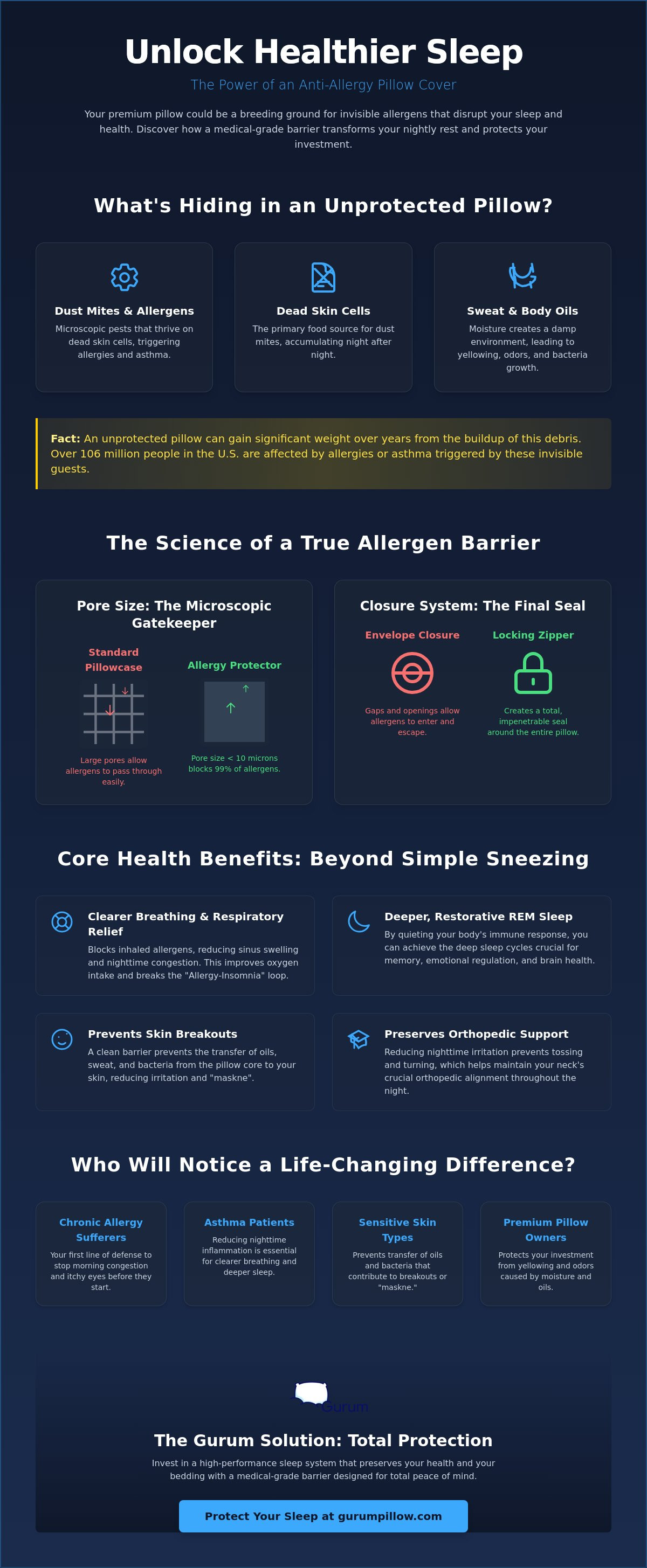
Many people assume a standard pillowcase is enough to keep their sleep surface clean. It isn't. Think of your standard cotton case as a sieve. It feels soft and looks clean, but the weave is often wide enough for microscopic particles to pass through effortlessly. If you are researching what is an anti-allergy pillow cover, you'll find it is actually a specialized medical-grade barrier. It's engineered to block the tiny triggers that a normal case simply ignores.
Over time, an unprotected pillow becomes a magnet for dead skin cells, sweat, and dust mites. These microscopic pests thrive on the debris we leave behind every night. According to data from the AAFA, more than 106 million people in the United States live with allergies or asthma, many of whom are triggered by these "invisible guests." One of the primary benefits of using an anti-allergy pillow cover is that it stops this accumulation before it starts. Without a barrier, your pillow can actually gain weight over years of use from the buildup of debris and mite waste. It's a sobering thought that impacts both your hygiene and your respiratory health.
The Anatomy of a High-Performance Barrier
To be truly effective, the fabric must have a specific pore size. Medical experts and industry standards suggest that a pore size of less than 10 microns is the magic number. This is small enough to trap dust mite allergens while still allowing air to circulate. Without this breathability, you'd wake up hot and uncomfortable. The closure system is just as vital. An "envelope" style case leaves gaps where allergens can escape. A high-quality protector uses a locking zipper to create a total seal. This acts as a definitive gatekeeper, ensuring nothing enters or leaves the pillow core.
Who Benefits Most from Allergy Protection?
While everyone can benefit from a cleaner bed, certain groups will notice a life-changing difference almost immediately:
- Chronic Allergy Sufferers: If you wake up with a stuffy head or itchy eyes, this barrier is your first line of defense.
- Asthma Patients: Reducing nighttime inflammation is essential for clearer breathing and deeper REM sleep.
- Sensitive Skin Types: A clean barrier prevents the transfer of oils and bacteria that contribute to breakouts or "maskne."
- Premium Pillow Owners: If you've invested in a high-quality latex pillow, a cover prevents the yellowing and odors caused by moisture and skin contact.
By choosing a specialized cover, you aren't just adding a layer of fabric. You're investing in a high-performance sleep system that preserves your health and your bedding. One of the most significant benefits of using an anti-allergy pillow cover is the peace of mind that comes from knowing your sleep environment is truly pristine.
The Core Health Benefits: Beyond Simple Sneezing
Allergies don't just cause a runny nose. They disrupt your entire biological rhythm. When you inhale microscopic allergens all night, your body stays in a state of high alert. This constant immune response triggers internal inflammation that goes far beyond a simple sneeze. One of the most profound benefits of using an anti-allergy pillow cover is its ability to quiet this systemic noise. By creating a physical barrier, you allow your body to shift from defense mode into true recovery mode.
Respiratory Relief and Clearer Airways
Nighttime respiratory distress is often caused by dust mite fecal matter settling into your airways. This leads to sinus swelling and restricted breathing. Allergic rhinitis is the inflammatory response of the nasal passages to inhaled allergens, often leading to chronic congestion and disrupted sleep. When your nasal passages are inflamed, your oxygen intake drops. This lack of efficient airflow is why many allergy sufferers wake up with a "stuffy head" or persistent brain fog. Knowing what to look for in a high-quality allergy protector is the first step toward reclaiming your lung capacity. A medical-grade barrier ensures the air you breathe is as pristine as possible.
This protection helps break the "Allergy-Insomnia" loop. It's the cycle where you drift toward deep sleep, only to be jerked awake by a coughing fit or the need to clear your throat. Every time this happens, your sleep architecture collapses. You lose out on the critical REM cycles needed for memory consolidation and emotional regulation. By stabilizing your environment, you aren't just stopping a sneeze; you're protecting your brain health. It's about more than comfort. It's about maintaining the integrity of your rest.
Dermatological Advantages: Sleep for Your Skin
Your pillow is a sponge for sweat, sebum, and dead skin cells. These elements combine to create a breeding ground for bacteria. For those with sensitive or acne-prone skin, this contact is a primary cause of breakouts. An allergy cover acts as a shield. It prevents these oils from soaking into the pillow core and prevents dust mites from irritating the skin surface. Modern high-quality barriers also offer a subtle cooling effect. By preventing the buildup of heat and moisture, they soothe irritated skin rather than aggravating it. If you want to wake up with a clearer complexion, adding an Anti-Allergy Pillow Cover to your bedding is a simple, effective strategy. It's a secret weapon for skin health that works while you rest. The benefits of using an anti-allergy pillow cover extend to every inch of your physical well-being, from your lungs to your skin.
The Hidden Link: How Allergy Protection Preserves Orthopedic Support
Restorative sleep requires more than just a soft surface. It requires stability. Most discussions about bedding focus on either comfort or hygiene, but these two worlds are deeply connected. If your body is reacting to allergens, your physical posture suffers. One of the most overlooked benefits of using an anti-allergy pillow cover is its role in maintaining your spinal alignment throughout the night. When your respiratory system is at peace, your body can finally find the stillness it needs to heal.
Stilling the Sleep Cycle
Congestion triggers micro-awakenings. Even if you don't fully wake up, your body shifts to find a position where breathing feels easier. These constant adjustments are the enemy of orthopedic support. When you move, your head often slips from the "sweet spot" of your pillow. This leads to morning neck stiffness and muscle tension. A calm respiratory system allows you to remain still. By eliminating the triggers that cause restlessness, you can fully experience the advantages of the best latex pillow for neck pain. A stiller sleeper is always a better-supported sleeper. Consistent positioning ensures your vertebrae stay in a neutral, relaxed state.
Preventing Material Degradation
Your pillow's "loft" is its ability to support the weight of your head. Moisture is the primary threat to this loft. Every night, the average person loses a significant amount of moisture through sweat and breath. Without a barrier, these fluids seep into the pillow's core. Over time, moisture and body oils break down the internal structure, causing flattening and loss of resilience. This is particularly damaging for a specialized cervical pillow designed for precise ergonomic support. If the material degrades, the orthopedic benefits vanish.
An anti-allergy cover acts as a moisture shield, preserving the responsive nature of the material. It prevents the yellowing and fiber breakdown that lead to a "dead" pillow. By protecting the physical integrity of your bedding, you ensure your investment continues to provide the same level of relief as the day you bought it. The benefits of using an anti-allergy pillow cover are as much about your joints and muscles as they are about your lungs. It's a simple addition that protects both your health and your premium sleep gear.
What to Look for in a High-Quality Allergy Protector
Choosing the right barrier is about more than just checking a box. It's about ensuring your sleep system remains functional and comfortable. If you pick a cheap, plastic-lined cover, you'll likely wake up sweaty and annoyed by a loud "crinkle" every time you move. One of the primary benefits of using an anti-allergy pillow cover is the seamless blend of medical protection and sensory comfort. A high-quality protector should be invisible to your senses while remaining impenetrable to microscopic allergens.
The locking zipper is the most critical component of the design. Without a secure, tight-fitting seal, dust mites can still find their way into the pillow core. It acts as the definitive gatekeeper for your bedding. Additionally, you must consider laundering durability. A medical-grade barrier needs to survive frequent high-heat washes without the weave loosening. If the fabric stretches or the fibers degrade after only a few months, your protection is effectively gone. Look for products designed to withstand 50 or more laundry cycles while maintaining their original pore size.
When evaluating your options, keep this checklist in mind:
- Pore Size: Ensure the fabric weave is less than 10 microns.
- Noise Level: Avoid "noisy" materials that disrupt your sleep.
- Breathability: Air should move freely to prevent heat buildup.
- Seal Integrity: A high-quality zipper is non-negotiable.
Material Science: Cotton vs. Synthetics
Many sleepers prefer 100% natural cotton for its familiar feel and superior breathability. A tight mechanical weave creates a barrier without the need for harsh chemical coatings or plastic membranes. At Gurum, we prioritize materials that complement the natural breathability of our latex line. We avoid heavy laminates that trap heat and moisture. Instead, we focus on high-density fabrics that stop particles but allow air to flow freely. This ensures your head stays cool while your lungs stay clear.
Maintenance for Maximum Protection
To keep your sleep environment truly hygienic, follow the "hot water" rule. The Asthma and Allergy Foundation of America (AAFA) recommends washing bedding in water that is 130°F (54.4°C) or hotter to effectively kill dust mites. While your outer pillowcase needs weekly washing, the zippered anti-allergy encasement typically only needs cleaning two to three times per year. When drying, use a medium heat setting to ensure the weave remains tight and effective. Proper care preserves the long-term benefits of using an anti-allergy pillow cover and keeps your investment performing like new.
Ready to upgrade your sleep hygiene? You can find our specialized Anti-Allergy Pillow Cover designed specifically for high-performance bedding.
The Gurum Solution: Total Protection for Your Premium Latex Pillow
Restorative sleep is a system. It isn't just one product; it's the harmony between support and hygiene. While a latex foam pillow is naturally resistant to mold and mildew, adding a physical barrier elevates your protection to a professional level. This synergy is one of the greatest benefits of using an anti-allergy pillow cover. It ensures that the core of your pillow remains as pure as the day it was harvested. You aren't just covering a pillow. You're creating a fortress for your health.
Don't leave your respiratory health at home when you head out on the road. When you use a natural latex travel pillow, you are often taking it into environments you can't control. Hotel pillows and airplane cabins are notorious hotspots for allergens and dust mites. Our Anti-Allergy Pillow Cover makes your travel gear truly travel-ready. It provides a "second skin" that keeps external irritants away from your face, no matter where you spend the night. It is lightweight, silent, and essential for any frequent traveler who refuses to compromise on air quality.
Designed for the Premium Latex Pillow
Most covers on the market are generic. They either squeeze the pillow into a hard, unresponsive block or leave baggy fabric that bunches under your neck. We designed our cover to be a perfect, silent partner for our latex line. It features a custom fit that doesn't compress the ergonomic shape. This preserves the "instant rebound" feel that makes natural latex so unique. You get the medical-grade protection you need without sacrificing the orthopedic contouring you love. To make your transition to better sleep even easier, we offer free shipping across the USA on qualifying orders.
A Holistic Approach to Restorative Sleep
True wellness happens when clean air meets proper neck support. By combining these elements, you eliminate the physical and environmental stressors that disrupt your deep REM cycles. You deserve the peace of mind that comes with a 100% protected sleep environment. No more waking up with a heavy head or irritated skin. We've seen how the right barrier can turn a night of tossing and turning into a night of total recovery.
The benefits of using an anti-allergy pillow cover represent a definitive commitment to your long-term health. It's the final piece of the puzzle for anyone struggling with sensitivities or chronic discomfort. Our promise is simple: reassuring comfort that feels natural and looks pristine. Take the next step toward a pain-free, allergen-free night. Your body will thank you every morning.
Reclaim Your Morning Energy
Restorative rest is the foundation of a healthy life. By combining medical-grade allergen protection with superior ergonomic support, you stop the cycle of morning congestion and nighttime restlessness. You've seen how the benefits of using an anti-allergy pillow cover extend from clearer breathing to preserving the orthopedic integrity of your favorite pillow. It's a simple, effective way to ensure your sleep environment remains truly pristine and supportive for years to come.
We believe everyone deserves to wake up feeling refreshed and pain-free. Our protectors are designed by ergonomic experts specifically to solve chronic physical discomfort and environmental sensitivities. They offer 100% natural latex compatibility and maintain the responsive feel you love. Plus, we offer free shipping in the USA to make your journey to better health even easier. It's time to invest in a solution that works as hard as you do.
Upgrade your sleep with the Gurum Anti-Allergy Pillow Cover and start breathing easier tonight. You've struggled with poor sleep long enough; let's find your path to better rest together.
Frequently Asked Questions
Do anti-allergy pillow covers really work?
Yes, anti-allergy pillow covers are highly effective at blocking microscopic triggers. They act as a medical-grade barrier that prevents dust mites and their waste from reaching your airways. One of the primary benefits of using an anti-allergy pillow cover is the immediate reduction in nighttime inflammation. This physical blockage is a proven method for managing allergic rhinitis and asthma symptoms during sleep.
Will an allergy cover make my pillow feel hot or sweaty?
Modern, high-quality covers are designed to be breathable and won't make you sweat. While older, plastic-lined versions were notorious for trapping heat, premium options use advanced micro-weaves or natural cotton. These materials allow air to circulate freely while keeping microscopic particles out. You get the protection you need without the "crinkle" sound or the uncomfortable heat buildup that disrupts your rest.
Can I put a regular pillowcase over an anti-allergy cover?
You absolutely should use a regular pillowcase over your anti-allergy protector. Think of the protector as an "encasement" that stays on the pillow for months at a time. Your decorative or standard cotton pillowcase goes on top and should be washed weekly. This setup provides a dual layer of protection, keeping your sleep surface soft and your pillow core completely isolated from allergens.
How often do I need to wash my anti-allergy pillow protector?
You only need to wash the zippered anti-allergy encasement two to three times per year. Washing it too frequently can eventually loosen the tight weave that makes it effective. However, your outer pillowcase must be washed weekly in hot water (130°F or higher) to kill surface mites. This balance ensures your barrier remains intact while your immediate sleep surface stays fresh and hygienic.
What is the best material for an allergy pillow cover?
The best material is either 100% tightly woven natural cotton or a high-performance microfiber with a pore size under 10 microns. Natural cotton is often preferred for its superior breathability and soft feel against the skin. These materials rely on a mechanical weave rather than chemical coatings to block allergens. This ensures long-term durability and safety for those with sensitive skin or chemical sensitivities.
Do these covers protect against bed bugs as well as dust mites?
Yes, a high-quality anti-allergy cover also serves as a bed bug barrier. To be effective, the cover must feature a specialized locking zipper that prevents even the smallest bed bug nymphs from passing through. While dust mites are the primary concern for most sleepers, the total seal of an encasement provides an extra layer of security against other household pests.
Is an anti-allergy cover necessary if I have a latex pillow?
Even with a naturally hypoallergenic latex pillow, a cover is highly recommended. Latex is resistant to mold and dust mites, but it isn't a physical barrier. Over time, skin cells, oils, and external dust can still settle on the surface or in the pin-core holes. One of the benefits of using an anti-allergy pillow cover is that it shields your premium latex investment from moisture and debris, keeping it pristine.
How do I know if my pillow cover is actually effective against allergens?
Look for specific technical standards like a pore size of less than 10 microns and third-party certifications. The "asthma & allergy friendly®" mark is the gold standard for verified protection. You can also perform a simple "breath test" by trying to blow air through the fabric. If it's difficult to blow through, the weave is likely tight enough to block microscopic particles effectively.