


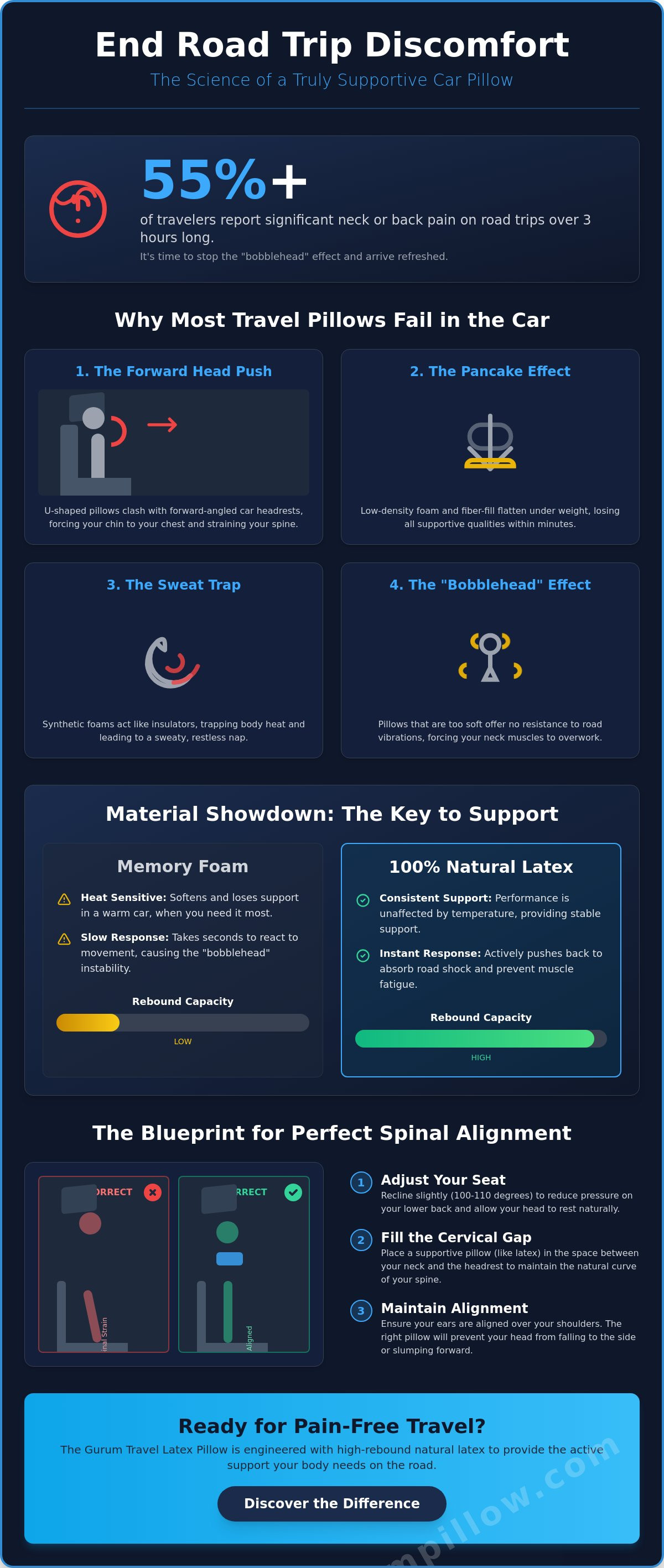
Over 55 percent of travelers report significant neck or back discomfort on road trips lasting more than three hours. You've likely felt it yourself; that sharp ache at the base of your skull or the frustrating "bobblehead" effect when you try to nap. Finding a truly supportive travel pillow for car rides is often harder than it looks because most options rely on cheap, heat-trapping foam that flattens under the weight of your head. You start the trip hopeful and end it reaching for pain relief.
We understand the exhaustion that comes from fighting for a comfortable position while the vehicle vibrates and shifts. It's a shared struggle that shouldn't be part of your journey. You deserve to arrive at your destination feeling restored rather than stiff and sore. This guide explores how to eliminate road trip pain by choosing a pillow designed for vehicle ergonomics and consistent cervical support. We'll dive into the science of active rebound materials like natural latex and show you how to maintain perfect spinal alignment, even in a cramped passenger seat. It's time to trade sweaty, collapsing foam for a breathable, hypoallergenic companion that actually holds its shape.
Key Takeaways
- Understand why traditional U-shaped pillows often fail by clashing with modern car seat ergonomics and pushing your head too far forward.
- Learn how to choose a supportive travel pillow for car rides by evaluating "rebound capacity" and selecting a loft that fills your unique cervical gap.
- Discover the anatomical benefits of 100% natural latex, which provides a cooling, resilient alternative to heat-trapping memory foam.
- Master the step-by-step process for adjusting your seat angle and pillow placement to maintain consistent spinal alignment during long-distance napping.
Why Most Travel Pillows Fail During Long Car Rides
Most of us have a "graveyard" of discarded travel accessories in the trunk. You bought them hoping for relief, but they only added to the frustration. The primary reason most options fail is a fundamental misunderstanding of vehicle geometry. Modern car headrests are designed for safety, specifically to prevent whiplash, which means they often angle forward. When you add a thick, U-shaped pillow behind your neck, it forces your chin toward your chest. This "head-forward" posture strains the cervical spine and tightens the muscles in your upper back. A truly supportive travel pillow for car rides must account for this safety-first design rather than fighting against it.
Beyond the angle, there is the issue of constant motion. Unlike a bed, a car is a vibrating environment. Your neck muscles are constantly making micro-adjustments to keep your head steady. If your pillow is too soft, it offers no resistance to these vibrations. Softness might feel luxurious at the airport gift shop, but during a four-hour drive, it becomes the enemy of stability. Without firm support, your muscles eventually give up, leading to that familiar, deep-seated ache. You need a material that pushes back, providing a stable foundation that absorbs road shock.
The Car Seat vs. Airplane Seat Dilemma
We often treat all travel the same, yet a car seat presents unique challenges compared to an airplane. Airplane seats are generally flatter, while car seats feature contoured lumbar support and aggressive headrest positioning. This creates a significant gap at the base of your neck. If this void isn't filled according to established orthopedic guidelines, your spine loses its natural curvature. Falling into a "micro-nap" with your head tilted at an awkward angle isn't just uncomfortable; it risks long-term cervical strain. Proper alignment requires a tool that bridges the gap between your anatomy and the car's safety features.
Why Your Current Pillow Flattens Out
Many travelers rely on fiber-fill or low-density memory foam. These materials are notorious for their lack of "rebound capacity." Within thirty minutes, the weight of your head compresses the material into a thin, useless pancake. This failure is often compounded by heat. Synthetic foams act like insulators, trapping your body heat and causing you to wake up sweaty and restless. There is a real psychological toll to this cycle of disappointment. You spend money on a supportive travel pillow for car rides only to find yourself mid-trip, tossing the flattened accessory into the backseat in a fit of discomfort. You don't need more "plushness"; you need resilient material that stays cool and refuses to quit.
Latex vs. Memory Foam: Which Material Actually Supports Your Neck?
Choosing the right material is the difference between waking up refreshed and suffering through a stiff neck. Most travelers assume memory foam is the premium choice because it feels soft to the touch. However, memory foam is a temperature-sensitive material that reacts to heat. In a warm car, it softens and loses its ability to hold your head in place. This is where 100% natural latex excels. It provides a consistent, resilient surface that doesn't rely on your body heat to function. For anyone seeking a truly supportive travel pillow for car rides, the science points toward latex as the superior anatomical partner.
Natural latex provides an "instant" adjustment to your head movements. While memory foam requires time to mold and reshape, latex responds immediately. This responsiveness is vital when you're dealing with the unpredictable shifts of a moving vehicle. You don't have to wait for the pillow to "warm up" or find its shape; it's ready to support you the moment you lean back. It's a professional-grade solution for a common lifestyle struggle.
The Rebound Factor in Moving Vehicles
Rebound capacity is the measure of how quickly a material returns to its original shape. It's the most critical metric for vehicle travel. Memory foam has a low rebound capacity; it sinks and stays there. When the car hits a bump or takes a curve, your head moves, but the foam takes several seconds to catch up. This delay causes the "bobblehead" effect, where your neck muscles must work harder to stabilize your head. Natural latex offers high rebound. It pushes back immediately, countering road vibrations and absorbing shock before it reaches your spine. This active support is essential to prevent neck pain during long stretches of highway driving. By reducing muscle fatigue, you can finally achieve a restorative nap in the passenger seat.
Breathability and Hypoallergenic Benefits
Road trips often involve fluctuating temperatures and dusty environments. Memory foam is a synthetic, closed-cell material that traps heat against your skin. This leads to the uncomfortable "hot neck" sensation that ruins a good nap. In contrast, natural latex features an open-cell structure. It allows air to circulate freely, regulating your temperature throughout the drive. This breathability is a sensory relief for those with sensitive skin or environmental sensitivities. Additionally, latex is naturally resistant to dust mites and mold. When you pair your pillow with anti-allergy pillow covers, you create a clean, healthy micro-environment for your rest. You avoid the "chemical smell" associated with off-gassing synthetic foams, ensuring your travel experience is as pure as it is comfortable. If you're tired of accessories that flatten and overheat, consider upgrading to a Travel Latex Pillow for your next adventure.
Selecting the Right Shape for Vehicle Ergonomics
Finding the right supportive travel pillow for car rides isn't about finding the fluffiest option. It's about finding the right "loft"—the specific height needed to fill the gap between your neck and the seat. In a car, space is limited. Large, oversized pillows often push your head too far forward, clashing with the safety-focused angle of modern headrests. A smaller, denser pillow typically performs better. It provides targeted support without adding unnecessary bulk that compromises your posture. We've seen too many travelers struggle with bulky accessories that actually create more tension than they relieve.
You also need to consider your natural sleeping position. While airplane travelers often nod forward, car passengers usually lean toward the window or rest directly back against the seat. Each position requires a different ergonomic approach to avoid muscle strain. A pillow that doesn't adapt to these specific angles is just another piece of luggage. True comfort comes from a shape that respects the constraints of a vehicle interior.
The Side-Leaner's Guide to Car Napping
If you find yourself leaning toward the car door, you need to support the space between your shoulder and the window. This prevents your head from tilting at an extreme angle, which can lead to pinched nerves and a sore neck. The same best pillow for side sleepers principles apply here: you need enough loft to keep your neck straight. By filling this void, you prevent painful shoulder compression and stop your head from bouncing against the glass during road vibrations. It's about creating a stable, cushioned bridge between you and the vehicle's frame.
The Back-Sleeper: Filling the Cervical Gap
Back-sleepers face a different challenge altogether. The primary goal is to target the C1-C7 vertebrae for total muscle relaxation. Many ergonomic causes of neck pain stem from the head being pushed forward while the neck remains unsupported. A cervical pillow design works best in this scenario. It cradles the base of the skull and maintains a neutral chin position. This prevents airway obstruction—which often causes snoring or restless napping—and keeps your spine aligned with the seat back. When your supportive travel pillow for car rides integrates seamlessly with the car's existing headrest, you achieve a level of comfort that standard U-shaped designs simply can't match. You wake up feeling refreshed because your muscles weren't fighting to stay upright the entire journey.
How to Achieve Perfect Spinal Alignment in a Car Seat
Achieving true comfort isn't just about the gear; it's about the geometry of your seat. Even the most supportive travel pillow for car rides can't fix a posture that's fundamentally broken. You need to create a foundation that allows your spine to relax into its natural S-curve. This process starts with the seat base and ends with the precise placement of your head support. When these elements work together, you stop fighting the car's movement and start resting with it.
Transitioning from the high-alert state of driving to the relaxation of a nap requires a conscious shift. Take a moment to reset. Shift your hips all the way back into the seat pocket. If your lower back is floating, your neck will never truly relax. Adjust the car's lumbar support until you feel a gentle pressure in the small of your back. This stable base prevents the slouching that leads to cervical strain. Once your spine is neutral, you can introduce your pillow for the final layer of anatomical relief.
The 110-Degree Rule for Car Napping
A common mistake is reclining the passenger seat as far as it will go. While a flat position seems ideal, it often causes your body to slide forward, leaving your neck unsupported. Instead, aim for a 110-degree recline. This subtle angle is the "sweet spot" for vehicle ergonomics. It distributes your body weight across the seat back rather than stacking it entirely on your tailbone. This recline helps maintain ear-to-shoulder alignment, ensuring your head doesn't tilt into a position that could obstruct your airway or strain your muscles.
Packing and Maintenance for the Road
Many travelers worry about the bulk of high-quality accessories. Fortunately, a natural latex travel pillow is remarkably resilient. You can compress it into a compact travel bag, and it will snap back to its original loft the moment it's released. Unlike cheap fiber-fill, the internal structure won't clump or develop permanent flat spots from being packed tightly. It's a durable companion built for the rigors of multi-day trips.
Keeping your gear clean is essential for long-term comfort. On the road, pillows can easily collect skin oils, dust, and hair. Always use a breathable, hypoallergenic cover to protect the latex core. This allows the material's open-cell structure to continue regulating your temperature while keeping the surface fresh. If you're ready to upgrade your travel experience, explore our Premium Latex Pillow collection to find the perfect balance of resilience and ease.
The Gurum Travel Latex Pillow: Your Partner for Pain-Free Travel
After years of testing and listening to travelers who have struggled with chronic neck pain, we've developed the definitive solution for road trip fatigue. The Travel Latex Pillow isn't just another accessory; it's a professional-grade tool designed to deliver the same restorative rest you experience at home. By using 100% natural latex, we've created a supportive travel pillow for car rides that maintains its integrity mile after mile. It's the end of the "disposable pillow" cycle. This is a durable, long-term investment in your physical well-being.
Our promise is simple: you should wake up feeling refreshed, not stiff. We understand the physical and emotional toll of arriving at a beautiful destination only to be sidelined by a tension headache or a locked neck. By prioritizing anatomical health over high-pressure sales, we act as your wellness partner on every journey. This is likely the last travel pillow you'll ever need to buy because it refuses to flatten or fail when you need it most. It's time to stop settling for "good enough" and start demanding the rest your body deserves.
Designed for the Cervical Spine
The core of our design mimics the proven support found in the best latex pillow for neck pain. We've engineered a specific density that provides "active support" for the unique vibrations of a moving vehicle. Real-world feedback from our community often highlights a transformation from being "chronic pain sufferers" to being "road trip ready." By cradling the cervical spine and absorbing road shock, our supportive travel pillow for car rides allows your muscles to fully disengage. You aren't just napping; you're recovering. This targeted approach ensures that your head stays stable, even when the road gets rough.
The Gurum Commitment to Quality
We believe that luxury and health should go hand-in-hand. Our pillows are naturally hypoallergenic, making them a safe haven for sensitive travelers who react to synthetic materials or road dust. This commitment to quality began with our founder, Ji H. Won, who sought to bridge the gap between medical necessity and lifestyle comfort. We want you to take the comfort of your bedroom onto the open road without compromise. With free shipping in the USA, it's easier than ever to upgrade your travel kit. Take the leap and bring the comfort of home on the road. Arrive at your next stop feeling light, aligned, and ready for adventure.
Transform Your Next Journey
You've spent enough road trips fighting for a comfortable position. By choosing a material with high rebound capacity and mastering the 110-degree recline rule, you can finally reclaim your rest. A truly supportive travel pillow for car rides doesn't just feel soft; it actively holds your head in alignment and absorbs the constant vibrations of the road. We've explored how 100% natural latex outlasts synthetic foam, providing a breathable and resilient foundation for your cervical spine. It's the difference between arriving at your destination exhausted or ready for adventure.
It's time to leave the stiff muscles and "bobblehead" naps behind. Our Travel Latex Pillow was designed by experts specifically to solve chronic neck pain during transit. We believe in providing a professional-grade tool that brings the restorative comfort of home to the passenger seat. With free shipping within the United States, your path to a refreshing arrival is simpler than ever. Upgrade your next road trip with the Gurum Travel Latex Pillow. You deserve to start your vacation feeling energized and pain-free. Safe travels and restorative rest await you.
Frequently Asked Questions
What is the best travel pillow for car rides if I have chronic neck pain?
The best option is a pillow that offers high rebound capacity and targeted cervical support to keep your spine aligned. You need a material that won't flatten under pressure, as consistent loft is vital for those with chronic sensitivities. A 100% natural latex core is often the most effective choice because it provides the resilient foundation required to absorb road vibrations and prevent muscle spasms.
Is memory foam or latex better for a travel pillow in a car?
Natural latex is superior for vehicle travel because it responds instantly to movement and doesn't trap body heat. Memory foam often fails in a car environment because it's temperature-sensitive; it softens and sinks as it warms up, losing its supportive qualities. Latex maintains its shape and provides a cooling, breathable surface that stays comfortable even on long, sun-drenched drives.
How do I stop my head from falling forward while sleeping in a car?
You can prevent your head from falling forward by filling the cervical gap and ensuring your seat is at a slight recline. When the space behind your neck is properly supported, your head naturally rests back against the seat. This maintains a neutral chin position, which keeps your airways open and prevents the "bobblehead" effect that often leads to a sore neck upon waking.
Can a travel pillow help with 'military neck' during long trips?
Yes, a specialized pillow can help by reinforcing the natural inward curve of your cervical spine while you rest. For individuals with a straightened neck profile, providing gentle, anatomical resistance is key to preventing further strain. By filling the void between your neck and the car seat, you allow the surrounding muscles to fully relax rather than tensing to hold your head upright.
How do I choose the right size travel pillow for a car seat?
You should choose a size based on the "loft" or height needed to fill the gap without pushing your head forward. A supportive travel pillow for car rides should be compact enough to integrate with your vehicle's headrest. Denser, smaller pillows often provide better alignment than oversized, fluffy options that can clash with the safety-focused angles of modern car interiors.
Are latex travel pillows breathable for hot summer road trips?
Latex is exceptionally breathable because of its natural open-cell structure that allows air to circulate freely. It doesn't act as an insulator like synthetic foams, so it won't trap heat against your skin. This temperature regulation is a significant relief during summer journeys, ensuring you stay cool and dry while you nap instead of waking up with an uncomfortable, sweaty neck.
How do I clean my travel latex pillow after a long trip?
You should wash the removable, anti-allergy cover in your machine and spot-clean the latex core with a damp cloth if needed. It's important to never submerge the latex itself in water or place it in a dryer, as high heat can damage the natural fibers. Simply air-dry the core in a shaded area to keep your travel companion fresh and ready for your next adventure.
Does a travel pillow actually prevent neck strain or just feel soft?
A high-quality supportive travel pillow for car rides is an anatomical tool designed to provide resistance, not just a soft surface. While cheap pillows focus on initial plushness, professional-grade options prioritize spinal alignment. By offering a stable foundation that counters the weight of your head, these pillows reduce the workload on your muscles and prevent the deep-seated strain caused by poor travel posture.