

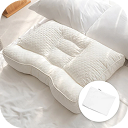
Your morning neck stiffness isn't an inevitable part of getting older. It's a physical protest from a spine that spent eight hours out of alignment. If you're tired of waking up with "military neck" or a lingering headache, you need a clear strategy. This pillow firmness guide is designed to help you stop the 3 AM pillow-repositioning cycle for good.
We understand the frustration of buying a pillow that feels like a cloud in the store but turns into a flat pancake within weeks. You deserve a restorative sleep experience that protects your anatomical health. We'll show you how to match your specific sleep position with the ideal density to achieve perfect spinal alignment and eliminate cervical discomfort. It's about finding that precise balance between luxury and medical-grade support.
This article explores the science of neck health and the latest 2026 trends in ergonomic bedding. We'll preview the specific firmness levels required for side, back, and stomach sleepers. You'll also learn why natural materials like latex are preferred for their ability to maintain their shape and provide breathable comfort without feeling rock-hard.
Key Takeaways
- Discover why incorrect resistance triggers a "fight or flight" response in your neck muscles, leading to chronic tension and poor sleep quality.
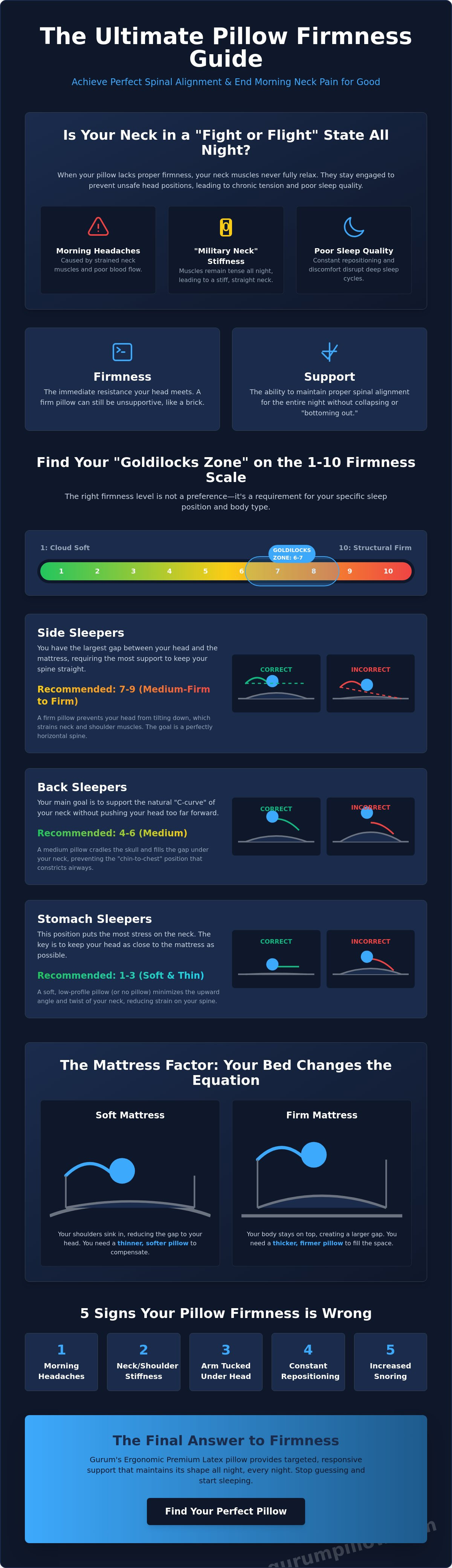
- Use our 1-10 pillow firmness guide to find your "Goldilocks zone" and maintain perfect spinal alignment based on your specific sleep position.
- Learn the critical difference between loft and firmness to prevent the inconsistent support and "bottoming out" common in traditional fill pillows.
- Identify the subtle physical warning signs, like morning headaches or sleeping with your arm tucked under your head, that prove your pillow is failing you.
- Explore how the targeted ergonomic contour of a Premium Latex Pillow provides the specific structural support your cervical spine requires to fully relax.
What is Pillow Firmness and Why Does It Affect Your Sleep Quality?
Firmness isn't just about how "hard" or "soft" a surface feels to the touch. It is the immediate resistance your head meets when you lie down. This pillow firmness guide treats that sensation as more than a preference; it's a physiological requirement for rest. While the basic question of What is a Pillow? might seem simple, the science of how it reacts to your body weight is remarkably complex.
When your pillow doesn't provide the right resistance, your body enters a state of high alert. Your neck muscles don't actually relax. Instead, they stay engaged in a "fight or flight" response to prevent your head from falling into an unsafe position. You haven't truly slept if your muscles have been bracing themselves all night. This constant tension is what leads to that familiar morning "military neck" stiffness.
Proper firmness also dictates how well you breathe. If your head sinks too deep, your chin can drop toward your chest. This constricts your airway and often leads to increased snoring or shallow breathing. The ultimate goal of any firmness choice is "cervical neutral." This is the state where your head, neck, and spine form a straight, unstrained line that allows your nervous system to fully decompress.
Firmness vs. Support: The Critical Difference
Many people confuse these two terms, but they serve different functions. A pillow can be firm but entirely unsupportive. Imagine sleeping on a literal brick; it's firm, but it doesn't contour to your neck's natural shape. Support is the ability to maintain spinal alignment for eight hours. This pillow firmness guide emphasizes that soft pillows often feel great for five minutes but fail the support test by 2 AM as the materials compress and lose their structural integrity.
How Your Pillow Impacts Cervical Spine Alignment
Your neck has a natural "C-curve" that must be preserved. When your pillow is the wrong firmness, it forces your neck into a flat or awkward position. This strain pulls on the delicate muscles and nerves at the base of your skull. Cervical alignment is the essential physical state required to maintain blood flow and prevent the onset of chronic morning headaches.
The Pillow Firmness Scale: Matching Your Sleep Position to Support
Understanding a 1-10 scale is the easiest way to use this pillow firmness guide effectively. At level 1, you have "Cloud-Soft" options that offer almost zero resistance. At level 10, you find "Structural-Firm" models that feel like a solid block. For the vast majority of sleepers, the "Goldilocks zone" sits between 6 and 7. This medium-firm range provides enough push-back to keep your head elevated while remaining soft enough to prevent ear pain or pressure points.
Your mattress also plays a silent role in this calculation. If you sleep on a very soft mattress, your shoulders sink deeper into the bed. This reduces the distance between your head and the mattress surface, meaning you actually need a thinner, slightly softer pillow. Conversely, a firm mattress keeps you "on top" of the bed, requiring a firmer pillow to fill the resulting gap. Combination sleepers who rotate throughout the night should prioritize a responsive 6.5 firmness that adapts to various angles without collapsing.
Side Sleepers: The Need for Structural Firmness
Side sleeping creates the largest physical gap between your ear and the edge of your shoulder. If your pillow is too soft, your head will tilt downward toward the mattress all night. This creates a massive strain on the side of your neck and can lead to permanent postural issues. You need structural firmness to hold the weight of your head at a level height. Finding the best pillow for side sleepers involves looking for materials that won't bottom out by morning. A firm foundation ensures your cervical spine stays perfectly horizontal, preventing that "crunched" feeling in your lower shoulder.
Back and Stomach Sleepers: Balancing Loft and Plushness
Back sleepers require a delicate balance. If your pillow is too firm, it forces your head upward in a "chin-to-chest" tilt. This restricts your airway and strains the back of your neck. You want a medium firmness that contours to the back of your skull while supporting the natural curve of your neck. Researching the right pillow for neck pain shows that back sleepers benefit most from a "cradle" effect.
Stomach sleepers face the highest risk of misalignment. A firm pillow in this position forces the neck into an unnatural backward arch. If you can't break the habit of stomach sleeping, choose a very soft, low-loft option. This keeps your head as close to the mattress as possible. If you wake up feeling like your head is being pushed forward or backward, your firmness level is likely too high for your position. You can find specialized restorative sleep tools designed to solve these specific alignment struggles.
Beyond the Scale: How Material and Loft Influence Firmness
Firmness doesn't exist in a vacuum. It's heavily influenced by "loft," which is the technical term for a pillow's height. This pillow firmness guide clarifies that while firmness describes resistance, loft describes the physical space the pillow occupies. You can have a firm pillow that's too thin, or a soft pillow that's too thick. Both will fail to protect your neck. Finding the intersection of these two variables is the secret to a pain-free morning.
Traditional pillows filled with down or polyester fibers rely on "fill power" to create their shape. This leads to a frustratingly inconsistent experience. You might fluff your pillow before bed, but as the night progresses, the air trapped between the fibers escapes. The firmness you started with vanishes. By 3 AM, you're left with a flat, unsupportive surface that forces your neck into a strained position. Synthetic materials are also prone to "bottoming out." They lose their structural integrity quickly, often within just a few months of use.
Temperature also plays a hidden role in material behavior. Memory foam, for instance, is highly sensitive to heat. It might feel supportive when you first lie down in a cool room. However, as it absorbs your body heat, the chemical structure softens. This leads to a "sinking" sensation that leaves your cervical spine unsupported. This pillow firmness guide suggests looking for materials that remain stable regardless of the environment.
The Latex Advantage: Why Responsive Support Beats Memory Foam
The primary difference between materials is how they react to pressure. Memory foam is designed to "sink" and contour, which can feel like it's trapping your head. Natural latex provides active "push-back" support. It's a responsive material that maintains its shape and density throughout the night. Because 100% natural latex is breathable and temperature-neutral, it doesn't soften or lose its firmness rating when you get warm. Many sleepers find that natural latex pillows offer a unique "supportive soft" feel. It's the comfort of a plush surface combined with the structural reliability of a medical-grade tool.
Understanding Loft: How Height Changes the Feel of Firmness
Loft can actually trick your senses. A high-loft pillow with a "soft" rating can feel firmer than a low-loft "firm" pillow simply because there is more material to compress. To find your ideal loft, you should measure the distance from the base of your neck to the outside edge of your shoulder. This measurement dictates how much "fill" you need to keep your head level. If you have broad shoulders, a low-loft pillow will never provide enough support, no matter how firm it is. The right loft ensures the firmness works for your anatomy by filling the gap between your head and the mattress perfectly.
5 Signs Your Current Pillow Firmness is Sabotaging Your Rest
Your body is a master of adaptation, but it shouldn't have to compensate for a failing sleep surface. If you've been using this pillow firmness guide to evaluate your setup, you might already suspect your current pillow is the culprit. Physical symptoms often manifest before the pillow visibly falls apart. Recognizing these red flags is the first step toward reclaiming your restorative rest.
- Sleeping with your arm under the pillow: This is a subconscious attempt to add height and firmness. If you're doing this, your pillow's loft has likely collapsed and is no longer filling the gap between your ear and the mattress.
- The 3 AM fluff-and-fold: If you're constantly repositioning or folding your pillow in half during the night, the internal structure is no longer capable of providing consistent, reliable support.
- Chronic morning "brain fog": Poor alignment can restrict blood flow and oxygen to the brain; this leaves you feeling groggy and disconnected even after a full night of sleep.
- Jaw tension or ear pain: Excessive firmness that doesn't contour to your head puts undue pressure on the temporomandibular joint (TMJ) and the delicate cartilage of your ear.
- Visible dipping or discoloration: A permanent indentation in the center or a yellowing core indicates that the materials have chemically broken down. They have lost their hygienic and structural integrity.
Physical Red Flags: Morning Stiffness and Headaches
A "Cervical Headache" is a specific type of pain that originates from the neck. It's often caused by poor firmness that pinches the nerves at the base of your skull. This irritation radiates upward, creating a dull throb that can last for hours after you wake up. You might also experience "military neck," a sensation where your cervical spine feels unnaturally straight and rigid. This is a classic firmness failure. When your pillow is too soft or too flat, it forces your muscles to stay contracted all night to protect your spine. For those struggling with these specific symptoms, our cervical pillow guide offers deeper insights into how ergonomic support can heal these tension patterns.
The "Pillow Punching" Test: Identifying Structural Failure
You can test your pillow's health in about ten seconds. Place it on a flat surface and press your fist firmly into the center. A healthy, responsive pillow should spring back to its original shape instantly. If it leaves a deep crater that only slowly fills, the material is fatigued. For fiber-fill or down pillows, try the folding test. Fold the pillow in half and squeeze the air out. If it doesn't snap back open immediately, it's time for a replacement. Stop trying to "fix" a pillow that has lost its structural core. You can upgrade to a Premium Latex Pillow that maintains its firmness and shape for years rather than months.
Why Gurum’s Ergonomic Latex Design is the Final Answer to Firmness
We've spent years analyzing why traditional bedding fails to deliver on its promises. The Premium Latex Pillow wasn't created in a marketing boardroom; it was born from a personal mission to solve the cycle of chronic neck pain and morning stiffness. This pillow firmness guide has explored the dangers of collapsing support and inconsistent materials. Our specific ergonomic contour addresses these failures by providing targeted firmness exactly where your cervical spine requires it most. It doesn't just cushion your head. It secures your alignment.
The design features a subtle but intentional curve that cradles the neck while allowing the head to rest at a neutral height. This prevents the "chin-to-chest" tilt that back sleepers dread and the "shoulder-scrunch" that plagues side sleepers. By using a material that reacts instantly to your movements, we've eliminated the need for the 3 AM pillow-repositioning dance. You can finally stop fighting with your bedding and start trusting it to do its job.
Beyond the immediate comfort, our 100% natural latex core is inherently breathable and hypoallergenic. It naturally resists dust mites and mold without the use of harsh chemicals. This creates a sleep environment that is as healthy for your lungs as it is for your spine. When you choose a tool designed for anatomical health, you aren't just buying a pillow. You're investing in a pain-free future.
100% Natural Latex: The Science of "Supportive Softness"
Natural latex possesses a unique molecular structure that other materials simply cannot replicate. It's an open-cell material that offers an elastic, spring-like quality. This creates what we call "supportive softness." You get the initial plush feel of a luxury surface without the subsequent structural collapse. Unlike memory foam, which can feel like quicksand as it traps body heat, natural latex provides active push-back. It doesn't require a "breaking in" period or specific room temperatures to function correctly. It is ready to support you from the very first minute of the very first night. It's why the best latex pillow for neck pain is frequently described as a transformative experience for those who have suffered through years of market disappointments.
Investing in Longevity: Pillows That Don’t Flatten
Most consumers are stuck in a wasteful cycle of replacing fiber-fill or down pillows every six months because they lose their firmness. A 100% natural latex core is a definitive break from that pattern. It is engineered to maintain its structural integrity and specific firmness rating for 5 to 10 years. When you calculate the cost-per-sleep, it becomes the most sustainable and economical choice for your wellness. To further maintain hygiene, our Anti-Allergy Pillow Cover protects the core from environmental sensitivities while keeping the surface cool to the touch. We believe that restorative sleep is a fundamental right, not a luxury. You deserve to wake up without pain, feeling fully refreshed and physically capable. It's time to experience the relief that comes with a perfected solution.
Step Into Your Future of Pain-Free Mornings
You now have the tools to evaluate your sleep environment with clinical precision. This pillow firmness guide has shown that true rest depends on the intersection of correct loft and resilient material. A pillow that "bottoms out" or traps heat is actively sabotaging your recovery. By choosing a surface that maintains its structural integrity, you protect your cervical spine and ensure your muscles finally stop bracing for impact.
Ji H. Won designed our solution specifically to end the cycle of chronic neck discomfort. Our 100% Natural Latex core is engineered to provide consistent support that never flattens over time. It's a professional-grade tool for your home that bridges the gap between luxury and medical necessity. We even offer free shipping on qualifying US orders to make your transition to better health as smooth as possible.
End your search for the perfect support; shop the Gurum Premium Latex Pillow today.
You don't have to settle for another night of stiffness or the frustration of a failing pillow. You deserve to wake up feeling refreshed and ready for the day ahead.
Frequently Asked Questions
How do I know if my pillow is too firm?
Your head will feel like it is resting on top of the pillow rather than being cradled by it. You might experience ear pain, jaw tension, or a "chin-to-chest" tilt that strains the back of your neck. These are physical signs that the resistance level is too high for your anatomy. If you wake up with a dull ache at the base of your skull, your pillow is likely too rigid.
What is the best pillow firmness for side sleepers with neck pain?
Side sleepers typically require a firm or medium-firm pillow to fill the wide gap between the ear and the shoulder. This structural resistance is necessary to keep the head from drooping toward the mattress. Proper firmness ensures the cervical spine remains in a neutral, horizontal line. This prevents the nerve compression and muscle strain that often cause chronic morning pain.
Do pillows lose their firmness over time?
Most traditional pillows lose their structural integrity within six to twelve months as fibers compress and clump. This leads to a significant loss of support and a "bottoming out" sensation. In contrast, 100% natural latex is known for its durability. It typically retains its original shape and firmness for five to ten years, making it a much more reliable investment for your health.
Can a pillow that is too soft cause headaches?
Yes, a pillow that lacks sufficient firmness allows the head to sink into an unnatural angle. This misalignment pinches the delicate nerves and blood vessels at the top of the spine. The result is often a "cervical headache" that greets you the moment you wake up. Without enough push-back, your neck muscles stay tense all night trying to stabilize your head.
Is medium-firm better than firm for back sleepers?
Medium-firm is typically the better choice because it allows the back of the skull to settle while cradling the neck. A purely firm surface can be too aggressive, forcing the head into an unnatural forward tilt. This pillow firmness guide recommends medium-firm to maintain the natural C-curve of the spine without creating pressure points. It provides the perfect balance of comfort and anatomical support.
How does mattress firmness affect which pillow I should choose?
A soft mattress allows your shoulders to sink deeper, which actually requires a lower-loft, softer pillow to maintain alignment. A firm mattress keeps your body on top of the surface, creating a larger gap between your head and the bed. This setup requires a firmer, higher-loft pillow to bridge that space. Your pillow and mattress must work together to keep your spine straight.
What is the "loft" of a pillow and why does it matter for firmness?
Loft refers to the uncompressed height of the pillow. It is a critical variable because even the correct firmness can't protect your neck if the height doesn't match your shoulder breadth. Think of loft as the quantity of support and firmness as the quality of resistance. You need both the correct loft to fill the physical gap and the right firmness to maintain that height throughout the night.
Why do I wake up putting my hand under my pillow?
You are likely compensating for a pillow that has flattened or was too thin to begin with. Your subconscious mind is attempting to manually adjust your spinal alignment by adding the height of your hand. It is a definitive sign that your current setup has failed the support test. Consulting a pillow firmness guide can help you identify a replacement that stays high and supportive without manual help.