

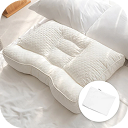
Did you know that a single unprotected pillow can host over one million dust mites within just two years? It's a staggering thought, especially when you've invested in a premium latex or ergonomic pillow to improve your rest. You likely wash your pillowcases every week, yet you're still waking up with morning congestion or unexpected skin breakouts. It's frustrating to see your high-end bedding lose its pristine white glow to yellowing stains you can't seem to stop. You want to keep your sleep environment sterile, but you're also worried that frequent laundering might damage delicate materials.
Understanding exactly how often to wash pillow protectors is the missing link between a basic bed and a truly hygienic sanctuary. We've built this 2026 guide to help you protect your skin, your respiratory health, and your premium pillow investment. You'll discover a clear maintenance schedule tailored to your specific health needs, ensuring you reduce allergen exposure while extending the lifespan of your pillows. We'll explore the science of clean sleep and the simple steps required to wake up feeling genuinely refreshed and pain-free every morning.
At a Glance:
- Learn exactly how often to wash pillow protectors to maintain a sterile sleep environment, with schedules ranging from monthly refreshes to weekly allergy prevention.
- Discover why 140°F water is the essential temperature for neutralizing dust mites and safeguarding your respiratory health.
- Master the stretch test to identify when your protector has lost its shape and is no longer shielding your premium pillow core.
- Stop the cycle of yellowing and odors by recognizing the signs of barrier failure before they damage your expensive bedding investment.
- Find out how the Gurum Anti-Allergy Pillow Cover balances medical-grade protection with the breathability you need for cool, restorative rest.
The Silent Shield: Why Your Pillow Protector Needs Regular Care
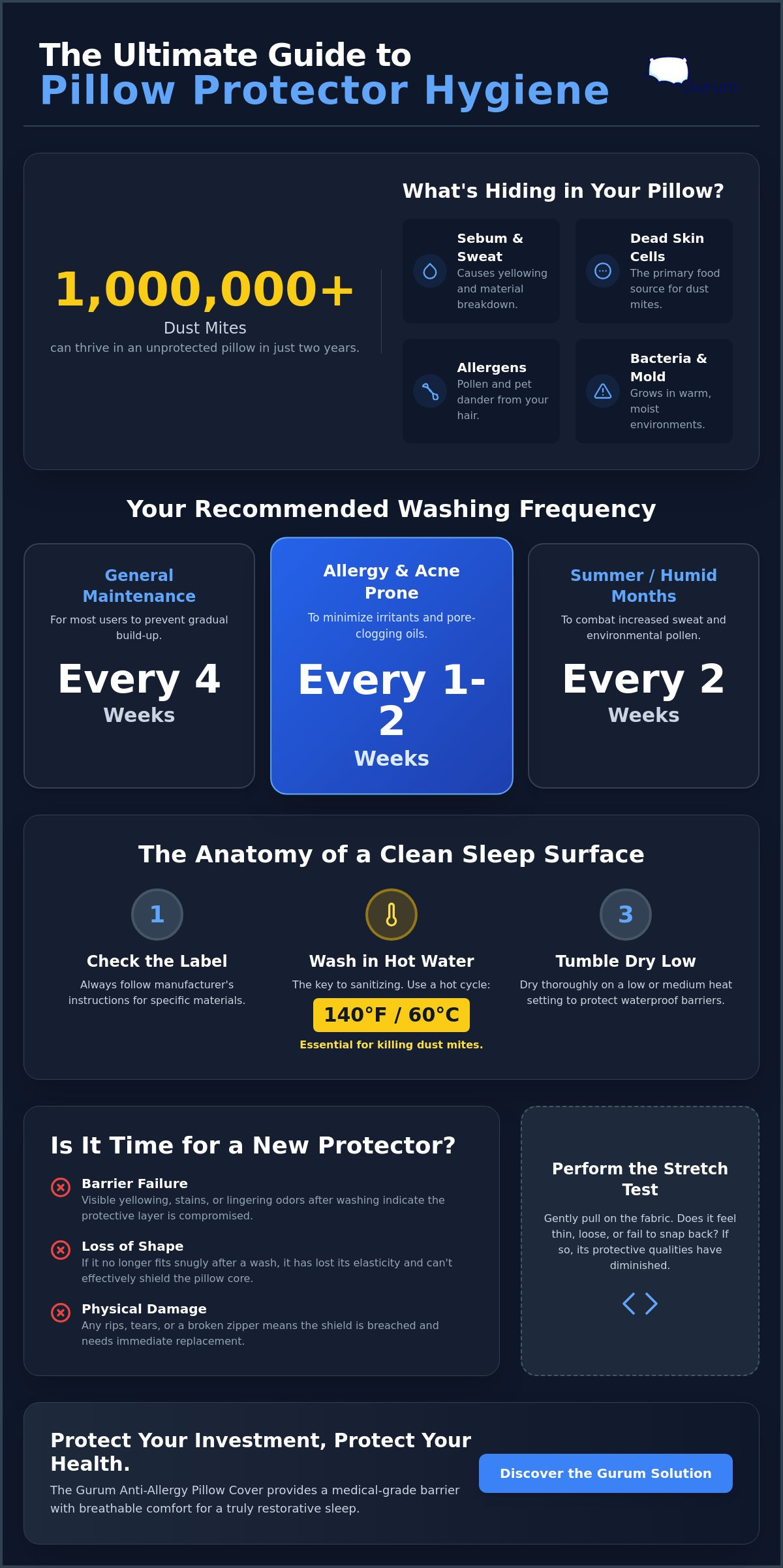
A pillowcase is a thin veil, not a vault. While it feels soft against your cheek, it's porous enough to let microscopic debris pass through every single night. This is where Pillow protectors step in. They serve as the essential barrier between your decorative pillowcase and the actual core of your pillow. Without this layer, your pillow becomes a sponge for everything your body sheds. Sebum, which is your natural skin oil, sweat, and millions of dead skin cells permeate standard pillowcases within hours of sleep.
This accumulation creates a hidden "bio-burden" that most sleepers ignore. Over time, these organic materials settle into the pillow fibers, creating a dark, warm, and nutrient-rich environment. It's the perfect breeding ground for dust mites and even mold. When you consider how often to wash pillow protectors, you are essentially deciding how often to reset your sleep hygiene. A clean protector doesn't just keep your bed smelling fresh; it actively prevents the growth of colonies that can irritate your skin and lungs. Specifically, this regular maintenance helps block:
- Sebum and Sweat: Oils that can cause yellowing and material breakdown.
- Dead Skin Cells: The primary food source for dust mite populations.
- Environmental Allergens: Pollen and pet dander that hitch a ride on your hair.
For those struggling with persistent breakouts, the state of your protector is often the culprit. When oils and bacteria saturate your bedding, they transfer back to your pores, leading to "sleep-induced" acne. Keeping this shield clean is a non-negotiable step for clear skin. It's about more than just aesthetics; it's about anatomical hygiene and long-term health.
Protecting Your Ergonomic Investment
Moisture is the silent enemy of high-end bedding. If you've invested in the best latex pillow for its supportive properties, you need to guard its structural integrity. Sweat and humidity can cause premium materials to degrade, leading to a loss of that crucial neck support. Washing a protector is a simple, cost-effective habit that saves you from the premature expense of replacing a high-performance pillow. A high-quality cover acts as a specialized bio-barrier that locks out fluids while maintaining necessary airflow for the material beneath.
The Respiratory Health Connection
Your lungs never stop working, even when you're deep in REM sleep. If your protector is neglected, it becomes a reservoir for allergens like mite waste and pollen. This leads to the concept of "re-breathing," where you inhale these trapped particles with every breath, often resulting in nighttime asthma or morning congestion. Using an anti-allergy pillow cover provides a medical-grade defense for sensitive sleepers. It creates a hostile environment for allergens, ensuring your airway remains clear and your sleep stays restorative. Understanding how often to wash pillow protectors ensures this defense never falters.
How Often to Wash Pillow Protectors: The 2026 Hygiene Standard
Maintaining a sterile sleep environment requires more than just rotating your sheets. While most people wash their pillowcases weekly, the protector often sits forgotten for months. This is a mistake. As a general rule, you should wash your pillow protector at least once a month. This baseline ensures that the microscopic build-up of oils and skin cells doesn't reach the core of your pillow. However, the question of how often to wash pillow protectors isn't one-size-fits-all. Your specific lifestyle and health needs dictate a more rigorous schedule.
Don't fall for the trap of thinking a clean pillowcase equals a clean bed. Gravity and pressure force sweat and sebum through the fabric of your case and onto the protector every night. By the time you see a yellow stain, the barrier is already compromised. Summer months demand an even stricter schedule. Warmer nights mean more sweat. Urban heat traps more pollution and pollen, creating a sticky environment on your bedding that requires a bi-weekly wash to prevent irritation.
When to Wash Every 1-2 Weeks
If you're waking up with puffy eyes, your 14-day clock has already run out. In 2024, approximately 1 in 4 U.S. adults were diagnosed with seasonal allergies. With allergy seasons now lasting 21 days longer than they did in 1970, your bed is a primary site for allergen accumulation. You must switch to a weekly or bi-weekly cycle if you fall into these categories:
- Pet Lovers: Dander and outdoor allergens from paws settle deep into fabric layers.
- Skin Care Enthusiasts: Heavy night creams and hair products transfer to the protector, creating a film that traps bacteria.
- Active Sleepers: If you struggle with night sweats or have naturally oily skin, a 7-day wash cycle is essential for skin health.
The Monthly Maintenance Routine
For back sleepers with low-activity skin types, a monthly schedule is usually sufficient to maintain hygiene. It's helpful to coordinate this with your cervical pillow deep-cleaning schedule. This ensures your entire ergonomic setup remains fresh and supportive at the same time. Understanding how often to wash pillow protectors allows you to stay ahead of environmental triggers before they disrupt your rest.
If you aren't sure if it's time, try the "sniff and sight" test. Look for faint yellowing under bright light. Smell the fabric near the zipper. If you detect a musky scent, you've waited too long. For those who prioritize deep, restorative rest, upgrading to a high-performance anti-allergy pillow cover can simplify your maintenance while providing a more robust barrier against daily debris.
The Anatomy of a Clean Sleep Surface: Step-by-Step Washing Guide
Once you've determined how often to wash pillow protectors based on your unique health profile, the actual laundering process requires precision. It's tempting to treat these covers like standard towels, but specialized fabrics need a more calculated approach. Always start by checking the care label. These manufacturer instructions are the primary blueprint for maintaining the material's barrier function. Ignoring them can lead to premature wear or a loss of the very protection you're seeking.
Temperature is your most powerful tool for hygiene. To effectively neutralize dust mites and stubborn allergens, your wash water should reach at least 140°F. While cooler settings are fine for decorative items, they won't kill the microscopic organisms that trigger nighttime congestion. Use a mild, fragrance-free liquid detergent. Liquid formulas are superior here because they dissolve completely, whereas powders can leave behind a gritty residue that irritates the skin and traps bacteria within the weave.
We highly recommend the "Double Rinse" method. Because protectors are engineered to be dense barriers, they often trap soap suds more effectively than standard clothing. Running a second rinse cycle ensures that every trace of chemical residue is flushed away. This is a vital step for anyone with environmental sensitivities or reactive skin who wants to wake up without redness or irritation.
Safe Laundering for Specialized Materials
Small habits make a significant difference in the lifespan of your bedding. Always close the zipper before the wash cycle begins. This simple act prevents the metal teeth from snagging on other items and stops the protector from acting as a "bag" that traps excess water. Never use bleach or fabric softeners. These substances are far too aggressive for technical fabrics; they clog the microscopic pores and can strip away the specialized coatings found on an anti-allergy pillow cover.
Drying Without Damage
Drying is the stage where most people accidentally compromise their investment. High heat is the enemy of modern sleep technology. Excessive temperatures can melt TPU linings and cause anti-allergy fibers to shrink or become brittle. For the best results, tumble dry on the lowest possible heat setting or air dry your covers entirely. Understanding how often to wash pillow protectors is only half the battle; drying them correctly ensures they continue to work.
Confirm the protector is 100% dry before placing it back on your bed. Even a trace amount of trapped moisture can foster mold growth inside your best pillow for side sleepers. Taking the extra time to ensure total dryness protects both your respiratory health and the structural loft of your pillow.
Beyond the Wash: When to Replace vs. When to Launder
Even a well-maintained shield has an expiration date. You can be diligent about your cleaning schedule, but every fabric eventually faces "barrier failure." This occurs when the fibers become so saturated with microscopic oils or so worn from agitation that they no longer block allergens effectively. While you've mastered how often to wash pillow protectors, you must also recognize when the fabric has reached its functional limit. Generally, you should replace your pillow protector every 1 to 2 years to ensure your sleep environment remains truly sterile.
Physical integrity is just as important as cleanliness. Perform the stretch test: pull the fabric gently in two directions. If it doesn't snap back into its original shape, the weave has loosened. A loose weave allows dust mites and dander to pass through to your pillow core. Similarly, check your zipper health. A sticking or broken zipper compromises the anti-allergy seal, leaving a gaping entry point for environmental triggers. If the seal isn't absolute, the protection is non-existent.
The Yellowing Dilemma
Persistent yellowing is a red flag. These stains are caused by a build-up of sebum and sweat that has chemically bonded with the fabric. If a deep clean soak using baking soda and vinegar doesn't lift the discoloration, the protector is likely harboring deep-seated bacteria. This bio-burden can eventually transfer to your skin or the pillow beneath. Identifying this "point of no return" is vital. When stains and musky odors survive a hot wash, laundering is no longer enough. It's time for a fresh start.
Upgrading for Better Support
A degraded protector doesn't just impact hygiene; it affects comfort. A worn-out, stiffened cover can interfere with the contouring properties of specialized bedding, such as a natural latex travel pillow. You'll notice a significant tactile difference between a fresh, supple cover and one that has become brittle from over-washing. Upgrading to a high-thread-count anti-allergy cover restores that smooth, sensory satisfaction while providing a robust medical-grade barrier.
Don't let a failing cover compromise your health or your expensive pillows. If your current shield shows signs of permanent staining or lost elasticity, it's time to invest in a professional-grade solution. Ensure your rest remains uninterrupted and hygienic by choosing a new Anti-Allergy Pillow Cover today.
Protecting Your Investment: The Gurum Anti-Allergy Solution
Understanding the science of a sterile bed is only half the battle. You need a barrier that performs as well as your high-end pillow. The Gurum Anti-Allergy Pillow Cover is specifically engineered as the perfect companion for our Premium Latex Pillow. Many generic protectors use thick, plastic-like linings that create a crinkly sound and trap body heat. We've solved this. Our specialized weave is dense enough to block micro-allergens but breathable enough to prevent the "hot sleep" that often disrupts restorative rest. It's a professional-grade tool designed for the home sanctuary.
When you consider how often to wash pillow protectors, you want a product that doesn't degrade after three trips to the laundry room. We've tested our covers to ensure they withstand the high temperatures required to neutralize dust mites. The fabric remains soft and the barrier stays intact, wash after wash. This durability is essential for anyone following a strict hygiene schedule. It ensures your investment stays protected while your skin remains clear and your airway stays open. You shouldn't have to choose between a clean pillow and a comfortable one.
Designed for Latex Pillows
Latex is a unique material. It's prized for its responsive, buoyant feel that provides instant pressure relief. A standard, rigid protector can muffle this sensation, making a premium pillow feel stiff or unresponsive. Our covers are designed with a specific elasticity that moves with the latex core. This snug fit is crucial for maintaining the cervical support you need to wake up pain-free. It ensures the pillow contours to your neck exactly as intended, without the interference of bunching fabric or loose corners that can disrupt spinal alignment.
The Final Step to Restorative Rest
Maintaining your bedding is an act of self-care. It's a commitment to your physical and emotional well-being. By following a consistent routine, you're creating a sanctuary where your body can truly recover from the day's stresses. A clean sleep surface reduces the metabolic load on your immune system, allowing you to focus on deep, healing rest. Remember the baseline: wash your protector monthly, or every two weeks if you have environmental sensitivities. Pair this with a high-performance barrier to lock in your results and keep your sleep environment pristine.
Don't let hidden allergens or degraded fabric stand between you and a perfect night's sleep. Your health is worth the extra step. Upgrade your sleep hygiene with our Anti-Allergy Pillow Cover today.
Master Your Path to Sterile, Pain-Free Rest
Your journey to better sleep doesn't end with choosing the right pillow. It's about maintaining the sterile environment your body needs to truly recover. You now know that while a monthly wash is the baseline, factors like seasonal allergies or nighttime skincare require a more frequent bi-weekly cycle. By using 140°F water and avoiding harsh chemicals, you protect both your skin and your ergonomic investment.
Consistency is key when deciding how often to wash pillow protectors. Don't wait for yellow stains or morning congestion to signal a problem. Proactive care ensures your airway remains clear and your pillow's structural integrity stays intact. Our solution is designed by experts to solve chronic neck pain while using hypoallergenic 100% natural materials to guard your health. It's the final piece of the puzzle for anyone tired of waking up with sensitivities.
Ensure your pillow stays pristine with our Anti-Allergy Pillow Cover and enjoy free shipping on qualifying US orders. You deserve a bed that feels like a sanctuary every single night. Sleep well, breathe easy, and wake up ready to take on the day.
Common Questions About Sleep Hygiene
Do I really need a pillow protector if I use a pillowcase?
Yes, because a pillowcase is a decorative comfort layer while a protector is a functional barrier. Standard pillowcases have a loose weave that allows oils, sweat, and microscopic skin cells to pass through easily. A protector acts as a secondary seal that prevents these contaminants from reaching the pillow core. This layer is essential for preventing the build-up of dust mites and mold within your bedding.
Can washing a pillow protector too often damage it?
Washing too frequently with the wrong methods can cause damage, but following proper care instructions prevents premature wear. Use mild detergents and avoid bleach to maintain the fabric's integrity over time. When you follow the guide on how often to wash pillow protectors, you strike the perfect balance between clinical hygiene and the long-term longevity of the material.
How do I get yellow sweat stains out of a pillow protector?
Use a paste of baking soda and water or a pre-soak in white vinegar to lift stubborn yellowing. Apply the paste directly to the stained area for 30 minutes before washing in warm water. If stains persist after multiple treatments, it's a sign that the oils have chemically bonded with the fibers. At this stage, the protector's barrier is likely compromised and it should be replaced.
Should I wash a new pillow protector before using it?
You should always wash a new protector before its first use. This removes any chemical residues, starches, or factory dust accumulated during the manufacturing and shipping process. Laundering it once also ensures the fabric is soft and ready for immediate skin contact. It's a simple step that guarantees your new sleep surface is truly sterile from night one.
What is the best water temperature for washing bedding for allergies?
The best water temperature for neutralizing allergens is 140°F (60°C). This specific heat level is required to kill house dust mites and denature the proteins that cause allergic reactions. Lower temperatures might clean the surface of the fabric but won't eliminate the underlying biological triggers. High-quality protectors are designed to withstand this heat without losing their protective properties.
Is it okay to put a pillow protector in the dryer on high heat?
Never use high heat in the dryer for a pillow protector. Excessive heat can melt thin waterproof membranes or cause specialized anti-allergy fibers to become brittle and shrink. Tumble dry on the lowest possible heat setting or hang the cover to air dry. This preserves the elasticity and the microscopic weave that keeps your pillow core safe from debris.
How can I tell if my pillow protector is still waterproof or allergen-proof?
You can test the barrier by placing a few drops of water on the surface; it should bead up rather than soak in. For allergen-proof covers, hold the fabric up to a bright light and look for thinning. If you see visible gaps in the weave or if the fabric feels "crunchy," the protector is no longer providing an effective seal against contaminants.
Can I wash my pillow and the protector at the same time?
You can wash them in the same load, but they have very different drying requirements. Pillows often require much longer to dry completely than a thin protector. It's usually more efficient to wash them separately to ensure each item receives the specific care its material requires. Knowing how often to wash pillow protectors helps you schedule these tasks without overwhelming your laundry routine.