
Your pillow is likely home to millions of microscopic triggers that shouldn't be there. It's a heavy realization. You go to bed seeking rest but wake up with a clouded head and itchy eyes. If you've asked yourself, do pillow covers help with allergies, you're looking for more than just a product. You're looking for relief from the constant cycle of morning congestion and interrupted breathing. We know how frustrating it is to feel like your bedroom is the source of your discomfort rather than your sanctuary.
True rest is a physical necessity, not a luxury. In this guide, you'll discover how the right pillow cover acts as a microscopic shield to eliminate allergens and transform your sleep health. We'll demystify technical terms like "microns" and explain the vital difference between a basic protector and a scientific barrier. You'll also learn why the term "hypoallergenic" is often unregulated and how to identify a durable, breathable solution that actually works. It's time to stop the sneezing and start waking up feeling clear-headed and ready for the day.
Key Takeaways
- Understand why standard cotton cases fail and how a pore size under 10 microns creates a true microscopic shield.
- Discover the definitive answer to "do pillow covers help with allergies" by identifying the difference between basic protectors and scientific barriers.
- Learn why the core material of your pillow determines your total "bio-load" and why organic down may be sabotaging your sleep.
- Master the 130°F washing rule to effectively eliminate dust mites and keep your allergy shield performing at its peak.
- See how pairing an Anti-Allergy Pillow Cover with a breathable latex core can finally resolve both morning congestion and physical discomfort.
The Hidden Truth About Morning Allergies and Your Pillow
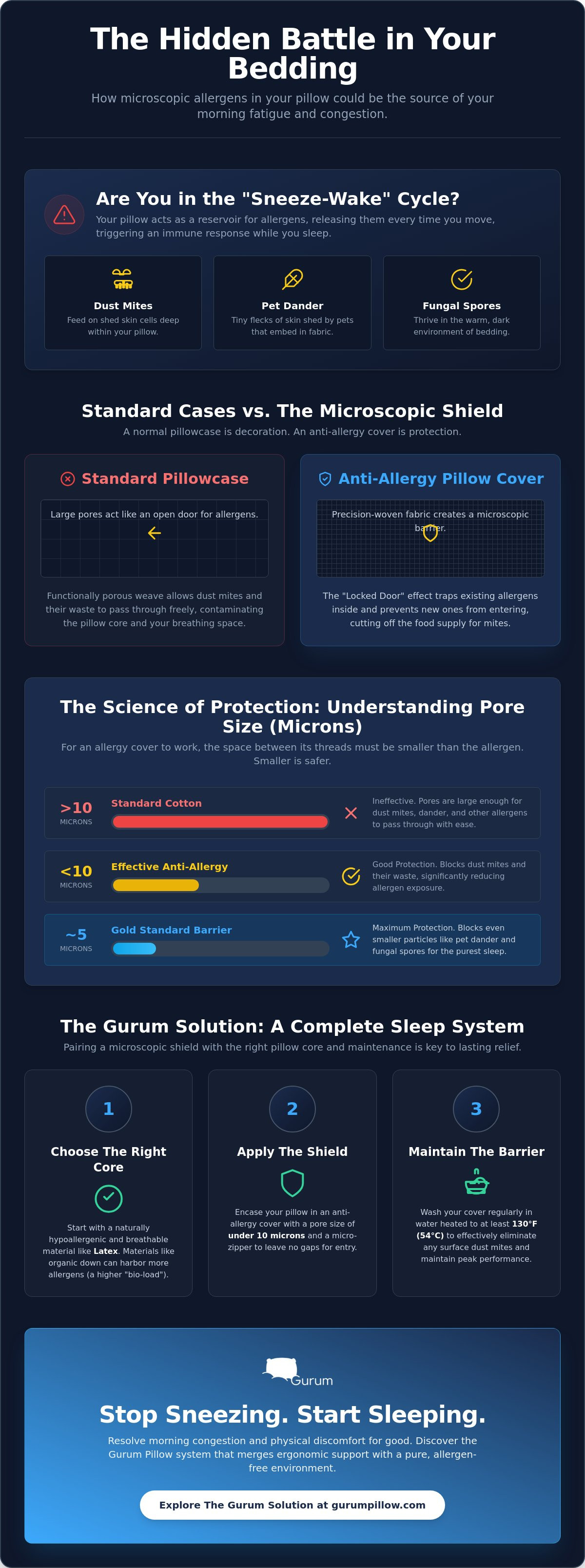
Your pillow is a living, breathing ecosystem. It isn't a pleasant thought, but it's the reality for most sleepers. Every night, you rest your face against a surface that likely teems with dust mites, fungal spores, and pet dander. These microscopic organisms thrive in the warm, dark environment of your bedding. They aren't just passive residents; they are active triggers. If you've wondered, do pillow covers help with allergies, the answer depends entirely on the technology behind the fabric. A standard case is just a decoration. A true anti-allergy cover is a precision-woven barrier designed to stop microscopic intruders in their tracks.
Many people suffer from what we call the "Sneeze-Wake" cycle. You go to bed feeling fine, but you wake up with a clouded head and itchy eyes. This nocturnal exposure ruins your daytime productivity. Your brain feels foggy because your immune system has been fighting a battle all night. Instead of recovering, your body is reacting. This constant state of high alert prevents deep, restorative rest. You wake up feeling like you've been working rather than sleeping.
Why Your Current Pillowcase Isn't Enough
Standard cotton weaves feel soft, but they are functionally porous. Their threads have "gaps" large enough for thousands of dust mites to pass through with ease. These pests don't just stay on the surface; they burrow deep into the core of your pillow. They feed on your shed skin cells, which accumulate in the fibers every single night. Every time you toss or turn, the pillow acts like a bellows. It puffs clouds of allergens directly into your respiratory system. Traditional cases offer zero protection against these particles because they were never designed for filtration. They were designed for aesthetics.
Symptoms of a 'Toxic' Sleep Environment
Identifying a "toxic" sleep environment is the first step toward relief. It's easy to mistake bedroom allergies for a common cold. However, bedroom allergies have a specific rhythm. If your congestion peaks in the morning and clears up after you leave the house, your pillow is the likely culprit. Understanding how allergen-proof covers work reveals that fabric density is the ultimate decider of your sleep quality. Beyond respiratory issues, an unprotected pillow can lead to other physical frustrations:
- Chronic Skin Irritation: Dust mite debris can trigger eczema or persistent acne on the cheeks and jawline.
- Gritty Eyes: Waking up with red, watery eyes that feel like they have sand in them.
- Persistent Fatigue: Feeling exhausted despite getting eight hours of sleep because your breathing was restricted.
An anti-allergy cover serves as a microscopic shield. It traps existing allergens inside the pillow so they can't reach your face. Simultaneously, it prevents new skin cells from entering the pillow core. It's a simple, scientific solution to a complex physical struggle. By cutting off the food supply and blocking the exit, you finally break the cycle of morning discomfort.
How Anti-Allergy Pillow Covers Create a Microscopic Shield
Understanding how a fabric barrier works changes the way you look at your bedding. If you've spent years suffering from morning congestion, you've likely asked, do pillow covers help with allergies or are they just an extra layer of laundry? The science suggests they are the most effective line of defense you can own. Unlike a decorative case, a true anti-allergy cover is engineered with a pore size so small that microscopic triggers simply cannot pass through. It creates a physical dead end for the organisms that disrupt your rest.
The effectiveness of these barriers isn't based on chemicals or sprays. It's based on the precision of the weave. Leading health organizations recommend using allergy-proof pillow covers because they trap existing allergens inside the pillow while preventing new ones from entering. This "Locked Door" effect is bolstered by specialized zipper designs. A standard zipper often has tiny openings at the end of the track. An effective allergy barrier uses an auto-locking, micro-zipper that leaves no gaps for mites to crawl through.
Understanding Micron Ratings
A single micron is approximately 1/250th the size of an average house dust mite, making it the critical unit of measurement for sleep health. For a cover to be effective, the "pore size" (the space between the threads) must be under 10 microns. However, a 5-micron pore size is the gold standard. This level of density blocks not only dust mites but also the much smaller particles of pet dander. While ultra-tight weaves provide maximum protection, they must be balanced with breathability. If the weave is too tight without proper engineering, air cannot circulate, leading to a hot and stifling sleep surface.
Material Matters: Fabric Choices for Sensitive Sleepers
The material you choose determines your comfort throughout the night. Many budget options use a plastic or vinyl backing to achieve a zero-micron pore size. These are effective at blocking allergens but are notorious for causing night sweats. They "crinkle" when you move and trap body heat against your skin. High-quality synthetic microfibers or high-thread-count natural cotton barriers offer a superior experience. These materials use tight weaving techniques to block particles while allowing moisture and air to move freely.
When selecting your shield, look for Oeko-Tex Standard 100 certification. This ensures the fabric is free from harmful substances that could further irritate sensitive skin or respiratory systems. If you're ready to upgrade your sleep environment, a precision-engineered Anti-Allergy Pillow Cover provides the scientific barrier you need without the heat of traditional plastic protectors. By choosing a breathable, certified material, you ensure your immune system finally gets the night off. You'll wake up feeling refreshed because your body didn't have to fight for every breath.
Why Your Pillow Material is the Foundation of Allergy Relief
A high-quality cover is a vital shield. However, it cannot do all the heavy lifting alone. If you're asking, do pillow covers help with allergies, you must also look at what's happening beneath that barrier. The material inside your pillow determines the "bio-load," which is the total amount of allergens your sleep environment generates. Putting a protective cover over an old, mite-infested pillow is like putting a fresh coat of paint on a crumbling wall. It looks better, but the structural issue remains. For total relief, the core and the cover must work in tandem.
Organic down and feather pillows present a significant dilemma for sensitive sleepers. While they feel luxurious, feathers are a natural magnet for dust mites. They provide the perfect nesting ground for colonies to grow and thrive. Similarly, many people find that memory foam has a dark secret. It excels at heat retention and moisture buildup. This creates a damp, warm environment where mold and bacteria can multiply. If your pillow core is actively producing allergens, your cover has to work twice as hard to keep them away from your face.
Latex vs. The Rest: A Clean Sleep Comparison
Natural latex is inherently different. Its unique cellular structure is naturally inhospitable to dust mites. They simply cannot find a place to settle or breed within the dense, resilient material. Beyond mites, latex possesses anti-fungal properties that keep the pillow fresh for years. It doesn't trap moisture like synthetic foams. This makes it a superior choice for those who struggle with respiratory issues or skin sensitivities. Beyond hygiene, choosing a specialized cervical pillow made of latex ensures that your physical alignment is as healthy as your breathing environment.
The Synergy of a Hypoallergenic Core and Barrier Cover
Think of your sleep setup as a double-layer defense system. A cover on a "dirty" pillow is a temporary bandage. When you pair a hypoallergenic core like natural latex with a precision-engineered barrier, you achieve total peace of mind. This combination reduces the "workload" of your anti-allergy cover. Instead of fighting a massive internal colony, the cover only has to manage the occasional external particle. This synergy is essential for severe allergy sufferers who need a sterile sleep environment to function. You deserve a solution that addresses the root cause, not just the symptoms. By choosing the right foundation, you ensure that when you ask, do pillow covers help with allergies, the answer is a definitive yes.
Maintenance: Keeping Your Allergy Shield Effective
Owning an allergy barrier is a long-term commitment to your respiratory health. You've invested in the technology to reclaim your mornings, but the longevity of that protection depends on how you treat the fabric. If you've wondered, do pillow covers help with allergies even after months of use, the answer is a definitive yes, provided you maintain the fabric's physical integrity. Without proper care, the microscopic pores can stretch or clog, turning your shield into a standard, ineffective pillowcase. Maintenance isn't just about cleanliness. It's about preserving a scientific barrier.
Heat is your most powerful ally in this process. Dust mites are resilient organisms that can survive standard cold-water cycles. To truly neutralize the "bio-load" inside your bedding, you must follow the 130°F Rule. Washing your covers in water that reaches at least 130-140°F (55-60°C) is the only verified way to kill mites and dissolve their allergenic proteins. Cold water might rinse away surface dust, but it leaves the triggers behind. By using high heat, you ensure your sleep environment remains clinically clean rather than just visually tidy.
The Ultimate Bedroom Hygiene Checklist
Consistency is the secret to a sneeze-free bedroom. You don't need to wash everything every day, but you do need a rhythm that addresses both the inner and outer layers of your bed. High-performance sleep systems require a layered approach to hygiene:
- Washing Frequency: Wash your decorative outer pillowcase once a week. Your anti-allergy cover only needs a deep clean every two to three months to avoid unnecessary wear on the zipper.
- HEPA Vacuuming: Use a vacuum with a HEPA filter on your mattress and the surface of your protected pillows once a month to remove external dander.
- Humidity Control: Keep your bedroom humidity levels below 50%. Dust mites cannot drink water; they absorb it from the air. In dry environments, they simply cannot survive.
Preserving the Micron Barrier
The specialized weave of an allergy cover is delicate. Harsh chemicals like bleach should be avoided at all costs. Bleach can weaken the individual threads, causing the pore size to expand and allowing allergens to leak through. Similarly, you should never use fabric softeners. These products leave a waxy coating on the fibers that can trap moisture and reduce the breathability of the fabric. This leads to the very heat and dampness that mites love. Always keep the zipper fully engaged. Even a microscopic gap at the end of the zipper track can serve as an entry point for a new colony.
Eventually, every barrier reaches the end of its life cycle. If you notice thinning fabric, loose zipper teeth, or a return of those familiar morning sniffles, your shield may have broken down. To maintain your results, consider replacing your barrier with a fresh Anti-Allergy Pillow Cover to ensure your protection remains absolute. Waking up clear-headed is a result of both great technology and disciplined care. Treat your cover well, and it will continue to protect your breath every night.
The Gurum Solution: Merging Ergonomics with Pure Air
True relief requires more than just a surface-level fix. We've explored the science of micron ratings and the necessity of high-heat maintenance. Now, you need a system that brings these elements together. When people ask, do pillow covers help with allergies, they are often searching for a way to stop the morning fog and physical exhaustion. Our solution isn't just a product. It's a holistic approach to bedroom wellness that prioritizes both your respiratory health and your anatomical alignment.
The Gurum Anti-Allergy Pillow Cover works in perfect harmony with our Premium Latex core. This combination addresses the two biggest hurdles to restorative rest: allergens and physical discomfort. While the cover acts as a microscopic shield, the 100% natural latex foundation provides an inherently hypoallergenic environment. Latex doesn't just support your neck; it resists the very mites and molds that trigger your symptoms. You get the benefit of breathable support without the "stuffy" feeling often associated with synthetic materials or plastic-backed protectors.
Designed for the Sensitive Sleeper
Our commitment to your health starts with the materials we choose. We use 100% natural, hypoallergenic latex because it's the gold standard for sensitive sleepers. It provides a dense, cellular structure that dust mites find inhospitable. When you pair this core with our precision-engineered covers, you create a sterile sleep zone. You can learn more about why this material is superior in our guide to the best latex pillow for pain-free rest. Our covers are designed to maintain the sensory satisfaction of our pillows. They feel soft and luxurious against your skin while maintaining the ultra-tight weave necessary for total protection.
Waking Up Refreshed and Pain-Free
Physical comfort and clear breathing are two sides of the same coin. You shouldn't have to choose between a pillow that supports your spine and one that lets you breathe freely. Imagine waking up without the weight of congestion or the sharp pull of neck pain. This is the emotional relief that comes with a perfected sleep system. Thousands of Americans have moved away from traditional, allergenic bedding to trust Gurum for their wellness. We understand the frustration of failed solutions. That's why we've focused on a singular, perfected pairing that addresses the root of your sleep struggles.
Investing in a complete sleep system is an investment in your daily energy and long-term health. By combining an inherently clean material with a scientific barrier, you ensure that your bedroom remains a sanctuary. Stop settling for interrupted rest and start experiencing the physical transformation of a truly clean sleep environment. It's time to reclaim your mornings and breathe easy again. Explore the Gurum Anti-Allergy Collection and find the relief you've been searching for.
Your Journey to a Clearer Tomorrow
Restorative sleep shouldn't be a struggle. You've learned how a microscopic shield with a sub-10-micron pore size can finally silence the "Sneeze-Wake" cycle. By pairing this barrier with a clean, breathable material and following the 130°F washing rule, you've taken control of your bedroom environment. It's no longer a question of whether do pillow covers help with allergies; it's a matter of choosing the right scientific solution for your health. True relief comes from addressing both the surface triggers and the foundation of your pillow.
Wellness is a layered approach. Our complete sleep system features a 100% Natural Hypoallergenic Latex Core that is doctor-designed for spinal alignment, ensuring you wake up without congestion or neck pain. We are dedicated to your recovery and offer free shipping on qualifying US orders to help you start your transformation sooner. You've spent enough nights fighting for breath; it's time to let your body rest and recover in a sterile, supportive environment.
Protect your sleep with the Gurum Anti-Allergy Pillow Cover. You deserve to wake up feeling truly refreshed and clear-headed every single day. Let's make your bedroom the sanctuary it was always meant to be.
Frequently Asked Questions
Can I put a regular pillowcase over an anti-allergy cover?
Yes, you can and should use a standard decorative pillowcase over your anti-allergy cover. The cover acts as the functional scientific barrier, while your regular pillowcase provides the aesthetic look and soft texture you prefer against your skin. Using an outer case also protects the specialized barrier from surface oils and hair products, which helps the inner shield stay cleaner for longer periods.
How do I know if my pillow cover is actually blocking dust mites?
The most reliable way to verify protection is to check the fabric's micron rating. A true barrier must have a pore size of 10 microns or less to stop dust mite waste from passing through. If your chronic morning symptoms like itchy eyes or congestion begin to clear up within the first few nights of use, it's a physical sign the shield is working. Look for third-party certifications to ensure the claims are verified.
Do allergy pillow covers make the pillow feel hot or loud?
High-quality covers are designed to be both silent and breathable. Older versions often used thick plastic membranes that crinkled with every movement and trapped body heat, leading to night sweats. Modern precision-woven fabrics achieve a microscopic pore size without using noisy laminates. These advanced materials allow for consistent airflow while keeping the allergens trapped inside, so your sleep remains cool and undisturbed.
What is the best material for an anti-allergy pillow?
Natural latex is the gold standard for anyone struggling with environmental sensitivities. Unlike down or memory foam, latex is inherently resistant to dust mites and fungal growth due to its unique botanical properties. When people ask, do pillow covers help with allergies, the most effective answer involves pairing a quality cover with a latex core. This combination addresses both the internal "bio-load" and external triggers simultaneously.
How often should I wash my anti-allergy pillow protector?
You only need to wash the specialized anti-allergy protector every two to three months. Washing it too frequently can eventually wear down the micro-zipper or stretch the tight weave of the fabric. However, you should continue to wash your outer decorative pillowcase every week in water that is at least 130°F. This routine ensures the surface stays fresh while preserving the integrity of the microscopic barrier underneath.
Can anti-allergy covers help with asthma or eczema?
These covers provide significant relief for individuals managing asthma or eczema. Many nocturnal asthma flare-ups are caused by inhaling dust mite proteins while you sleep. Similarly, eczema can be triggered by direct skin contact with allergens on the pillow surface. By sealing these triggers away, you reduce the total allergen load on your immune system. This often results in calmer skin and much clearer airways throughout the night.
Is there a difference between a waterproof cover and an allergy cover?
There is a major difference in how these covers function. Waterproof covers typically use a non-porous plastic backing to stop liquids, which can make them feel stiff and stifling. Allergy covers focus on the density of the weave to block microscopic particles while still allowing air and moisture to pass through. While some hybrid products exist, a dedicated allergy barrier is usually the superior choice for those prioritizing breathability and comfort.
Should I buy a new pillow when I buy an allergy cover?
Starting with a fresh pillow is highly recommended for the best results. If your current pillow is more than two years old, it likely already contains a significant accumulation of dust mites and shed skin cells. While a new cover will trap those existing allergens inside, starting with a clean, hypoallergenic core like natural latex ensures a more sterile environment. It's a proactive step toward reclaiming your sleep health and ensuring your new barrier isn't working overtime.