

Most travel pillows are just expensive fluff masquerading as support. You know the feeling of waking up in a cramped middle seat with a sharp, stabbing pain in your neck. You likely bought that pillow to avoid this exact scenario, yet it collapsed the moment you leaned on it or turned into a portable heater that left you sweaty and frustrated. Finding the best material for a travel pillow is the difference between arriving refreshed and spending your first day of vacation in physical discomfort.
We understand the exhaustion that comes from a history of disappointing sleep solutions. It is frustrating to invest in gear that loses its shape after a single flight or fails to provide the anatomical alignment your body needs. You deserve a travel companion that offers quiet confidence and restorative rest, even at thirty thousand feet.
This guide explores the 2026 landscape of travel comfort to help you make a smarter investment. We will examine why certain materials stay cool and hygienic while others fail, and how to identify a core that won't go flat. You are about to discover how to choose a pillow that provides active support and keeps your spine aligned for the long haul.
Key Takeaways
- Understand the difference between active support and passive cushioning to prevent cervical strain during long-haul flights.
- Learn why traditional materials like memory foam and microbeads often fail to maintain the structural integrity needed for pain-free rest.
- Discover why natural latex is the best material for a travel pillow, offering an instant response that stays cool and never goes flat.
- Identify the hidden hygiene risks of travel and how to select antimicrobial materials that naturally repel dust mites and allergens.
- Master the art of selecting the right support by matching your pillow material to your specific seat position and sleeping style.
Why Your Choice of Travel Pillow Material Matters More Than the Brand
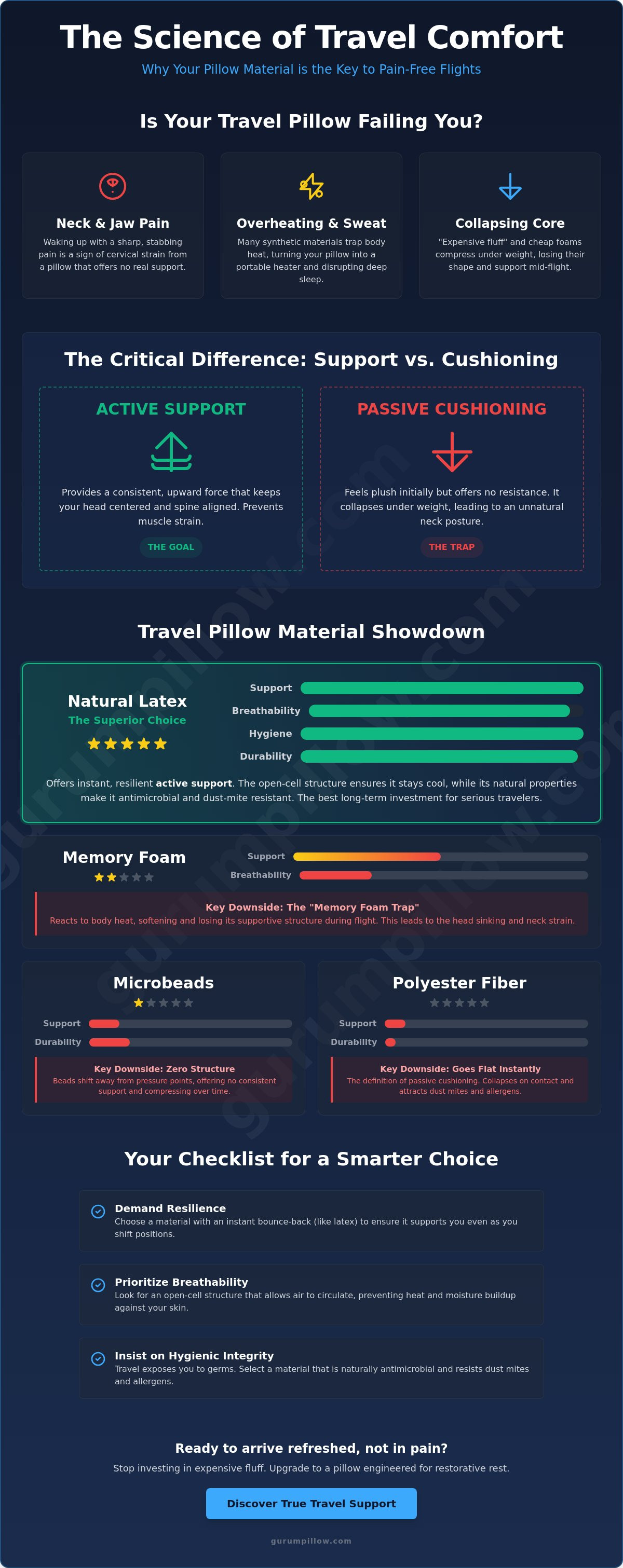
Brand names look great on luggage tags. They don't stop your head from bobbing during a red-eye flight. Most travelers prioritize aesthetics or price over the actual science of support. This leads to the "expensive fluff" problem. You buy a pillow that feels soft in the store, only to find it collapses the moment you actually lean your head against it. Finding the best material for a travel pillow is about choosing active support over passive cushioning.
Passive cushioning is a common trap. Materials like polyester fiberfill or cheap foams feel plush to the touch, but they offer no structural resistance. They simply compress under weight. Active support is different. It provides a consistent, upward force that keeps your head centered. Without this, you face significant cervical strain. When your neck muscles have to work all night to stay upright, you wake up with that familiar, sharp stabbing pain. Orthopedic pillows are designed to solve this by maintaining the natural curve of your spine, even in a cramped airplane seat.
Temperature regulation is another critical factor. Airplane cabins are notorious for fluctuating temperatures and stagnant air. Synthetic materials often trap body heat, creating a "sweaty neck" syndrome that makes deep sleep impossible. By 2026, we are seeing a major shift in traveler behavior. People are moving away from disposable synthetics that end up in landfills. They are looking for high-quality, breathable materials that serve as a long-term investment in their health.
The Anatomy of a Travel Nap
Upright sleep is a battle against gravity. When you drift off, your neck muscles relax and your head tilts. This creates intense pressure points on the jaw and the side of the neck. A "one size fits all" material usually fails because it doesn't adapt to these specific anatomical shifts. If the material is too soft, your head drops too far. If it's too rigid, it pushes against your jaw and causes discomfort. You need a material that contours to your shape while maintaining its original height, or "loft."
The Three Pillars of Material Performance
To find a pillow that actually works, you must look for three specific performance markers:
- Resilience: This is the ability to bounce back instantly. If a material takes too long to recover its shape, it won't support you when you shift positions.
- Breathability: Look for materials with an open-cell structure. This allows air to circulate, preventing heat buildup against your skin.
- Hygienic Integrity: Airplane cabins are hubs for bacteria and allergens. The best materials are inherently antimicrobial and resist the buildup of dust mites.
Choosing the right core material ensures your pillow remains a professional-grade tool for rest, rather than just another piece of luggage to carry. It's the difference between a trip spent in a fog of exhaustion and one where you arrive ready to explore.
Comparing Traditional Materials: Memory Foam, Beads, and Fiber
Most travelers reach for the first pillow they see at the airport gate. These are usually filled with memory foam, microbeads, or polyester fiber. While they seem like a quick fix for a long flight, they often fail the moment you actually try to sleep. Choosing the best material for a travel pillow requires looking past the initial softness and understanding how these fillers behave over several hours of use.
The Downside of Memory Foam in Tight Cabins
Memory foam is often marketed as the gold standard for comfort. It has a significant flaw that many manufacturers ignore: thermal sensitivity. Memory foam reacts to your body temperature. In a warm, pressurized airplane cabin, your body heat causes the foam to soften and lose its structural integrity. This creates the "Memory Foam Trap." It feels firm and supportive when you first sit down, but after thirty minutes, it sinks. Your head eventually touches your shoulder, leaving your neck in a strained, twisted position. This lack of support is a primary cause of travel-induced stiffness. According to research from Harvard, maintaining the natural curve of the neck is essential for avoiding pain, a feat that softening foam rarely achieves. Additionally, the chemical off-gassing scent of many foams can become overwhelming in the stagnant air of a plane.
Why Microbeads and Fiber Are Short-Term Fixes
Microbeads are incredibly lightweight, which makes them popular for carry-on luggage. However, they provide almost zero structural "push-back." When you lean your head against a bead-filled pillow, the beads simply shift to the sides. This leaves your neck unsupported while the filler bunches up where you don't need it. You end up with "bobblehead" sleep, where your head snaps forward or sideways every time you relax. It's a recipe for a restless flight and a sore morning.
Polyester fiberfill is another common culprit. It's cheap to produce and widely available, but it's essentially just loose fluff. Within just a few trips, these fibers clump together and lose their loft. These pillows go flat almost instantly. Both microbeads and fiber fillers are typically made from synthetic plastics. They aren't just bad for your neck; they have a heavy environmental impact. If you're tired of pillows that collapse when you need them most, it's time to consider why a latex travel pillow offers a more resilient, long-term solution. Inflatables are even worse. They offer a bouncy, unstable surface that feels like sleeping on a balloon and are prone to puncture leaks at the worst possible moments.
The Science of Natural Latex: Why It Is the Best Material for a Travel Pillow
Natural latex stands apart from the synthetic options that dominate airport kiosks. While memory foam relies on body heat to mold to your shape, latex provides an instant response. It's buoyant. This means it supports you the moment you lean on it. There's no sinking. There's no waiting for the material to "activate." This immediate resilience makes natural latex the best material for a travel pillow for anyone seeking consistent support during a long trip. It maintains its shape regardless of the cabin temperature.
The secret lies in its cellular structure. Unlike dense synthetic foams, natural latex features an open-cell design. It's essentially a series of microscopic air chambers that allow for maximum airflow. This natural ventilation prevents heat from becoming trapped against your skin. You stay cool. You stay dry. Additionally, this material is eco-friendly. It's harvested from the sap of rubber trees rather than being cooked up from petroleum and harsh chemicals. It's a professional-grade tool for rest that respects the environment.
Anatomical Benefits of a Natural Latex Travel Pillow
Proper sleep requires more than just softness. It requires alignment. Experts at the University of Rochester Medical Center emphasize that proper spinal alignment is non-negotiable for restorative sleep. Natural latex excels here by cradling the delicate curve of your neck while keeping your spine straight. It creates a "weightless" sensation that reduces pressure on your jaw and shoulders. If you're ready to dive deeper into the technical specifications, check out the ultimate guide to choosing a natural latex travel pillow in 2026.
Durability: The Last Travel Pillow You Will Ever Buy
Most travelers are used to their pillows going flat within a year. Memory foam and fiberfill simply don't have the structural integrity to last. Natural latex is different. It's incredibly durable. A high-quality latex core can maintain its loft and resilience for up to 10 years, whereas most synthetic alternatives fail after just 12 months. This makes it a superior long-term investment.
Think about the cost-per-use. A cheap pillow that you have to replace every three trips is more expensive than a premium material that stays perfect for a decade. Latex also has incredible "memory" of its own shape. You can compress it into a tiny travel bag for a 15-hour flight. The moment you take it out, it snaps back to its original height. It never loses its ability to support you. It's a reliable partner for your wellness, ensuring you wake up refreshed every time you land.
Durability and Hygiene: The Hidden Factors in Material Selection
Travel is inherently messy. Your pillow touches airport security bins, airplane seat pockets, and occasionally the cabin floor. Most travelers focus entirely on comfort, yet they ignore the microscopic reality of their gear. Synthetic foam and fiberfill act like sponges. They absorb sweat, skin oils, and ambient moisture, creating a breeding ground for bacteria and odors. When you realize your pillow is a magnet for cabin allergens, the best material for a travel pillow becomes a question of health as much as support.
Natural latex offers a definitive solution to these hygiene frustrations. Unlike synthetic alternatives, it is inherently antimicrobial and resistant to dust mites. It does not provide the hospitable environment that mold and mildew need to thrive. This means your pillow stays fresh trip after trip, even if you can't wash the core itself. For a truly restorative experience, pair your pillow with an Anti-Allergy Pillow Cover to create an impenetrable barrier against travel-related irritants. Investing in a Travel Latex Pillow ensures your rest is as clean as it is comfortable.
Hypoallergenic Properties for Sensitive Travelers
If you struggle with environmental sensitivities, the material of your pillow is your first line of defense. Natural latex is a botanical product that lacks the harsh chemicals and volatile organic compounds found in many memory foams. It naturally repels common triggers. This allows you to breathe easily in the recycled air of a pressurized cabin. For more insights on how clean, ergonomic support transforms your physical well-being, explore our cervical pillow guide. Understanding the relationship between material purity and spinal health is the first step toward pain-free travel.
Portability Without Sacrificing Performance
A common myth suggests that natural latex is too heavy for frequent travelers. This is a misunderstanding of density versus weight. While latex is denser than cheap fluff, it is also highly compressible. You don't have to carry a bulky, rigid block. Many premium latex pillows are designed to be rolled tightly into a compact travel bag, springing back to their full loft the moment they are released. This resilience is a hallmark of the best material for a travel pillow. It allows you to balance carrying convenience with the uncompromising support your neck requires. Don't settle for a lightweight pillow that collapses under pressure. Choose a material that maintains its integrity while fitting seamlessly into your carry-on lifestyle.
Keeping your gear fresh is simple. Most high-quality travel pillows feature removable, machine-washable covers. While the latex core should never be submerged in water, a quick wipe with a damp cloth is all it takes to maintain its hygienic integrity. This ease of maintenance, combined with its ten-year lifespan, makes natural latex the most reliable investment for any frequent flyer.
Making the Switch: How to Select the Right Support for Your Next Trip
Transitioning to a pain-free travel experience starts with a shift in mindset. You've already discovered why traditional foams fail and why natural latex is the best material for a travel pillow. Now, you must apply that knowledge to your specific travel habits. The goal is to move away from "one-size-fits-all" solutions and toward a professional-grade tool that respects your unique anatomy. Your next trip shouldn't be defined by how much discomfort you can tolerate.
Start by assessing your primary sleeping position. Are you a window leaner or an aisle sleeper? Window travelers require lateral support to prevent the head from hitting the hard cabin wall. Aisle travelers, conversely, need consistent 360-degree support to stop the "head bob" that causes severe cervical strain. When you shop, look beyond the brand name. Check the labels for 100% natural materials. Avoid "latex-feel" or "synthetic blends," as these lack the botanical resilience of the real thing. A pure core ensures you receive the anatomical benefits you deserve.
Choosing Your Pillow Shape
Shape is just as critical as the core material. While the traditional U-shape is common, it often leaves a gap at the back of the neck. This gap forces your head forward into an unnatural slump. Ergonomic contouring is a far superior choice. It follows the natural curve of your skull and provides a stable cradle for your jaw. Pay close attention to the loft, or height, of the material. If you have a longer neck, you need a higher profile to maintain spinal alignment. Always perform the "rebound test" before you buy. Press the material firmly; it should snap back instantly. If it leaves a slow-moving indentation, it is likely memory foam and will eventually sink during your flight.
The Gurum Pillow Difference
We didn't just create another travel accessory; we engineered a solution for chronic physical discomfort. Designed by Ji H. Won to solve real-world neck pain, the approach at Gurum Pillow focuses on the intricate science of restorative rest. We married precise ergonomic design with the unmatched resilience of 100% natural latex. This ensures you never have to sacrifice your health for the sake of portability. The Travel Latex Pillow from Gurum Pillow is the premium standard for 2026 travelers who demand a transformative sleep experience. It provides the quiet confidence that you will arrive at your destination refreshed, aligned, and ready to explore.
Before you pack for your next journey, use this final checklist to ensure your support is up to the task:
- Confirm the core is 100% natural latex with no synthetic additives.
- Verify the ergonomic shape supports your specific sleeping position (Window vs. Aisle).
- Check that the loft is sufficient for your neck length to maintain a straight spine.
- Ensure the pillow includes a high-quality Anti-Allergy Pillow Cover for hygienic protection.
- Test for instant rebound to guarantee the material won't go flat mid-flight.
Investing in the right material is an investment in your first day of vacation. Don't let a poor pillow steal your energy. Make the switch to active support and feel the difference that professional-grade rest can make.
Your Journey Toward Restorative Travel
Restorative sleep shouldn't be a luxury reserved for when you reach your destination. You now understand that material choice is the foundation of spinal health during transit. While synthetic fillers compromise support as they warm up, natural latex remains resilient and breathable. It is undeniably the best material for a travel pillow for those who refuse to settle for "good enough" rest. You've moved past the expensive fluff and found a professional-grade solution for your long-term wellness.
You deserve a travel companion that works as hard as you do to maintain your physical comfort. Our Travel Latex Pillow is ergonomically designed for neck pain relief and crafted from 100% natural latex to ensure your support never collapses. We also offer free shipping on qualifying orders to help you start your next trip on the right note. Upgrade your journey with the Travel Latex Pillow and arrive at your next destination feeling truly refreshed. Safe travels and peaceful rest are finally within your reach.
Frequently Asked Questions
Is memory foam or latex better for a travel pillow?
Latex is significantly better for consistent, long-term support. Memory foam reacts to your body heat and softens over time, which means it eventually fails to hold your head upright in a warm airplane cabin. Natural latex provides an instant, buoyant response that doesn't change with the temperature. It is the best material for a travel pillow if you want to wake up without neck stiffness.
What is the most supportive material for a neck pillow?
Natural latex provides the highest level of anatomical support for travelers. Its high resilience allows it to cradle your neck while providing enough "push-back" to keep your spine in a neutral alignment. This active support prevents your neck muscles from straining to keep your head centered while you sleep in an upright position.
Are inflatable travel pillows actually good for your neck?
Inflatable pillows prioritize convenience over your physical health. They lack the structural integrity and contouring required to support the delicate curve of your cervical spine. The air inside shifts constantly as you move, creating an unstable surface that often leads to muscle fatigue and sharp pain upon landing. They simply can't match the pressure relief of solid materials.
Can I wash a natural latex travel pillow?
You should never submerge a latex core in water or put it in a washing machine. The botanical structure can break down if it stays wet for too long. Instead, wash the removable outer cover regularly. To keep the core fresh and protected from sweat or oils, we recommend using an Anti-Allergy Pillow Cover as a protective barrier.
Why do some travel pillows use microbeads if they lack support?
Microbeads are a budget-focused choice for manufacturers because they are incredibly light and cheap to produce. While they are easy to pack, they provide zero structural resistance. The beads simply move away from pressure points when you lean on them, leaving your neck unsupported. This leads to the "bobblehead" effect that prevents restorative rest during your trip.
How long should a high-quality travel pillow last?
A premium travel pillow made from natural latex is built to last for a decade. Unlike memory foam or polyester fiberfill, which typically start to sag or go flat after 12 to 24 months, latex maintains its original loft and bounce for up to 10 years. It is a reliable, long-term investment for frequent flyers who value consistent performance.
What is the best material for travelers with allergies?
Natural latex is the gold standard for travelers with environmental sensitivities. It is naturally resistant to mold, mildew, and dust mites without the need for harsh chemical additives or flame retardants. This botanical purity helps you breathe easier in the recycled air of a pressurized cabin, making it the best material for a travel pillow for allergy sufferers.
Does the weight of the material matter for carry-on restrictions?
Support is more critical than weight for most modern travelers. While latex is denser than polyester fluff, it is highly compressible and fits easily into a small travel bag. Most major airlines don't count a neck pillow as a carry-on or personal item, so you don't have to sacrifice your neck health to save a few ounces of weight.