

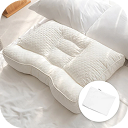
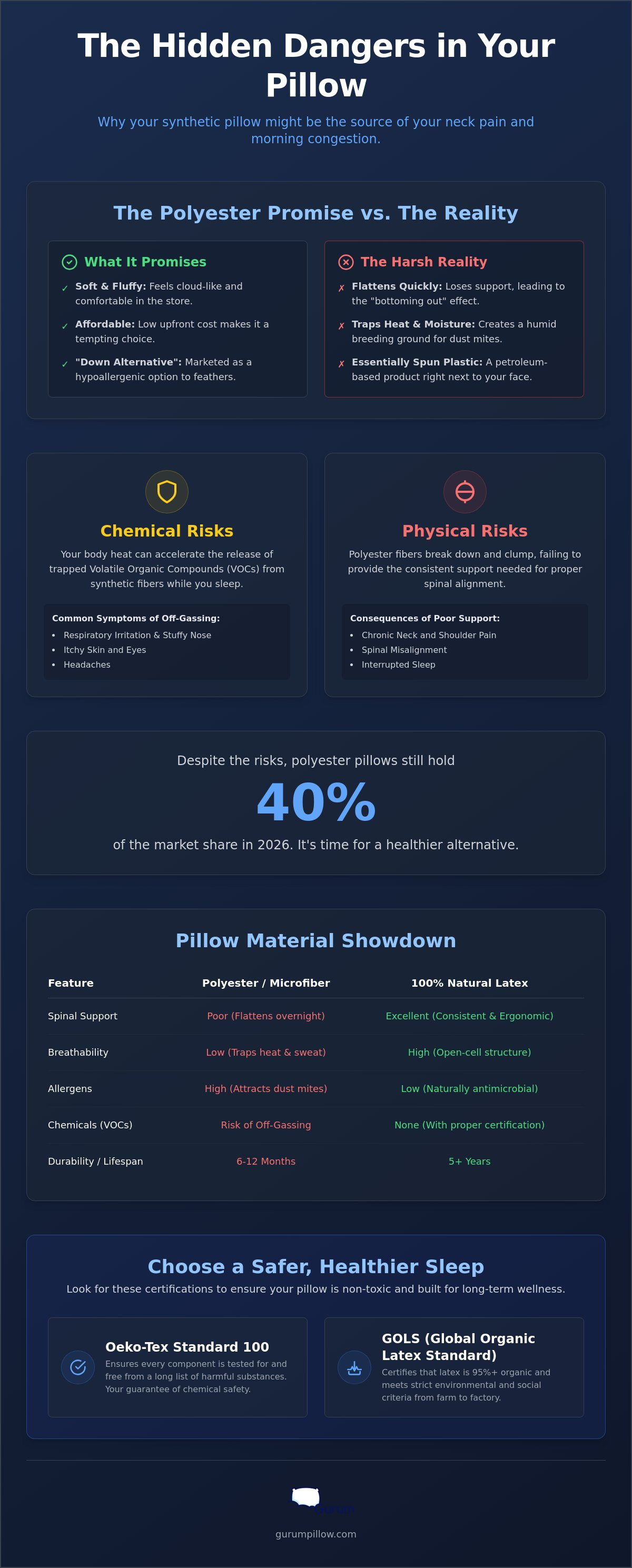
What if the very pillow you rely on for restorative rest is actually the source of your morning congestion and chronic neck pain? You deserve a sanctuary. Instead, you wake up with a stuffy nose. Your skin feels itchy. Your pillow is flat, having lost its support months ago. It's exhausting to battle night sweats caused by non-breathable fibers. You've probably asked yourself: are polyester pillows unhealthy? You aren't alone in this concern. Polyester still holds 40% of the market share in 2026, but that's changing fast as more people prioritize their long-term wellness.
We understand the frustration of a sleep solution that fails you. You deserve to know exactly what you're breathing in while you sleep. This guide explores the chemical and physical risks of synthetic pillows. We'll dive into new state-level regulations on formaldehyde and PFAS that are shifting the industry. You'll learn how to identify high-quality, non-toxic materials that won't off-gas or flatten. We'll help you find a supportive alternative that protects both your spine and your respiratory health. Your journey to a refreshed, pain-free morning starts with understanding what's inside your pillowcase.
Key Takeaways
- Identify the hidden link between petroleum-based synthetic fibers and common morning symptoms like respiratory irritation and itchy skin.
- Discover why the answer to "are polyester pillows unhealthy" involves more than just chemicals, directly impacting your spinal alignment and neck health.
- Learn to recognize the "bottoming out" effect that causes synthetic pillows to flatten and fail you by the middle of the night.
- Master the 2026 safety landscape by decoding essential non-toxic certifications like GOLS and Oeko-Tex Standard 100.
- Find out how switching to 100% natural latex eliminates VOC exposure while providing the consistent, ergonomic support your body craves.
What Are Polyester Pillows and Why Are They So Common?
Most pillows found in major retail aisles share a hidden trait. They aren't made of organic fibers or breathable layers. They're essentially spun plastic. To truly understand What Are Polyester Pillows, you must look at their chemical roots. Polyester fiberfill is a plastic-based material treated with chemical softeners to mimic the feel of natural materials. It's cheap to produce. It feels light in your hands. Yet, this accessibility leads many to ask: are polyester pillows unhealthy for a person's long-term well-being?
The low price tag is tempting. It feels like a quick fix for a guest room or a college dorm. But "cheap" always carries a hidden tax on your sleep hygiene. Synthetic fibers don't breathe well. They trap body heat and create a humid environment. This moisture invites dust mites and allergens into your sleeping space. While the pillow feels soft on day one, the fibers quickly break down. You're left with a flat, lumpy surface that fails to support your cervical spine. This lack of durability means you're constantly replacing them, which isn't great for your wallet or the planet.
The Rise of Synthetic Bedding
Bedding changed forever in the 20th century. We transitioned from traditional materials like wool and down to mass-produced plastics. This wasn't because plastic was better for our bodies. It was because it was easier to manufacture at scale. Marketing departments worked hard to change our perception of quality. They made "fluffy" synonymous with "good." We began to value that initial, cloud-like squish more than actual anatomical support. For millions of households, polyester became the standard. It fit the budget. It looked great in a plastic-wrapped package. Unfortunately, our collective sleep quality began to suffer as a result.
Understanding 'Microfiber' and 'Down Alternative'
Labels can be confusing. You might see "Microfiber" and think it's a specialized, high-tech fabric. It isn't. Microfiber is simply ultra-fine polyester. It's the same plastic, just thinner. Similarly, "Down Alternative" is often just a marketing term for synthetic clusters. These are designed to mimic the loft of bird feathers without the cost. Whether a brand uses virgin polyester or recycled plastics, the core issues remain. These materials lack the point elasticity needed for real neck support. They offer a temporary comfort that masks a lack of functional utility. When you understand the science, it becomes clear that these synthetic options are built for the shelf, not for your health.
Chemical Risks: VOCs, Off-Gassing, and Respiratory Health
Your pillow is the closest object to your airway for a third of your life. It's a sobering thought when you consider that most synthetic options are essentially chemical cocktails. The manufacturing process for synthetic polymers often leaves behind residues that impact VOCs, Off-Gassing, and Respiratory Health. These Volatile Organic Compounds are byproducts of petroleum processing. When asking are polyester pillows unhealthy, we have to look at how these chemicals behave when they're right against your face. Off-gassing is the release of trapped chemicals into your immediate breathing zone. It isn't just about that "new pillow smell." It's about the invisible gasses you inhale while your body tries to recover.
The risk increases as you settle in for the night. Your body heat, which stays around 98.6 degrees, acts as a catalyst. It creates a "thermal chimney" effect. As the synthetic fibers warm up, they accelerate the release of trapped gasses. You aren't just lying on plastic; you're actively warming it and breathing in the resulting vapors. Many manufacturers also add flame retardants and antimicrobial treatments. These additives are designed for safety and longevity, but they can be aggressive irritants for your skin and lungs. If you're not ready to replace your current setup, a specialized Anti-Allergy Pillow Cover can act as a vital barrier between you and these hidden chemicals.
The Link to Allergies and Asthma
We understand the frustration of waking up with a heavy head and a stuffy nose. Often, people blame seasonal pollen or a lingering cold. The reality is often simpler. Polyester is non-breathable. It traps your perspiration and body heat, creating a damp, warm microclimate. This is a perfect playground for dust mites. Unlike natural latex, polyester doesn't have inherent antimicrobial properties. This moisture buildup can also lead to skin irritation. If you struggle with persistent "sleep acne" or itchy patches on your cheeks, the synthetic dyes and trapped bacteria in your pillowfill might be the culprit.
Endocrine Disruptors in Your Bed
The concerns go deeper than surface-level irritation. Many synthetic textiles contain phthalates, which are used to give plastics their flexibility. These are known endocrine disruptors. They can mimic or interfere with the body's natural hormones. This is why children and pregnant women should be especially cautious. Their developing systems are more sensitive to chemical interference. Think about the accumulation effect. You spend roughly 2,900 hours a year with your face pressed against these fibers. Over a decade, that's a staggering amount of time spent in direct contact with materials that were never designed for human biological compatibility.
Physical Health: Why Polyester Fails Your Neck and Spine
Chemical exposure is only half the story. To understand why are polyester pillows unhealthy, you must examine how they interact with your anatomy. Most synthetic fiberfill lacks what experts call "point elasticity." This is the material's ability to compress at a specific point while maintaining support around it. Because polyester fibers are loosely packed, they simply shift away from your weight. This creates the "bottoming out" effect. You might fall asleep feeling comfortable, but by 3 AM, your head has sunk through the fluff and is resting almost directly on the mattress. This misalignment Fails Your Neck and Spine, forcing your muscles to work overtime just to keep your airway open and your vertebrae stable.
This constant muscular strain doesn't just make you feel stiff. It leads to chronic tension headaches and radiating shoulder pain. When your neck isn't held in a neutral position, the delicate nerves and blood vessels in your cervical spine are compressed. If you've spent years waking up with a dull ache at the base of your skull, your pillow is the likely culprit. Transitioning to a dedicated cervical support pillow can provide the structural integrity that synthetic clusters simply cannot offer. It's about more than comfort; it's about anatomical necessity.
The Lifespan Problem
Polyester has a remarkably short functional life. Within six months, the individual fibers begin to clump and mat together. This creates an uneven, hilly surface that makes it impossible to maintain a consistent spinal posture. While you might try to "fluff" it back to life, you're only moving air around, not restoring support. A degraded pillow is a health hazard for your neck. It can exacerbate conditions like cervical strain or even "military neck," which is the loss of the spine's natural curve. While the initial cost of synthetic bedding is low, the hidden price is the need for frequent replacements and the long-term cost of physical therapy for neck issues.
Heat Retention and Sleep Quality
Your body needs to drop its core temperature to enter deep, restorative REM sleep. Polyester pillows make this physiological shift difficult. Because they are made from petroleum-based polymers, they act as insulators rather than conductors. They trap your body heat and reflect it back at you. This leads to the "flipping the pillow" ritual throughout the night. Every time you wake up because you're too hot, you break your sleep cycle. This tossing and turning prevents your brain from completing the essential cleaning processes that only happen during deep rest. You wake up feeling foggy and unrefreshed, not because you didn't sleep long enough, but because your pillow kept you too warm to sleep deeply.
Choosing a Safer Alternative: What to Look for in 2026
Making the switch from synthetic bedding can feel overwhelming, especially when every brand claims to be "eco-friendly." If you've spent years wondering are polyester pillows unhealthy, the solution lies in returning to materials provided by nature. For 2026, prioritize 100% natural materials like wool, organic cotton, or natural latex. These materials don't just avoid the chemical risks we've discussed; they offer superior performance. Natural latex is inherently dust-mite resistant without added chemicals, making it a powerful ally for your respiratory health. By choosing materials with an open-cell structure, you ensure constant air circulation. This prevents the heat buildup that causes restless nights.
Certifications are your best defense against deceptive marketing. Look for the Oeko-Tex Standard 100 label, which ensures every component is tested for harmful substances. If you're choosing latex, the GOLS (Global Organic Latex Standard) is the gold standard. It guarantees the product contains at least 95% certified organic raw material. These aren't just badges; they're verified promises of safety. When you invest in a certified product, you're buying peace of mind. You're ensuring that the air you breathe all night is clean and free from the VOCs found in cheaper, synthetic alternatives.
The Truth About 'Natural' Blends
Marketing can be tricky. Many "hybrid" or "latex-feel" pillows are designed to confuse you. They often contain up to 70% polyester hidden behind a thin layer of natural material. To find the truth, ignore the front of the box and check the law label. This tag is legally required to list the exact composition of the filling. If it doesn't say 100% natural latex, it's likely a synthetic blend that will still off-gas. Understanding these distinctions is why natural latex pillows are the gold standard for non-toxic sleep. They provide a pure, consistent environment that synthetics simply cannot replicate.
Testing for Support and Alignment
A safe pillow must also be a supportive one. You can perform a simple "hand test" to check for quality. Press your hand firmly into the center of the pillow and release. A high-quality material like natural latex will bounce back immediately, whereas polyester will leave a temporary indentation or feel "mushy." This resilience is what keeps your spine aligned. You also need to match the pillow's loft, or height, to your specific sleeping position. Side sleepers generally need a higher loft to fill the gap between the shoulder and ear. Back sleepers require a medium loft to maintain the neck's natural curve. If you're ready to experience the relief of true ergonomic alignment, explore our Premium Latex Pillow collection today.
The Gurum Solution: 100% Natural Latex for Total Health
We've explored the hidden costs of synthetic bedding. We've seen how chemical off-gassing and physical collapse can ruin your rest. When you ask are polyester pillows unhealthy, the evidence points toward a need for a fundamental change in how we sleep. At Gurum, we've replaced petroleum-based polymers with the pure resilience of nature. Our pillows are crafted from 100% natural latex. There are zero synthetic fillers. There are no VOCs. We believe that your pillow should be a tool for healing, not a source of irritation. By combining ergonomic design with chemical safety, we've created support that doesn't compromise your health.
Natural latex is a superior biological match for the human body. It's naturally hypoallergenic and breathable. The open-cell structure allows air to circulate freely, keeping you cool throughout the night. Unlike polyester, which traps moisture and invites dust mites, our latex provides a clean, dry environment. It's an investment in a product that maintains its shape for years, not months. You won't have to worry about clumping or matted fibers. You get consistent, reliable support every single night.
Designed by Experts for Real Relief
The Gurum story began with a personal search for relief. Our founder, Ji H. Won, developed the Premium Latex Pillow to solve his own struggle with chronic physical discomfort. He understood that traditional pillows weren't just uncomfortable; they were failing the spine. This led to a focus on the science of spinal alignment. Our latex provides "active" support. It doesn't just let your head sink; it pushes back to keep your vertebrae in a neutral position. This is why experts recommend it as the best latex pillow for neck pain. It's a professional-grade solution for the home.
A Cleaner Sleep Environment
Creating a non-toxic bedroom is about more than just the pillow fill. It's about every layer that touches your skin. For maximum protection, you can pair your pillow with our Anti-Allergy Pillow Cover. This creates a total barrier against environmental sensitivities. There is a profound peace of mind that comes from knowing your sleeping space is truly safe. You can finally wake up without the stuffy nose or itchy skin caused by synthetic fibers. Join the thousands of Americans who have traded plastic for natural comfort. Your journey to restorative sleep is waiting.
- 100% Natural: No synthetic blends or hidden plastics.
- Ergonomic Integrity: Maintains spinal alignment all night long.
- Breathable Comfort: Naturally regulates temperature for deep REM sleep.
- Long-Term Value: Built to last, reducing waste and saving you money.
Take Control of Your Sleep Health
You've spent enough nights struggling with morning congestion and persistent neck stiffness. We've explored how synthetic materials fail your body. From the chemical risks of off-gassing to the physical strain of unsupportive fibers, the evidence makes it clear why are polyester pillows unhealthy for your long-term wellness. You don't have to settle for "good enough" rest. Switching to a natural, high-performance material is the most direct path to the relief you've been seeking.
Choosing a better way to sleep is an investment in your daily energy and physical comfort. You can experience the difference of 100% Natural Latex and the precise Ergonomic Neck Support your spine deserves. We're here to help you make that transition as smooth as possible with Free Shipping in the USA on every order. It's time to stop fighting your pillow and start waking up truly refreshed.
Upgrade to a healthier, 100% Natural Latex Pillow today and feel the transformation for yourself. You deserve a sanctuary that supports your health every single night.
Frequently Asked Questions
Can polyester pillows cause skin rashes or acne?
Yes, polyester pillows can contribute to skin irritation and "sleep acne." Because synthetic fibers are non-breathable, they trap facial oils, perspiration, and heat against your skin all night. This creates a warm, damp environment where bacteria thrive. If you have sensitive skin, the chemical dyes used in synthetic manufacturing may also trigger contact dermatitis or localized rashes.
Do polyester pillows off-gas harmful smells?
Yes, many synthetic pillows release a distinct chemical odor known as off-gassing. This scent comes from Volatile Organic Compounds (VOCs) used during the petroleum-based manufacturing process. While the smell often fades after a few days, the invisible release of gasses can continue for much longer. If you're wondering are polyester pillows unhealthy, this chemical emission is a primary reason to consider natural alternatives.
How often should you replace a polyester pillow for health reasons?
You should replace a polyester pillow every 6 to 12 months. Unlike natural latex, synthetic fiberfill loses its structural integrity quickly and begins to clump. This leads to poor neck support and increased physical strain. From a hygiene perspective, the lack of breathability allows moisture and dead skin cells to accumulate, making the pillow a magnet for dust mites and allergens over time.
Is 'Down Alternative' just another name for polyester?
Yes, "Down Alternative" is almost always a marketing term for polyester fiberfill. Manufacturers use this name to suggest the luxury and loft of real bird feathers without the high cost. While these pillows feel soft initially, they are still made from the same petroleum-based polymers as standard synthetic pillows. They carry the same risks regarding heat retention and chemical off-gassing.
Are there non-toxic certifications I should look for on a pillow label?
Look for the Oeko-Tex Standard 100 or Global Organic Latex Standard (GOLS) certifications. Oeko-Tex ensures that every component of the product has been tested for harmful substances and is safe for human health. GOLS is specific to organic latex and guarantees that the material is harvested and processed without toxic synthetic additives. These labels provide a verified layer of protection for your sleep environment.
Can a polyester pillow cause neck pain or headaches?
Yes, polyester pillows are a frequent cause of morning headaches and chronic neck stiffness. They lack the "point elasticity" required to keep your cervical spine in a neutral position. When the pillow flattens or "bottoms out" during the night, your neck muscles must strain to support your head. This persistent tension often radiates upward, resulting in painful tension headaches upon waking.
Is natural latex better than polyester for people with allergies?
Natural latex is far superior for allergy sufferers. It is inherently resistant to dust mites, mold, and mildew without the need for added chemical treatments. Polyester, however, traps the moisture and heat that these allergens need to survive. If you often wake up with a stuffy nose or watery eyes, switching to a breathable, hypoallergenic latex option can provide immediate respiratory relief.
What happens if I wash a polyester pillow too often?
Frequent washing causes polyester fibers to mat and clump together much faster. While washing is necessary to remove the allergens trapped in synthetic fill, the mechanical action of a machine destroys the pillow's loft. This leaves you with an uneven, lumpy surface that fails to support your neck. It's one reason why many people find are polyester pillows unhealthy after only a few months of use.