
Your pillow should be a sanctuary, not a source of morning congestion or a yellowed reminder of restless nights. Many people treat protectors as an afterthought, often settling for noisy, plastic-like fabrics that trap heat and ruin the feel of a high-quality pillow. Knowing exactly what to look for in a pillow protector is the difference between waking up refreshed and struggling with environmental sensitivities. It isn't just about a physical barrier; it's about maintaining the ergonomic integrity and breathability of your rest.
We know how frustrating it is to wake up with a stuffy nose or a damp, overheated head. You deserve a sleep environment that stays clean and supportive for years, not just months. This guide will help you discover how to choose a protector that shields your health and preserves your pillow without sacrificing comfort. We'll break down the latest 2026 OEKO-TEX® Standard 100 updates, the benefits of moisture-wicking materials like Tencel, and how to find a waterproof seal that remains completely silent through the night. It's time to stop compromising on your sleep quality.
Key Takeaways
- Learn why a professional shield is essential for blocking the "invisible enemies" like moisture, skin oils, and dust mites that degrade your pillow.
- Understand what to look for in a pillow protector to balance total waterproofing with the breathability required for temperature-regulated sleep.
- Discover how modern membrane technology prevents the uncomfortable "plastic bag" effect while maintaining a silent, soft-to-the-touch surface.
- Master our 2026 selection checklist to evaluate critical details like locking zipper quality and how proper sizing preserves your pillow's original feel.
- See how specialized anti-allergy covers complement the natural benefits of premium latex to create a cleaner, more restorative sleep environment.
Why Your Sleep Investment Requires a Professional Shield
You invested in a quality pillow for a reason. Whether you chose a Premium Latex Pillow for its contouring support or a travel version for consistency on the road, that investment provides the foundation for your neck health. But without a professional shield, that comfort is on a countdown. A Pillow protector is a specialized, zip-enclosed barrier designed to sit between your pillow and the decorative pillowcase. Unlike a standard case, it acts as a functional seal. It's the first thing to consider when researching what to look for in a pillow protector.
Standard pillowcases are decorative, not protective. They are designed for aesthetics and basic surface comfort. Most are woven with gaps large enough for microscopic allergens and fluids to pass through effortlessly. If you're only using a case, your pillow is effectively an open sponge. Every night, your body introduces elements that compromise the hygiene of your sleep surface:
- Moisture: Sweat and breath vapor penetrate the core.
- Skin Oils: Sebum from your face and hair seeps into the fibers.
- Dust Mites: Microscopic pests find a permanent home in the dark, warm center of the pillow.
The Anatomy of a Yellowing Pillow
That yellow tint on an old pillow isn't just a cosmetic flaw. It's a sign of chemical and structural breakdown. When sweat and oils penetrate the internal material, they trigger material fatigue. The moisture softens the internal structure over time. For a pillow to support your neck properly, it must maintain its loft and resilience. Once material fatigue sets in, the pillow sags and loses its ergonomic integrity. You might wake up with unexplained neck stiffness or tension. A high-quality protector keeps these fluids out, ensuring the internal architecture remains dry and supportive for years.
Allergens: The Silent Sleep Disrupter
Do you wake up with a stuffy nose, itchy eyes, or a morning cough? The culprit is likely hiding inside your pillow. Dust mites thrive in warm, humid environments filled with skin cells. An unprotected pillow is their ideal habitat. Standard washing often fails to reach the deep core where these allergens accumulate. Worse, putting your pillow through frequent wash cycles can clump fibers or damage delicate materials. Understanding what to look for in a pillow protector allows you to create a physical block that these microscopic pests cannot penetrate. By using a specialized Anti-Allergy Pillow Cover, you turn your sleep surface into a clean, breathable zone that protects both your health and your pillow's lifespan.
Decoding Materials: What to Look for in a Pillow Protector
The fabric you choose determines whether you wake up cool or drenched in sweat. It is the most critical decision in your search for a protector. Material choice dictates your sleep temperature and the overall longevity of the product. When researching what to look for in a pillow protector, you must weigh the benefits of natural fibers against the cost-effectiveness of synthetics. For most sleepers, the goal is a barrier that feels invisible while performing a vital health function.
Cheap polyester blends are common in big-box stores. They are durable and affordable. However, they have a significant downside. Synthetic fibers are often non-porous. They trap body heat and moisture against your skin. This creates a "hot" sleep environment that can lead to restlessness. If you struggle with night sweats, avoid high-percentage polyester covers. They often lack the capillary action needed to move moisture away from your body.
Many protectors are too rigid. They turn a responsive surface into something stiff and unyielding. This is a common frustration for those who use a Premium Latex Pillow. You want a material that stretches and breathes alongside the pillow's core. Choosing a dedicated Anti-Allergy Pillow Cover made from high-quality natural fibers ensures your health isn't a trade-off for comfort. It preserves the ergonomic benefits you invested in originally.
Cotton and Bamboo: The Breathable Leaders
Natural fibers are the gold standard for sleep hygiene. 100% cotton is prized for its classic breathability and soft hand-feel. It allows for maximum airflow, which is essential for regulating your core temperature. Bamboo and Tencel are also excellent choices. These materials are naturally moisture-wicking. They pull sweat away from the skin and allow it to evaporate quickly. This keeps the pillow core dry and prevents the "material fatigue" mentioned in the previous section. High-quality natural weaves, such as those offered by King of Cotton, are also incredibly durable and can withstand frequent washing without losing their shape or protective qualities.
Micron Technology and Pore Size
If you suffer from allergies, pore size is the most important technical specification to check. Pore size refers to the space between the threads in the fabric weave. To effectively block dust mites and their waste, a pore size under 10 microns is essential. This tight weave creates a physical fortress. It stops microscopic particles from entering the pillow core without the need for harsh chemical treatments. When you know what to look for in a pillow protector, you prioritize these tight, mechanical barriers. They provide long-term relief from morning congestion while remaining soft and silent during the night.
Breathability vs. Waterproofing: Finding Your Balance
Finding the right balance between a dry pillow and a cool head is often the hardest part of choosing bedding. Many people assume that more protection is always better. They opt for 100% waterproof covers only to find they've created a "plastic bag" effect. This happens when the protector blocks all airflow, trapping heat against your face and neck. When deciding what to look for in a pillow protector, you must consider your specific environment. Total waterproofing is a specialized tool, not a universal requirement for every sleeper.
Low-quality waterproof layers often give themselves away with a distinct "crunchy" sound. This noise occurs every time you shift your head, disrupting the quiet environment needed for deep sleep. These covers usually rely on thick PVC or vinyl. They are effective at stopping spills, but they are loud, stiff, and notoriously hot. If you want a silent night, you need to look for advanced membrane technology. These layers are engineered to be felt, not heard, providing a barrier that doesn't announce itself every time you move.
When to Choose Waterproof Protection
Waterproof protection is essential in specific scenarios. If you share your bed with pets, have young children, or experience heavy night sweats, a liquid barrier is non-negotiable. Modern technology has moved beyond crinkly plastics. Look for TPU (Thermoplastic Polyurethane). It is an ultra-thin, flexible layer that blocks liquids while allowing microscopic air molecules to pass through. It is significantly quieter than PVC. It offers a compromise for those who need a high level of security without the sweltering heat of traditional plastic. It's a professional-grade solution for a common household struggle.
The Case for Water-Resistant Natural Fibers
Most sleepers don't actually need a plastic-lined fortress. Dense, high-quality cotton weaves provide a natural water-resistant buffer that handles everyday humidity and minor moisture. These natural fibers maintain the tactile response of your Premium Latex Pillow. A rigid waterproof layer can make a soft, supportive pillow feel like a firm brick. It creates surface tension that fights against the natural contouring of the latex. By choosing a breathable, high-density weave, you preserve the ergonomic "give" of the material. These covers are also easier to launder and dry much faster than their membrane-lined counterparts. This simplicity makes maintaining a clean sleep system much less of a chore. You get the protection you need for most of life's messes without the heat trap of a total seal.
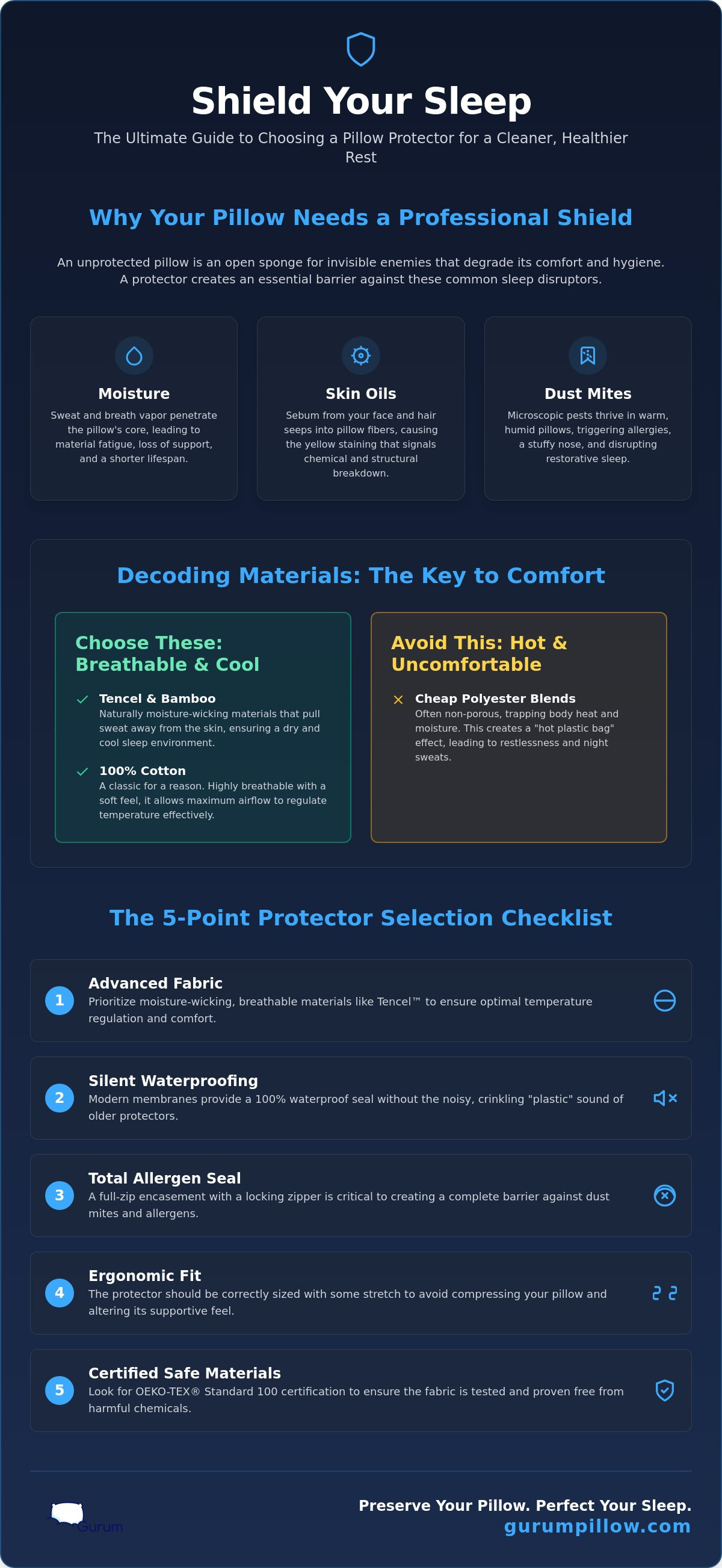
The 5-Point Selection Checklist for 2026
Finding the perfect shield for your bedding requires a sharp eye for detail. When you're deciding what to look for in a pillow protector, the smallest features often make the biggest difference in your long-term sleep quality. A protector that fails at the zipper or shrinks in the wash isn't just a nuisance. It's a breach in your health defense. We want to ensure your sleep environment remains as pristine as the day you bought your pillow.
Noise is often the first thing people notice, yet it's frequently overlooked during the buying process. Perform the "scrunch test" before you commit. If the fabric sounds like a rustling grocery bag when you squeeze it, it will be even louder when it's under your ear at 2 AM. You want a fabric that remains silent and supple. Additionally, look for certifications like the OEKO-TEX® STANDARD 100. As of June 2026, this standard has become even more stringent, requiring stricter supply chain controls and mandatory certification of wet processes like dyeing. This ensures your protector is free from harmful substances and safe for your skin.
Checking the Closure System
A protector is only as good as its seal. Many budget options use an "envelope" closure, which is essentially a fabric flap. This is insufficient for protection. It leaves a massive gap that allows dust mites and allergens to move in and out of the pillow core freely. You need a high-quality, locking zipper. Ensure the zipper teeth are fine enough to create a mechanical barrier against microscopic particles. A "zipper garage"—a small fabric pocket at the end of the zipper track—is also essential. It prevents the zipper pull from snagging on your pillowcase or scratching your skin during the night.
Laundering and Longevity
To effectively kill dust mites and remove allergens, you must wash your bedding at a minimum temperature of 130°F. If a protector can't handle frequent hot-water cycles, it won't provide the hygiene you need. Check the care label for shrinkage warnings. A protector that shrinks even half an inch will compress your pillow, making a soft surface feel uncomfortably firm. This ruins the loft and support of your pillow. A professional pro-tip is to keep two protectors per pillow. This allows you to have one on the bed while the other is in the wash, ensuring your pillow is never left unprotected. If you're ready to upgrade your sleep hygiene, you can view our high-performance Anti-Allergy Pillow Cover to see these features in action.
Elevating Your Sleep Hygiene with Anti-Allergy Technology
A clean pillow is a foundational requirement for restorative health. We've seen too many people struggle with chronic discomfort and morning congestion because they neglected this final layer of protection. When you know what to look for in a pillow protector, you reclaim control over your sleep hygiene. It's about more than just the longevity of the materials. It's about ensuring every breath you take during the night is through a clean, allergen-free surface. At Gurum Pillow, we focus on hypoallergenic, breathable protection because we understand that your rest shouldn't be a struggle against environmental triggers.
Creating a truly supportive sleep environment requires a complete system where every layer works in harmony. A specialized cover isn't just an accessory; it's a vital health shield. It bridges the gap between your skin and the pillow core, preventing the accumulation of the "invisible enemies" we discussed earlier. By choosing a professional-grade barrier, you ensure that your investment in a high-quality pillow remains a source of comfort rather than a trap for allergens. This holistic approach is the key to waking up feeling genuinely refreshed and clear-headed.
The Synergy of Latex and Anti-Allergy Covers
Latex is a remarkable material for sleep because it's naturally resilient and resistant to dust mites. However, pairing it with our Anti-Allergy Pillow Cover takes this protection to a professional level. While the latex core resists pests, the cover stops skin cells and oils from reaching the surface in the first place. A breathable cover is vital here. It allows the ergonomic shape of the pillow to contour precisely to your neck without the resistance of a stiff, non-stretch fabric. For light sleepers, the silence of a high-quality weave is the final piece of the puzzle. You get a quiet, soft barrier that respects the science of your rest and the physical needs of your body.
Your Path to a Pain-Free, Clean Morning
Your journey to a better night's sleep began with recognizing that standard bedding isn't enough. You've learned how to identify what to look for in a pillow protector, from pore sizes and material fatigue to the delicate balance of waterproofing. Now, it's about implementation. Waking up refreshed and pain-free is a transformative experience that we want every sleeper to enjoy. By selecting a protector that meets these 2026 standards, you're choosing long-term wellness over temporary fixes. It's time to stop settling for yellowed pillows and stuffy mornings. Optimize your sleep environment today and feel the difference that a clean, supportive, and truly breathable system provides for your physical and emotional well-being. To further enhance your morning confidence and complete your self-care routine, you can discover GLI GLI for professional dental-grade results at home.
Reclaim Your Rest with the Right Shield
Restorative sleep is a necessity, not a luxury. You now understand that a high-quality protector is the final, essential layer of your sleep system. It preserves the ergonomic integrity of your pillow while blocking the microscopic allergens that disrupt your breathing. By prioritizing breathable materials and secure, locking closures, you ensure your bedroom remains a true sanctuary. It’s about protecting your health just as much as your investment. You don't have to settle for yellowed fabrics or restless, stuffy mornings anymore.
In addition to maintaining a clean environment, you can further personalize your sanctuary with sentimental decor; for instance, Just T-Shirt Quilts offers custom-made quilts that transform your favorite shirts into a cozy, meaningful addition to your bedding collection.
Knowing exactly what to look for in a pillow protector allows you to move past noisy, heat-trapping fabrics toward modern, silent solutions. You can now choose a barrier that complements your pillow’s support instead of fighting against it. It's time to wake up without the congestion or discomfort that defined your past mornings. You've done the research; now it's time to feel the physical and emotional relief of truly clean rest.
Ready for a cleaner, more supportive sleep? Explore the Gurum Pillow Anti-Allergy Pillow Cover. Our covers are designed for specialized ergonomic support using hypoallergenic and breathable materials. We also offer free shipping on qualifying US orders to help you complete your sleep environment. You deserve a morning that feels as refreshed as you do.
Frequently Asked Questions
Do I really need a pillow protector if I use a pillowcase?
Yes, you definitely need one. Standard pillowcases are woven loosely and allow sweat, skin oils, and microscopic allergens to pass right through into your pillow's core. A protector acts as a sealed fortress that keeps these elements out. It ensures your pillow stays hygienic and supportive for years instead of months.
How often should I wash my pillow protector?
You should wash your protector at least once a month. If you suffer from severe allergies or night sweats, every two weeks is a better schedule. Always use water at 130°F or higher to ensure you effectively neutralize dust mites and their waste. This keeps your sleep surface fresh without damaging the pillow itself.
Will a pillow protector make my pillow feel firmer or stiffer?
It won't make your pillow feel firm if you choose the right fit and material. A protector that is too small will compress the pillow, making it feel stiff. Look for breathable, flexible fabrics that stretch with the pillow's natural contouring. This is especially true for specialized materials like latex that require surface "give" to support your neck.
Can a pillow protector help with my morning allergies?
Yes, a protector is one of the most effective tools for reducing morning congestion. It creates a physical barrier that prevents dust mites from living in your pillow core. When researching what to look for in a pillow protector, prioritize a pore size under 10 microns. This tight weave blocks allergens without the use of harsh chemical treatments.
What is the best material for a pillow protector if I am a hot sleeper?
Natural fibers like 100% cotton, Tencel, or bamboo are the best choices for hot sleepers. These materials are highly breathable and naturally wick moisture away from your skin. Avoid cheap polyester blends or thick PVC linings. These trap body heat and create a "hot" sleep environment that can lead to a restless night.
Is there a difference between a pillow protector and a pillow sham?
A pillow protector is a functional health barrier, while a pillow sham is purely decorative. Protectors feature a secure zipper to seal the pillow inside. Shams usually have an "envelope" opening and a wide fabric flange for aesthetics. You should place your protector underneath your pillowcase or sham for the best results.
Do pillow protectors protect against bed bugs?
Some protectors are specifically designed to block bed bugs, but not all of them. To be effective, the protector must feature a locking zipper with teeth so fine that even tiny bed bug nymphs cannot pass through. Look for products labeled specifically as "bed bug proof" if this is a primary concern for your household.
How long do pillow protectors typically last before they need replacing?
Most high-quality protectors last between two and three years. You should replace yours if you notice the fabric thinning, the zipper becoming loose, or any tears in the material. Regular hot-water washing eventually breaks down the fibers. Replacing it promptly ensures your pillow remains fully shielded from moisture and allergens.