

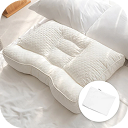
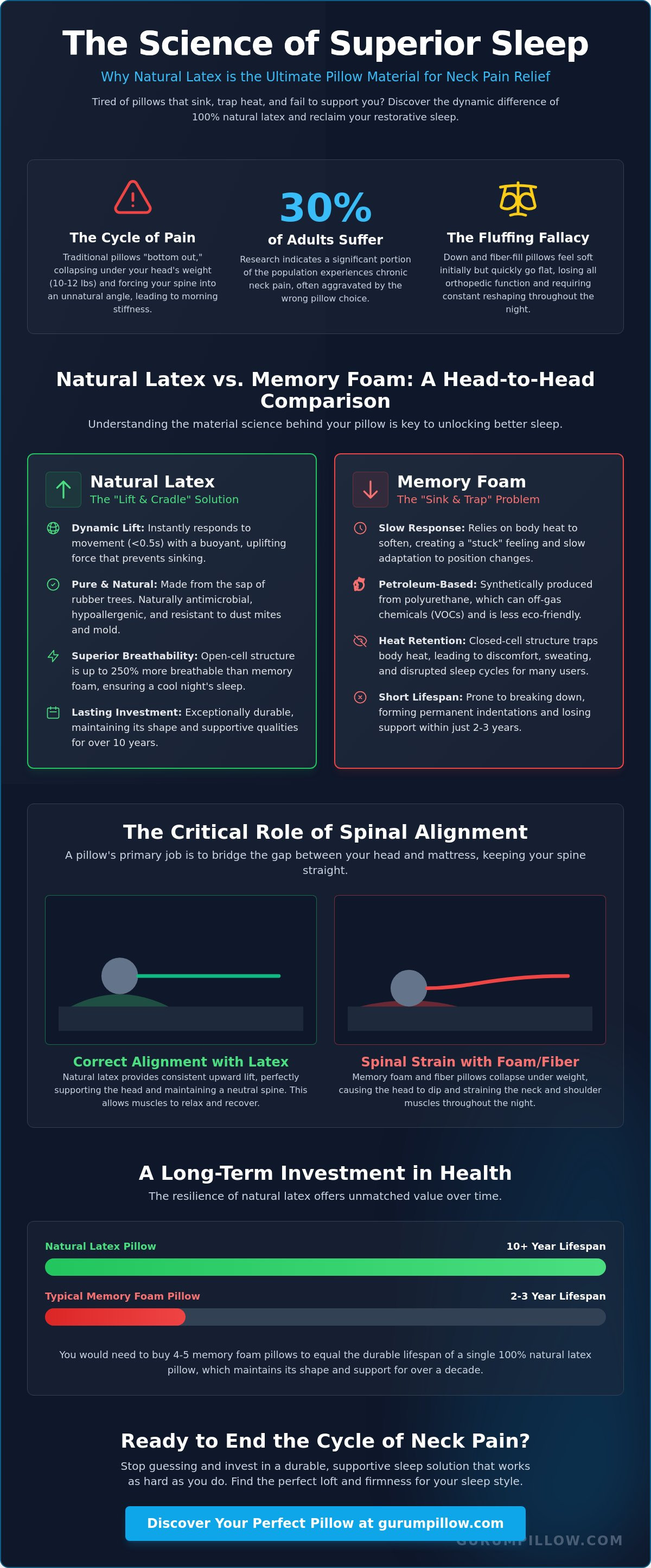
What if the very thing you trust to rest your head on is the primary reason you wake up feeling like your neck is made of concrete? You aren't alone in this struggle. Research indicates that approximately 30% of adults suffer from chronic neck pain, often because they haven't found the right natural latex pillow to support their unique anatomy. You've likely cycled through dozens of fiber-fill or memory foam options that start soft but eventually "bottom out," leaving your spine strained and your muscles tight by morning. It's frustrating to invest in sleep only to wake up with stiffness or allergy flare-ups from dust mites.
You deserve a permanent solution to these restless nights. Discovering why natural latex is the ultimate material for cervical support is the first step toward reclaiming your health. In this guide, we'll explain the science of resilient materials and show you how to choose a pillow that is supportive and comfortable, not rock-hard. We will explore the benefits of a non-toxic sleep environment and provide a clear path to waking up without neck pain. It's time to stop guessing and start investing in a durable solution that works as hard as you do.
Key Takeaways
- Discover the "dynamic lift" of a natural latex pillow and why it provides better cervical support than traditional memory foam.
- Identify the critical differences between 100% organic materials and synthetic blends to ensure a non-toxic, chemical-free sleep.
- Use our selection framework to find your ideal loft and firmness based on your unique sleeping position and shoulder width.
- Learn how proper spinal alignment can finally end the cycle of chronic neck pain and morning stiffness.
- Understand the long-term value of a biodegradable sleep investment that maintains its shape for over a decade.
What is a Natural Latex Pillow? Understanding the Material
Finding a pillow that actually works is exhausting. You've likely tried memory foam that traps heat or down that goes flat by midnight. A natural latex pillow is different. It starts with the milky sap harvested from the Hevea brasiliensis tree. This isn't a petroleum product. A natural latex pillow is a high-resiliency orthopedic tool. It provides a unique, buoyant feel that supports your head without the suffocating sinking sensation of traditional foams.
The core difference lies in the purity of the ingredients. Many brands sell "blended" latex, which mixes natural sap with synthetic fillers like styrene-butadiene. These versions often lack the durability and breathability of 100% natural options. The manufacturing process also determines the final feel of the product. Most pillows use either the Dunlop or Talalay method. The Dunlop process is the original way to create foam latex, resulting in a dense, supportive base. Talalay is a multi-stage process that involves a vacuum and flash-freezing step to create a lighter, airier feel. Both options outperform standard foam in every metric that matters for your sleep quality.
The Origin of 100% Natural Latex
Harvesting natural latex is a sustainable, eco-friendly practice. Workers tap the rubber trees to collect sap, a process that allows the tree to live and thrive for up to 30 years. This botanical origin gives the material a major advantage over petroleum-based foams. It's naturally antimicrobial and hypoallergenic. It resists dust mites, mold, and bacteria without the need for harsh chemical treatments. While memory foam often breaks down and loses its shape within two or three years, natural latex maintains its structural integrity for over 10 years. It's an investment in long-term orthopedic health.
Why Traditional Pillows Fail Your Cervical Spine
Most people wake up with neck stiffness because their pillow lacks a proper foundation. Down and polyester pillows are notorious for "bottoming out." They feel plush for the first five minutes, but they eventually collapse under the 10 to 12 pounds of your head. This collapse forces your cervical spine into an unnatural angle. You spend the night with strained muscles, which leads to that localized, rock-hard tension in your shoulders every morning. A pillow should function as a structural support system. It must keep your head aligned with your spine. When your pillow fails to provide this foundation, your body can't enter the deep, restorative stages of sleep it needs to heal.
The Science of Dynamic Lift: Latex vs. Memory Foam
Most people think softness equals comfort. It doesn't. Traditional memory foam creates a "sink-and-trap" effect. It relies on visco-elasticity, meaning it reacts to your body heat to soften. This process takes time and often leaves you feeling stuck in a crater. A natural latex pillow works on the principle of dynamic lift. It doesn't need your warmth to function. Instead, it responds in less than 0.5 seconds to your every move. This instant reaction provides a "lift-and-cradle" sensation that keeps you on top of the pillow rather than buried inside it.
The physics of "push-back" is what sets this material apart. While foam collapses under weight, latex acts like thousands of microscopic springs. It provides an upward force that counters the weight of your head. This prevents the "bottoming out" feeling common in cheap polyester fills. Because it's so resilient, it maintains its shape for years. You won't find yourself fluffing it in the middle of the night. The material is also naturally cooling. Its open-cell structure is up to 250% more breathable than traditional polyurethane foams. This constant airflow regulates your temperature throughout the 8-hour sleep cycle.
While the material is highly beneficial for most, individuals with a Latex allergy should always consult a specialist, even though the intensive washing process for bedding often removes most reactive proteins. For everyone else, it remains a gold standard for sleep hygiene.
Support vs. Pressure Relief: Finding the Balance
Latex excels at distributing weight evenly across its entire surface. It eliminates the harsh resistance that causes ear pain or jaw stiffness. When you lie down, the material contours to your specific shape without losing its structural integrity. This creates a buoyant feel. It makes the 10 to 12 pounds of your head feel almost weightless. By reducing pressure points, it minimizes the tossing and turning that disrupts deep REM sleep. You get the soft touch of a cloud with the firm foundation of an orthopedic tool. It's supportive and comfortable, but never rock-hard.
Spinal Alignment for Side and Back Sleepers
Alignment is a matter of geometry. For side sleepers, the goal is a perfectly straight line from the ear to the center of the shoulder. A natural latex pillow achieves this by filling the gap between the neck and the mattress without compressing over time. It holds its loft. Back sleepers benefit from the way latex supports the natural C-curve of the cervical spine. It prevents the chin from dropping toward the chest, which keeps airways open and reduces snoring. If you've struggled with morning stiffness, finding the right orthopedic support can finally help you wake up without neck pain.
Health and Safety: The Benefits of Organic Bedding
Your bedroom should be a sanctuary. You spend eight hours every night with your face pressed against your pillow. If that pillow is synthetic, you're likely breathing in volatile organic compounds (VOCs). This process is known as off-gassing. It's the reason new memory foam pillows often smell like a chemical factory. Many polyurethane foams contain flame retardants or formaldehyde that can irritate your lungs. A natural latex pillow eliminates this risk. It's made from botanical sap harvested from rubber trees, not petroleum-based chemicals. This choice protects your long-term respiratory health and prevents the morning grogginess often caused by poor air quality. For the highest safety standards, look for GOTS certification. The Global Organic Textile Standard (GOTS) is the gold standard for organic textiles, ensuring the entire supply chain meets strict ecological and social criteria.
Hypoallergenic Properties and Dust Mite Resistance
Finally stopped waking up sneezing? That's the goal. Traditional pillows are often breeding grounds for microscopic pests. Research from Ohio State University suggests a typical used mattress or pillow can house up to 10 million dust mites. These creatures love the damp, loose fibers of polyester and down. Natural latex is different. It's naturally dense and inherently antimicrobial. Dust mites simply cannot thrive in this dry, solid environment. This makes it a life-changer for chronic allergy and asthma sufferers. You won't wake up with a stuffy nose or itchy eyes. To maximize protection, pair your pillow with an anti-allergy pillow cover. It creates an impenetrable barrier that keeps your sleep space pristine. Support where you need it. Hygiene everywhere else.
Breathability and Temperature Regulation
Nobody likes the "hot-head" syndrome. It's the biggest complaint with memory foam. Synthetic materials trap body heat against your skin, which often leads to restless tossing and turning. A natural latex pillow solves this through a specific pin-core design. During the molding process, thousands of tiny holes are created throughout the latex. These channels allow air to circulate freely. Every time you move, the pillow "breathes." It stays cool. It stays fresh. This isn't just about comfort; it's about orthopedic health. A cooler head leads to deeper, uninterrupted REM cycles. When you combine this breathable core with a natural cotton cover, the moisture-wicking properties increase. Cotton pulls sweat away from your body so you stay dry all night. No more flipping the pillow to the cool side.
How to Choose Your Perfect Natural Latex Pillow
Finding the right natural latex pillow isn't about picking the softest one on the shelf. It's a calculation of your body's geometry. Two factors dictate your comfort: loft and firmness. Loft refers to the height of the pillow, while firmness describes how much it pushes back against your weight. If you have broad shoulders, you need a higher loft to keep your spine neutral. If your pillow is too thin, your head tilts down. If it's too thick, your neck strains upward. You're looking for the "Goldilocks" zone where your ears, shoulders, and hips form a straight line.
Identifying Your Ideal Loft and Firmness
Your primary sleeping position determines your needs. Side sleepers usually require a high loft, typically 5 to 6 inches, to fill the deep gap between the ear and the mattress. This prevents the shoulder from collapsing. Back sleepers benefit from a medium-low loft. This height supports the natural curve of the neck without forcing the chin toward the chest. Stomach sleepers should choose an ultra-low loft or even a very thin shredded option. This prevents the lower back from arching painfully during the night. A 2021 study on cervical spine alignment showed that even a 1-centimeter difference in pillow height can significantly reduce muscle activity in the neck.
You also need to choose between a solid molded core and shredded fill. A solid natural latex pillow provides consistent, bouncy support that won't shift. It's ideal for those seeking orthopedic relief. Shredded latex offers a traditional feel that you can mold and shape, though it lacks the structural integrity of a solid core. Before you buy, always verify certifications. Look for the FSC (Forest Stewardship Council) stamp to ensure environmental responsibility. Check for Oeko-Tex Standard 100 certification to guarantee the material is free from 100 known harmful substances. This ensures your sleep environment is as healthy as it is comfortable, and not rock-hard.
The 14-Day Adjustment Phase
Don't judge your new pillow on the first night. Your body has years of "muscle memory" tied to poor sleep posture. When you switch to a supportive surface, your muscles have to unlearn those bad habits. You might feel a temporary, "good" soreness for the first few mornings. This is a sign your cervical spine is finally realigning. It's similar to the muscle fatigue you feel after a focused workout. Stick with it for at least 14 days. Consistency is the only way to see true orthopedic results and long-term pain relief. Your body will thank you for the patience.
Ready to experience the difference of professional-grade support? Wake up without neck pain with our expertly designed natural latex pillow.
The Long-Term Value: Why Latex is a Sleep Investment
Buying a pillow shouldn't be a recurring yearly chore. Most polyester pillows flatten within 6 to 12 months, quickly losing their ability to support your head and neck. A natural latex pillow is different. It's engineered to last 10 years or more without losing its structural integrity. This durability means you aren't just buying comfort; you're ending the wasteful cycle of disposable bedding.
Choosing biodegradable materials also protects the planet. Synthetic foams are petroleum-based and sit in landfills for centuries. Natural latex is harvested from rubber trees and breaks down naturally at the end of its long life. It's a choice that feels good for your body and your conscience. You're investing in a product that respects the environment as much as it respects your sleep.
Think about the hidden costs of poor sleep. Frequent visits to the chiropractor or monthly massages to treat neck stiffness add up to significant annual expenses. By maintaining proper spinal alignment every single night, you're investing in preventative health. Reducing chronic pain and morning stiffness saves you thousands in long-term healthcare and therapy costs. It's the most cost-effective way to protect your physical well-being.
Durability and Shape Retention
You'll never need to fluff a Gurum Pillow. Traditional pillows rely on trapped air and loose fibers that shift and clump during the night. Latex is different. Resilience tests show that high-quality latex maintains its original height and density even after 50,000 compression cycles. While memory foam often develops permanent dips or "sinkholes" after just two years of use, latex bounces back instantly. It stays supportive, and comfortable (not rock-hard), for a decade or more.
Waking Up Refreshed: The Gurum Promise
Our core mission is simple: Wake up without neck pain. We've spent years bridging the gap between clinical orthopedic science and the plush comfort you crave at the end of a long day. We know the frustration of a closet full of pillows that didn't work. That's why we've perfected a solution that actually delivers on its promises.
The Gurum Premium model provides the ultimate home sleep experience, while our Travel Latex model ensures your spine stays aligned even when you're away from home. You've likely tried dozens of options that left you feeling stiff and tired. It's time to stop guessing and start healing. Take the first step toward better spinal health today. Your future self, waking up refreshed and pain-free, will thank you for making the switch to a natural latex pillow.
Wake Up Refreshed and Pain-Free
You've likely spent years searching for the right support, only to be met with pillows that are either rock-hard or completely flat. A natural latex pillow changes that cycle by providing dynamic lift that reacts to your movements. Unlike memory foam, which traps heat and leaves you feeling stuck, this material stays breathable and supportive all night long. It's a professional-grade tool for your bedroom, designed by orthopedic experts who understand the mechanics of chronic neck pain. You'll finally experience the relief of proper spinal alignment without the chemical odors of synthetic alternatives.
Every Gurum Premium Latex Pillow is crafted from 100% natural latex to ensure you stop waking up with stiffness or allergies. We focus on the science of sleep so you can focus on your day. We've simplified the process with free shipping across the USA. It's time to stop guessing and start healing. You don't have to settle for another morning of discomfort. Trust the expertise that thousands of sleepers already rely on for restorative rest. Your best night of sleep is finally within reach.
Experience the "Dynamic Lift" of the Gurum Premium Latex Pillow
Frequently Asked Questions
Do natural latex pillows have a smell?
Yes, a new natural latex pillow has a faint, sweet scent similar to vanilla that usually disappears within 48 hours. This isn't the harsh chemical odor found in 90% of synthetic memory foams. It's a natural byproduct of the rubber tree sap. If you're sensitive, leave it in a breezy spot for 2 days. It'll be completely scent-free and ready for a restorative night of sleep.
Is a natural latex pillow good for side sleepers with neck pain?
Absolutely, because it provides the instant response needed to keep your spine in a neutral position. About 74% of people sleep on their sides, which requires a pillow that doesn't collapse under pressure. A natural latex pillow pushes back gently to support your neck. You can finally wake up without neck pain because your muscles aren't straining to stay aligned throughout the entire night.
How long does a 100% natural latex pillow typically last?
You can expect a high-quality pillow to last between 5 and 10 years with proper care. Most traditional polyester pillows lose their shape after just 18 months, leading to poor sleep and morning stiffness. Latex is famous for its incredible durability. It maintains its height and bounce for over 3,000 nights. It's a long-term investment in your orthopedic health and daily comfort.
Can I wash a natural latex pillow in the machine?
No, you should never wash a solid latex core in a machine. The heavy spinning can shred the internal structure, and heat from a dryer will ruin the natural rubber. For 100% hygiene, spot clean any stains with a mild detergent and cool water. Always use a breathable, zippered protector. This keeps 99% of dust and moisture away from the core so it stays fresh for years.
What is the difference between Talalay and Dunlop latex?
The difference is in the texture and density. Dunlop latex is made using a traditional pour method, resulting in a denser, firmer feel. Talalay latex undergoes a vacuum and flash-freeze process, creating a lighter, more consistent cell structure. Most sleepers prefer Talalay for pillows because it feels soft and breathable. It's supportive and comfortable (not rock-hard), providing that perfect balance of pressure relief for your head.
Are latex pillows too firm for people used to down?
Latex isn't necessarily firmer than down; it's just more supportive. Down pillows often flatten within minutes, forcing you to constantly fluff them. A latex pillow holds its shape all night long. If you love the squish of feathers, look for a shredded latex option. It mimics the moldability of down while providing the orthopedic alignment that 80% of sleepers actually need to avoid waking up with a sore neck.
Is natural latex safe for people with a latex allergy?
Most people with a mild contact allergy are fine, but those with a severe Type I allergy should be cautious. The manufacturing process involves washing the latex thoroughly, which removes about 98% of the proteins that cause reactions. Since you'll use a pillowcase, your skin never touches the latex directly. However, if you've had a systemic reaction to rubber in the past, consult your physician before making a purchase.