
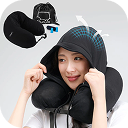
The "head bob" isn't a design flaw in your neck; it's a structural failure in your pillow. Most travelers accept the "bobblehead" effect as an inevitable part of flying. It's actually the result of soft materials collapsing under the weight of your head as your muscles relax. You've likely spent countless flights waking up every few minutes with sharp neck pain and itchy, sweaty skin from cheap synthetic covers. Finding a travel pillow that prevents head bobbing is the difference between arriving at your destination exhausted or waking up refreshed and pain-free.
We understand the frustration of investing in gear that loses its shape before you even reach cruising altitude. Restorative rest depends on anatomical support that keeps your cervical spine in a neutral position even when you're upright. This 2026 guide reveals how the resilient push-back of natural latex provides the necessary stability to eliminate "military neck" stiffness. We will explore how ergonomic support allows for consecutive hours of sleep. You'll learn how to choose a portable solution that stays cool and maintains its integrity for years of travel.
Key Takeaways
- Understand how vertical sleep places up to 12 lbs of pressure on your cervical spine, triggering the "bobblehead" effect during REM cycles.
- Learn why the multi-directional resilience of natural latex stops structural collapse where traditional memory foam pillows fail.
- Discover the two-step process for choosing a travel pillow that prevents head bobbing by matching loft to your specific neck height.
- Compare the stability of various pillow shapes to find a design that cradles your head without restricting airflow or causing skin irritation.
- Explore how the Gurum Travel Latex Pillow provides the anatomical support needed for consecutive hours of restorative sleep on any flight.
Understanding the Head Bob: Why Traditional Travel Pillows Fail
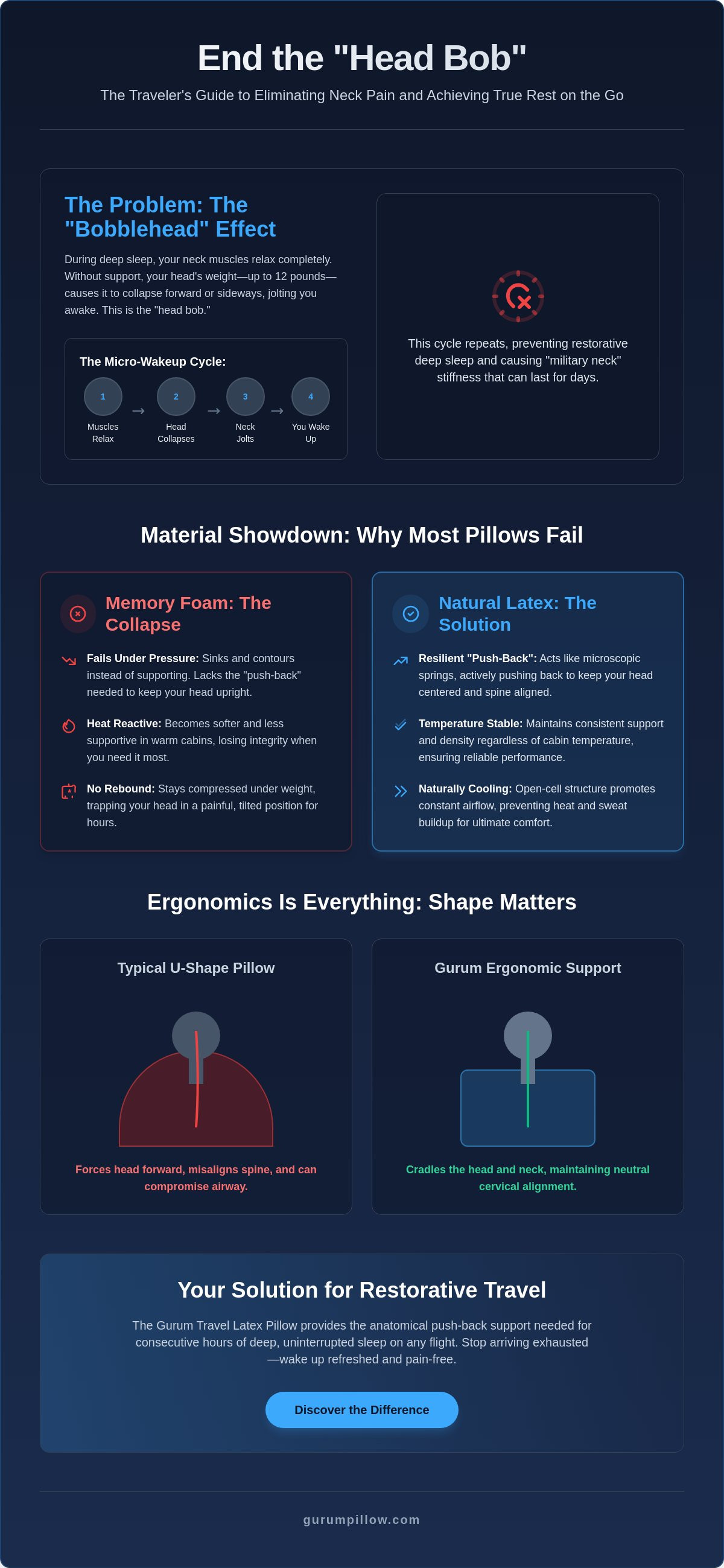
The "head bob" isn't just an annoying travel habit; it's a physiological response to muscle atonia during REM sleep. When you enter deep rest, your brain signals your muscles to relax completely. In a vertical plane seat, this relaxation is disastrous for your posture. Your head, which weighs approximately 10 to 12 pounds, suddenly has no internal support system. Gravity takes over immediately. This creates the "Collapse Point," the exact moment your neck muscles can no longer counteract the weight of your skull.
The result is a "Micro-Wakeup" cycle. Your head drops, your neck jolts to protect the spine, and your nervous system floods with cortisol. You wake up every few minutes, never reaching the deep sleep cycles required to feel human upon landing. Finding a travel pillow that prevents head bobbing is the only way to break this exhausting loop. It requires a material that doesn't just cushion your skin, but actually supports the structural weight of your head.
The Anatomy of Upright Sleep
Your sternocleidomastoid muscle is the primary stabilizer for your neck. During upright sleep, this muscle goes limp, leading to the dreaded forward tilt. While falling forward is common, side-to-side bobbing actually causes more long-term damage. It creates asymmetrical strain on the cervical spine, often resulting in "military neck" stiffness that lasts for days. Travel pillows are designed to mitigate this, but many traditional U-shaped models actually force the head forward because they are too thick behind the skull. This misalignment can even compromise your airway. When your chin drops toward your chest, soft tissues in the throat can partially collapse, leading to snoring or interrupted breathing patterns.
Material Fatigue: Why Memory Foam is Your Worst Travel Partner
Memory foam is marketed as a luxury material, but it's fundamentally flawed for upright support. It's designed to "sink" and contour, which is the exact opposite of the "push-back" support you need to stay vertical. Because memory foam is heat-reactive, it becomes softer and less supportive in warm airplane cabins. It loses its structural integrity right when you need it most.
Synthetic foams also lack "rebound" or resilience. Once your 10-pound head compresses the foam, the material stays flat. It doesn't push back to keep your head centered. This leads to a permanent tilt during long-haul flights, leaving you trapped in an awkward, painful position. To achieve true stability, you need a material that maintains its shape and provides multi-directional support regardless of the cabin temperature or the duration of your trip.
The Science of Push-Back Support: Why Latex Stops the Bobblehead Effect
The secret to staying asleep in the air isn't a tighter strap or a bigger buckle. It's the material's resilience. "Resilient support" is the ability of a material to actively push back against the weight of your head. While memory foam is designed to yield and "bottom out," natural latex acts like a series of microscopic springs. This constant upward pressure is exactly what you need in a travel pillow that prevents head bobbing. It keeps your head centered even when your neck muscles go completely limp during deep sleep.
Planes aren't static environments. They vibrate, tilt, and hit turbulence. In this video where an , the focus is on maintaining a neutral spine. Latex excels here because its cellular structure offers multi-directional support. It doesn't just hold you up; it stabilizes you against the constant micro-movements of the aircraft. This buoyant feel ensures you don't wake up the moment the plane banks or the person next to you moves. If you've struggled with pillows that feel like they're collapsing, switching to a Travel Latex Pillow provides the structural integrity you've been missing.
Natural Latex vs. Synthetic Alternatives
Temperature control is a major failure point for synthetic pillows. Memory foam is heat-sensitive. It gets softer as your body heat builds up, losing its ability to support you mid-flight. 100% natural latex maintains its height and density regardless of the cabin temperature. The open-cell structure also allows for constant airflow. This prevents the "hot neck" syndrome that makes cheap synthetic covers feel itchy and restrictive. For travelers with sensitivities, latex is naturally hypoallergenic, resisting the dust and allergens often found in recycled cabin air.
Maintaining Cervical Alignment on the Go
Proper alignment requires filling the anatomical gap between your shoulder and the headrest. If this gap isn't filled with the correct "loft," your neck kinks at a sharp, painful angle. A firm latex core provides the necessary height to keep your head level. This prevents the lateral bobbing that leads to long-term nerve compression. Natural latex preserves the natural C-curve of the neck by providing firm, responsive lift that follows your anatomy rather than fighting it. This restorative alignment is why you arrive feeling refreshed instead of stiff.
Comparing Travel Pillow Designs for Maximum Stability
Not every pillow shape is capable of surviving a long-haul flight. Most traditional designs prioritize aesthetics or easy packing over actual anatomical support. If you've ever purchased a standard U-shaped pillow at an airport kiosk, you already know the frustration. These classic designs are usually too thin at the back, which forces your head into a forward-leaning position before you even fall asleep. At the same time, the sides are often too wide, providing no real leverage to stop your head from sliding toward your shoulder. This lack of precision is why people continue to struggle with the bobblehead effect.
Wrap-style pillows attempt to solve this by acting like a structured scarf. While they are effective for side-leaning sleepers, many travelers find them restrictive. The tight wrap can feel claustrophobic and often interferes with natural breathing patterns. For a travel pillow that prevents head bobbing to be effective, it must offer a "jawline cradle." This ergonomic contour supports the chin and jaw, physically blocking the forward drop that occurs during muscle atonia. Specialized shapes that follow the natural curves of your neck provide a stable base that doesn't require you to sacrifice comfort for security.
Inflatable pillows are perhaps the most disappointing option for those seeking stability. They suffer from the "bouncy" problem. Because they are filled with air rather than a resilient core, they offer zero contouring. Your head simply rolls off the rounded surface. There is no "give" to accommodate your anatomy, only a hard, balloon-like resistance that increases neck strain.
Stability vs. Portability: Finding the Balance
You shouldn't have to choose between a pillow that works and one that fits in your bag. Many ultra-compact pillows sacrifice the density needed to stop bobbing. Before you buy, try the "Squish Test." If you can easily compress a pillow into the size of a grapefruit with one hand, it won't hold up the 10 to 12 pounds of your head. True support requires a material with enough integrity to remain firm under pressure. For a deeper look at balancing these needs, see The Ultimate Guide to Choosing a Natural Latex Travel Pillow in 2026.
Breathability and Temperature Regulation
Heat is the silent enemy of a good night's sleep. When your neck gets hot, you subconsciously toss and turn to find a cool spot. This movement is what often triggers a head bob, snapping you out of your sleep cycle. Using Anti-Allergy Pillow Covers helps maintain a neutral surface temperature, reducing the urge to shift. Natural latex naturally wicks away moisture and heat through its open-cell structure. Unlike heat-trapping memory foam, it stays cool against your skin, allowing you to remain still and supported for hours.
How to Choose a Pillow That Actually Stops the Bobblehead Effect
Selecting the right gear is about biomechanics, not just soft fabric. To find a travel pillow that prevents head bobbing, you must evaluate how your body interacts with your seat. Most travelers buy based on color or price. This is why they end up with neck pain. Follow these five essential steps to ensure your next trip is actually restful.
- Step 1: Measure your neck height. Use a ruler to find the distance from your shoulder to your ear. Your pillow loft should match this measurement to keep your head level.
- Step 2: Identify your leaning preference. Do you fall forward, left, or right? If you fall forward, you need a design with a reinforced chin cradle.
- Step 3: Test the material density. Apply approximately 10 lbs of pressure to the center. This mimics the weight of a human head. If it bottoms out, it won't stop a bobblehead.
- Step 4: Check the fastening system. Look for adjustable drawstrings or clips. A secure fit keeps the pillow tight to your neck, preventing it from sliding as you shift.
- Step 5: Prioritize hygiene. Ensure the cover is removable and washable. Planes are high-germ environments, and a clean sleep surface is non-negotiable for skin health.
Ready to upgrade your next flight? Explore our Travel Latex Pillow for professional-grade support that never loses its shape.
Assessing Your Travel Sleeping Style
Your seat choice dictates your support needs. The "Window Leaner" can often rely on the plane wall, requiring a pillow with a dense lateral side. The "Aisle Sleeper" has no such luxury. They need 360-degree stability to prevent their head from tilting into the walkway. If you prefer sleeping on your back, look for a thinner rear cushion. A bulky back forces your head forward into a permanent "tech neck" position. Side sleepers benefit most from the high-density lateral walls of a latex pillow, which fill the gap between the ear and the shoulder perfectly.
Sizing and Portability Considerations
The "one size fits all" approach is a myth in ergonomic neck support. A pillow that is too tall will strain your vertebrae, while one that is too short offers no leverage. High-quality travel latex is the ideal solution because it's both firm and compressible. You can roll a latex core into a compact shape for your carry-on, and it will pop back to its original dimensions instantly. To pack efficiently, use a compression bag. This allows you to carry a full-density pillow without sacrificing half of your luggage space. You get the benefits of a professional-grade tool in a portable, travel-friendly package.
The Gurum Travel Latex Pillow: Your Solution for Restorative Travel
You've endured enough flights waking up to your own head snapping forward. The search for a travel pillow that prevents head bobbing ends with a commitment to superior materials. Our pillow is crafted from 100% natural latex, a material chosen for its unique ability to maintain structural integrity under pressure. It doesn't just sit under your chin; it actively cradles the cervical spine. This ergonomic precision ensures that even when your muscles reach total relaxation, your head remains stable. You can finally stop fighting gravity and start resting.
Hygiene is often an afterthought in travel gear, but not here. The natural latex core is inherently breathable and hypoallergenic. It resists the dust mites and allergens that thrive in airplane upholstery. Because the material is open-cell, it allows for constant air circulation. This keeps your skin cool and prevents the "synthetic itch" common with cheap foam alternatives. It's a professional-grade tool designed for the most demanding travel schedules, ensuring a fresh sleep environment every time you board.
Why 100% Natural Latex is the Frequent Flyer's Secret
The defining characteristic of our latex is its buoyancy. Unlike memory foam, which creates a deep, heat-trapping "pit," latex provides a responsive lift. This is vital during turbulence or when the aircraft banks. The material absorbs the vibration while keeping your head centered. Durability is where latex truly outshines the competition. Memory foam tends to degrade and lose its rebound after just a few trips. Natural latex maintains its height and density for years. It's a long-term investment in your health. For a deeper dive into why this material is superior, read the Best Latex Pillow 2026: The Ultimate Guide to Pain-Free Sleep.
The Peace of Mind of a Pain-Free Arrival
There is a specific emotional relief that comes with waking up refreshed. You no longer have to spend the first day of your vacation or business trip nursing a stiff neck. By using the Travel Latex Pillow, you bridge the gap between the restorative sleep you get at home and the challenges of air travel. It provides a familiar, reliable support system that fits in your carry-on. You arrive at your destination ready to engage, not looking for a pharmacy. Gurum solves the chronic frustration of travel-induced neck pain by providing a scientifically backed, resilient support system that stays stable throughout your journey.
Arrive Refreshed and Ready for Your Destination
You now understand that the "bobblehead" effect isn't an inevitable part of travel; it's a symptom of inadequate material support. Restorative sleep during a flight requires a material that actively pushes back against the weight of your head. By selecting a travel pillow that prevents head bobbing, you ensure your cervical spine remains aligned even in a cramped middle seat. You no longer have to settle for the micro-wakeups and sharp pains that define traditional travel sleep.
The Gurum Travel Latex Pillow is crafted from 100% natural latex and was designed by ergonomic experts to solve chronic neck pain. This resilient core maintains its structural integrity for years, unlike synthetic foams that degrade after just a few trips. We want you to experience the physical and emotional relief of a pain-free arrival, so we offer free shipping on qualifying orders within the USA. It's time to bridge the gap between home comfort and the challenges of the cabin.
Stop the bobblehead effect and shop the Gurum Travel Latex Pillow today
Your next journey doesn't have to end in exhaustion. Embrace the comfort of professional-grade support and wake up ready for whatever adventure awaits you.
Frequently Asked Questions
Is there a travel pillow that actually stops my head from falling forward?
Yes, pillows with a reinforced chin cradle or high-density resilient support can stop the forward drop. Most traditional pillows lack the necessary "push-back" to counteract gravity. A dedicated travel pillow that prevents head bobbing uses material like natural latex to maintain structural integrity even when your muscles relax completely. It acts as a physical barrier to the "Collapse Point" during REM sleep.
Why do U-shaped travel pillows often make neck pain worse?
Standard U-shaped designs are often too thick at the back, which forces your cervical spine into a forward-leaning position. This creates unnecessary strain before you even fall asleep. They also tend to be too wide at the sides, offering no leverage to stabilize your head. This misalignment puts up to 12 pounds of pressure on your neck, leading to sharp pain and stiffness upon landing.
Can I use a cervical neck pillow for long-haul flights?
You can, provided the pillow is designed for upright support rather than just horizontal sleep. A travel-sized cervical pillow helps maintain the natural C-curve of your neck. This prevents the lateral sliding that causes nerve compression during long-haul flights. It acts as a portable version of your home orthopedic support, bridging the gap between home comfort and the cabin.
How do I prevent my head from bobbing while sleeping in a car or plane?
Prevention requires filling the anatomical gap between your shoulder and the headrest with a high-loft, high-density material. Secure the pillow tightly using its fastening system to ensure it doesn't shift as you sleep. Using a travel pillow that prevents head bobbing creates a stable base for your jawline. This prevents the sudden jolts that lead to micro-wakeups and cortisol spikes.
What is the best material for a travel pillow: latex or memory foam?
Natural latex is superior for upright travel because it provides resilient support that doesn't bottom out. Memory foam is heat-reactive and often becomes too soft in warm cabins, losing its ability to hold your head up. Latex maintains its shape and density regardless of temperature. It offers a buoyant feel that stabilizes your head against the constant vibrations of the aircraft.
How do I choose the right size travel pillow for my neck?
Measure the distance from your shoulder to your ear to determine the required loft. A pillow that is too tall will strain your vertebrae, while one that is too short will allow your head to tilt at a sharp angle. Look for designs that offer a compressible core. This allows the pillow to adapt to your specific anatomy while still providing enough resistance to keep you centered.
Are latex travel pillows breathable enough for long flights?
Yes, natural latex features an open-cell structure that allows for constant air circulation. This prevents the "hot neck" syndrome that often causes travelers to toss and turn. Pairing a latex core with an Anti-Allergy Pillow Cover ensures a cool, fresh sleep surface even during 12-hour flights. It stays comfortable against your skin without trapping body heat like synthetic foams.
How do you wash a natural latex travel pillow?
You should never submerge the latex core in water or put it in a washing machine. Instead, remove the outer cover and wash it according to the care instructions to maintain post-trip hygiene. If the latex core needs cleaning, spot clean it with a damp cloth and mild soap. Always allow it to air dry completely in a shaded area away from direct sunlight.