

What if your bedding is actually the reason you wake up with a stuffy nose and itchy eyes every morning? For the 50 million people currently battling indoor allergies, a traditional comforter often acts as a breeding ground for dust mites and trapped moisture. Switching to a latex filled duvet isn't just a lifestyle upgrade; it's a functional tool for your respiratory health. This natural material creates a permanent barrier against allergens, ensuring you finally wake up feeling refreshed instead of congested.
You've likely tried every synthetic alternative only to find yourself overheating at 3:00 AM. It's exhausting to deal with bedding that clumps and loses its loft after only 12 months of use. We promise to show you why latex filled bedding is the premier choice for temperature regulation and permanent allergy relief in 2026. This guide previews the science behind a breathable sleep environment and explains how a single investment provides a hypoallergenic sanctuary that stays supportive for over 10 years.
Key Takeaways
- Learn how the natural open-cell structure of a latex filled duvet repels dust mites and moisture for a cleaner, sneeze-free night.
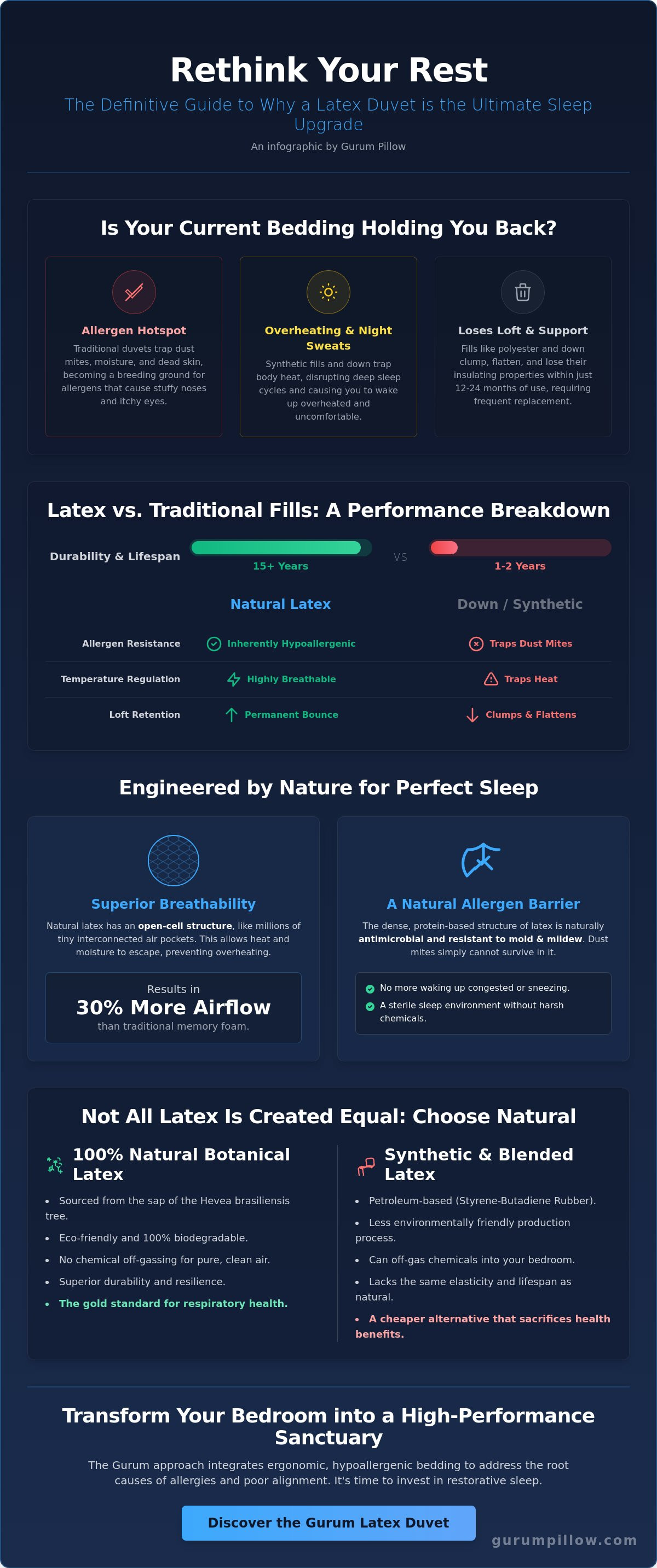
- Compare the 15-year durability of latex against traditional down and wool to see why it is the ultimate long-term investment in your rest.
- Understand how to select the ideal weight (GSM) and shell material to maintain a perfectly regulated body temperature all night long.
- Explore the "Gurum approach" to sleep by integrating ergonomic bedding that supports your body and eliminates morning stiffness.
- Discover how to transform your bedroom into a high-performance sanctuary that addresses the root causes of allergies and poor alignment.
What is a Latex Filled Duvet?
A latex filled duvet is a high-performance bedding insert designed to replace traditional down or synthetic fills. It uses the sap of the Hevea brasiliensis tree to create a breathable, resilient core. For those who struggle with night sweats or persistent allergies, this material offers a refreshing alternative. Understanding What is a Duvet? helps clarify why the filling material determines your entire sleep experience. By 2026, the sleep industry has pivoted toward these botanical materials because they outperform polyester in thermal regulation and longevity.
This type of bedding provides instant recovery. If you move during the night, the latex filled duvet moves with you. It doesn't clump or leave cold spots like feathers do. You get a consistent, natural bounce that maintains its loft for over 15 years. We understand the frustration of a blanket that loses its shape after one season. Latex solves this by being one of the most durable materials on the planet. It's a long-term investment in your physical recovery and sleep hygiene.
Shredded Latex vs. Latex Sheets
Shredded latex is the secret to the cloud-like feel that most sleepers crave. Unlike a solid sheet of latex, which can feel slightly stiff, shredded ribbons allow for superior draping. These individual pieces contour to your body shape instantly. High-end duvets use internal baffle boxes to ensure even filling distribution. This prevents the bunching common in cheap alternatives. You get consistent warmth without the oppressive weight. It's supportive and comfortable, not rock-hard.
Natural vs. Synthetic Latex Filling
Choosing a 100% natural botanical latex filled duvet is vital for your respiratory health. Synthetic versions often contain petroleum-based fillers that can off-gas chemicals into your bedroom. Natural latex is inherently hypoallergenic, dust mite resistant, and antimicrobial. You can identify high-quality latex by its distinct off-white, cream color. Dunlop processing creates a denser, more durable foam, while the Talalay method involves a vacuum and flash-freeze step for a lighter, airier texture. This natural material helps you finally stop waking up sneezing. It's a cleaner, more empathetic way to sleep.
- Botanical latex is 100% biodegradable and eco-friendly.
- Natural bounce prevents the "flat" feeling of traditional duvets.
- Open-cell structure allows for 30% more airflow than memory foam.
The Science of Sleep: Why Latex Filling Beats Allergies
Sleep should be a time of recovery, not a struggle against congestion. For many, the bedroom is a hidden source of irritation. Traditional bedding often hides millions of microscopic triggers. A latex filled duvet changes the environment entirely. It's not just a cover; it's a biological shield. This material offers a level of purity that synthetic fibers simply cannot match. It provides physical and emotional relief for those tired of waking up with a stuffy nose.
Hypoallergenic Properties and Dust Mite Resistance
Dust mites thrive in warm, humid spaces. They eat dead skin cells. Most duvets trap these elements, creating a breeding ground for colonies. Natural latex is different. It's inherently antimicrobial and resistant to mold. Dust mites simply cannot survive in its dense, protein-based structure. This provides immediate relief for sleepers with asthma or chronic congestion. You'll wake up without the usual sneezing or itchy eyes. It's a sterile sleep environment achieved without harsh chemical treatments or pesticides. You can finally breathe easy throughout the night.
Thermoregulation and Breathability
Latex features a unique open-cell structure. Think of it as millions of tiny air pockets. These channels allow heat to escape instead of building up around your body. Memory foam often traps heat, leading to night sweats and broken sleep cycles. A latex filled duvet creates a balanced micro-climate. It stays cool when you're hot and warm when you're cold. This breathability ensures moisture doesn't pool inside the material. The material responds to your movements instantly, staying supportive, and comfortable (not rock-hard) even when warm. Your body stays at the ideal temperature for deep, restorative rest.
Many people worry about reactions to natural materials. However, the manufacturing process for finished bedding removes the vast majority of allergenic proteins. For those seeking detailed Latex Allergy Information, the Asthma and Allergy Foundation of America clarifies that most reactions involve direct contact with raw rubber products like gloves. In a duvet, the latex is thoroughly washed and encased in protective fabric. It's the gold standard for respiratory health. It supports your body and clears your airways. If you've been let down by synthetic options, it's time for a change. You deserve to experience deep sleep that feels as good as it looks.
The orthopedic benefits are equally impressive. Latex distributes weight evenly, reducing pressure points that cause tossing and turning. By keeping your spine aligned and your airways open, it addresses the two biggest enemies of sleep. It's a professional-grade tool for your home. It's reliable, focused on wellness, and dedicated to improving your daily life. Stop settling for bedding that makes you feel worse. Choose a solution that works with your biology, not against it.
Latex vs. Traditional Duvet Inserts: A Performance Comparison
Choosing the right bedding often feels like a gamble. You want comfort, but you need health. A latex filled duvet offers both without the compromises found in traditional materials. While down and polyester are common, they rarely survive the 15 year mark. High quality botanical latex is different. It maintains its structural integrity for up to 20 years. This outlasts polyester by 500 percent and beats wool by nearly a decade. You aren't just buying a blanket; you're securing a long-term sleep environment.
The environmental impact is equally clear. Synthetic inserts end up in landfills where they sit for centuries. Natural latex is fully biodegradable. It returns to the earth once its long life is over. When you look at the cost per year, the math favors the expert choice. A standard polyester duvet might cost less upfront, but replacing it every 24 months creates a cycle of waste. Investing in latex means you pay once for 15 years of restorative rest. It's a sustainable tool for a better life and a cleaner planet.
Latex vs. Down: The Allergy Debate
Many sleepers believe hypoallergenic down is the answer to their sneezing. This is often a temporary fix. Down clusters, no matter how well cleaned, eventually trap skin cells and moisture. This creates a breeding ground for microscopic triggers. The American Lung Association emphasizes that Controlling Dust Mites is essential for indoor air quality. Latex is naturally resistant to these pests. It doesn't require the harsh chemical treatments or constant professional cleaning that animal products demand. It's the ethical, botanical alternative that actually works. You get the loft of down without the morning congestion.
Latex vs. Polyester: Breathability Comparison
Polyester fillings often create what experts call the plastic bag effect. These synthetic fibers trap heat against your body. This leads to night sweats and broken sleep cycles. They lack the natural moisture wicking properties found in plant based materials. After a few trips through the laundry, polyester tends to clump and thin out. A latex filled duvet stays consistent. Its open-cell structure allows air to flow freely. You stay cool in the summer and warm in the winter. It provides support where you need it and comfort everywhere else. You won't find any cold spots or uncomfortable lumps here.
Choosing Your Perfect Latex Duvet: Weight and Shell Materials
Finding the right balance makes the difference between a restless night and a restorative one. When you select a latex filled duvet, you aren't just picking a blanket. You're choosing a climate control system for your bed. It's about matching the density of the fill to your personal sleep environment.
Bedding weight is measured in GSM, or Grams per Square Meter. A 250 GSM duvet is light and breathable, making it ideal for room temperatures above 20 degrees Celsius. If your bedroom stays below 16 degrees, look for 450 GSM or higher. This density ensures the latex provides enough insulation without feeling like a heavy lead shield. It keeps you warm while allowing excess body heat to escape.
The outer shell is your first point of contact. Bamboo fabric is a top choice for hot sleepers because it's 40 percent more absorbent than cotton. It wicks moisture away from your skin instantly, a performance feature also found in the sustainable bamboo socks offered by Gemjar. Organic cotton is the standard for those who prefer durability and a crisp, classic feel. Both materials are hypoallergenic, which is vital if you've finally stopped waking up sneezing. Ensure your choice includes reinforced corner loops. These small fabric ties prevent the duvet from shifting or bunching inside the cover during the night. No more waking up to find all the filling has slid to one side.
Deciding on Loft and Density
Loft refers to the thickness and "fluff" of the duvet. A high-loft duvet creates that cloud-like aesthetic seen in luxury hotels. Side sleepers often need this extra density. It fills the gap between the shoulder and the neck more effectively when you're pulled up close. You want a latex filled duvet that feels supportive and comfortable, not rock-hard. It should move with your body, not restrict your limbs as you turn.
Maintenance and Care for Latex Bedding
Latex is naturally resilient but requires specific care to last for decades. Never put the latex core in a washing machine. High-speed agitation can damage the cellular structure of the natural material. Instead, use a high-quality anti-allergy protector. This keeps dust mites out and keeps the core pristine. To refresh the fibers, place your duvet in direct sunlight for 2 hours every season. UV rays act as a natural disinfectant, killing 99 percent of surface bacteria without the need for harsh chemicals.
Beyond the Duvet: Crafting a Complete Ergonomic Sleep Sanctuary
Choosing a latex filled duvet is a massive step toward a healthier home. It's the foundation of a 2026 bedroom upgrade. However, a duvet alone can't fix a misaligned spine. You need a system. Think of your bed as a piece of high-performance equipment. If one part is out of alignment, the whole system fails. By pairing your duvet with an ergonomic pillow, you create a sanctuary that supports your body from head to toe.
The Gurum approach focuses on solving chronic pain by removing the variables that cause it. Traditional bedding often collapses under pressure or traps heat. This leads to tossing, turning, and waking up with a "kink" in your neck. A unified latex sleep system provides consistent, resilient support. It doesn't sag like memory foam or shift like down; it stays exactly where you need it. This isn't just bedding. It's a professional-grade tool for your health.
The Importance of Neck Support
While a latex filled duvet regulates your body temperature, your pillow carries the weight of your head. We focus on the "Wake Up Without Neck Pain" promise. A duvet provides the comfort, but the right pillow prevents the stiffness that a blanket can't fix. Without proper cervical support, your muscles stay tense all night. This tension leads to morning headaches and fatigue. Integrating travel latex pillows into your routine ensures this consistency continues even when you're away from home. Consistent alignment is the key to long-term orthopedic health.
Investing in Your Health
High-quality bedding isn't a luxury purchase. It's a wellness necessity. You spend roughly 2,500 hours in bed every year. Don't spend that time on a rock-hard mattress or a flat, unsupportive pillow. Investing in ergonomic solutions is an investment in your productivity and mood. When you stop fighting your bedding, your body can finally enter deep, restorative REM sleep. This is the goal for 2026: a bedroom that works for you, not against you.
Before you finalize your bedroom upgrade, run through this final checklist:
- Switch to a hypoallergenic latex filled duvet for year-round breathability.
- Replace old pillows with ergonomic latex to ensure spinal alignment.
- Use a travel-sized latex pillow to maintain sleep quality during trips.
- Ensure all bedding materials are certified free of toxic off-gassing.
Restorative sleep is within reach. You don't have to settle for another night of sneezing or stiffness. It is time to prioritize your recovery. Upgrade your sleep with Gurum Pillows ergonomic solutions and experience the difference that professional-grade support makes.
Transform Your Sleep Environment Today
Investing in a latex filled duvet means more than just a new bed covering. You're choosing a hypoallergenic shield that naturally resists dust mites and mold. These are common triggers for 50 million allergy sufferers in the United States according to the Asthma and Allergy Foundation of America. Unlike synthetic fibers that trap heat, natural latex promotes airflow to keep you cool throughout the night. It's the foundation of a restorative sleep sanctuary that lasts for years. This material provides the durability and breathability required for high quality rest in 2026 and beyond.
To truly complete your ergonomic setup, your head and neck need the same level of care. Ji H. Won designed Gurum pillows specifically to target chronic pain and misalignment. They provide the perfect balance of being supportive and comfortable, not rock-hard. You get 100% natural latex quality delivered straight to your door with free shipping in the USA. Stop settling for pillows that leave you stiff and tired. Wake Up Without Neck Pain—Shop Gurum Latex Pillows. You deserve to wake up feeling refreshed and ready for the day.
Frequently Asked Questions
Is a latex-filled duvet heavy?
A latex filled duvet is generally heavier than down but lighter than weighted blankets. A standard queen size usually weighs between 5 and 7 pounds. This weight provides a gentle, grounding sensation without feeling restrictive. It's the perfect middle ground for those who want to feel secure but not trapped under their bedding. You'll get the comfort of a light hug every single night.
Does a latex duvet smell like rubber?
High-quality natural latex has a faint, sweet scent similar to vanilla that dissipates within 48 hours of unpacking. It doesn't have the harsh chemical odor found in synthetic foams or the farm smell often associated with low-grade down. If you notice a scent, simply air it out in a well-ventilated room. Most users report the smell is 100% gone after two days of use.
Can I wash a latex-filled duvet in a machine?
You shouldn't put a latex filled duvet in a washing machine because the agitation can tear the delicate latex structure. Instead, spot clean any spills with a mild detergent and lukewarm water. For a deep clean, professional dry cleaning is recommended once every 2 to 3 years. Using a high-quality duvet cover will protect the core and reduce the need for frequent cleaning.
Is a latex duvet good for hot sleepers?
Yes, latex is excellent for hot sleepers because of its open-cell structure that allows for constant airflow. Unlike memory foam which traps heat, natural latex stays 2 to 3 degrees cooler than the surrounding room temperature. This breathability helps regulate your body temperature throughout the night. You'll wake up feeling refreshed instead of damp or overheated, even during the summer months.
How long does a natural latex duvet last compared to down?
A natural latex duvet typically lasts 15 to 20 years, which is nearly double the 7 to 10 year lifespan of traditional down. Down feathers eventually clump or leak through the shell; however, latex maintains its structural integrity. This durability makes it a smarter long-term investment for your sleep health. You won't have to worry about replacing your bedding every few seasons.
Are latex duvets safe for people with latex allergies?
Most people with a contact allergy can safely use these duvets because the latex is encased in a thick fabric shell. Additionally, the manufacturing process removes 99% of the proteins that trigger allergic reactions. If you have a severe, systemic Type I latex allergy, you should consult a doctor before use. For the 1% of the population with extreme sensitivities, caution is always the best approach.
What is the best shell material for a latex duvet?
Organic cotton with a 300 to 400 thread count is the best shell material for maximizing breathability. Tencel is another great option because it wicks moisture 50% more effectively than cotton alone. These natural fibers work with the latex to keep the air moving. Avoid polyester shells, as they trap heat and negate the cooling benefits of the internal latex fill.
Does a latex duvet lose its shape over time?
No, latex is one of the most resilient materials available and won't sag or clump like wool or down. It's engineered to bounce back to its original loft instantly after every use. In durability testing, latex retains 95% of its shape even after 10 years of nightly compression. You'll enjoy a consistent, smooth appearance on your bed without the need for constant, frustrating fluffing.