

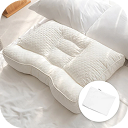
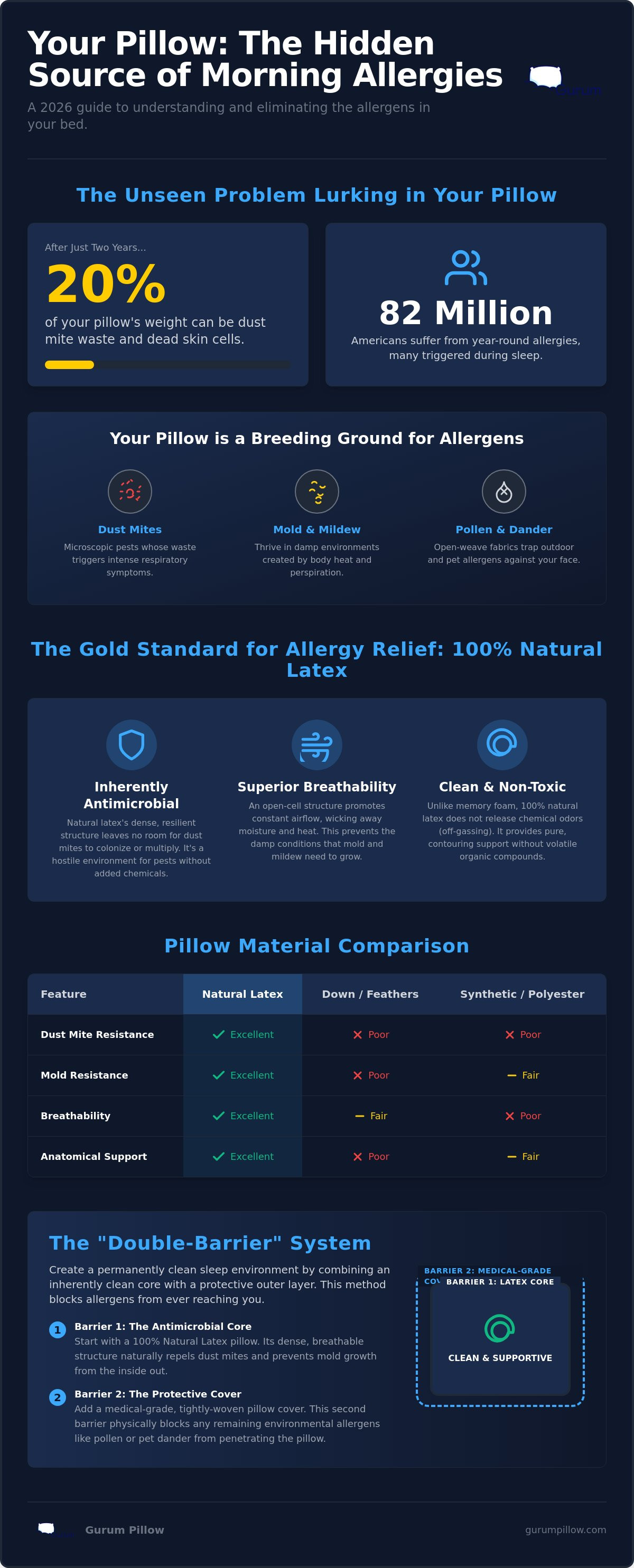
Did you know that after just two years, up to twenty percent of your pillow's weight could consist of dust mite waste and dead skin cells? It is a staggering reality for the 82 million Americans currently living with year-round allergies. If you wake up every morning with a congested nose and a foggy head, you aren't just tired; your immune system is likely fighting a battle while you sleep. You have probably tried products labeled as hypoallergenic pillows for allergies before, only to find they trap dust and irritants within weeks.
It is frustrating to choose between breathing clearly and getting proper neck support. You deserve a sleep environment that remains as clean as the day you bought it. This 2026 guide reveals how a science-backed "Double-Barrier" system can finally provide the respiratory relief you need. We will explore why natural latex is the gold standard for antimicrobial rest. We'll also explain how medical-grade covers prevent mold and dust mite colonization for the long term. It's time to stop settling for restless nights and start waking up refreshed and pain-free.
Key Takeaways
- Uncover the hidden reasons why your current pillow might be trapping microscopic triggers and disrupting your rest.
- Learn why 100% natural latex is the gold standard for resisting dust mites and preventing moisture buildup.
- See how the "Double-Barrier" method uses hypoallergenic pillows for allergies to create a permanently clean sleep environment.
- Compare materials like latex, down, and synthetics to find the best balance of breathability and anatomical support.
- Discover how to combine ergonomic comfort with medical-grade protection for a restorative, symptom-free morning.
Why Your Pillow is Often the Secret Source of Morning Allergies
You wake up with itchy eyes, a scratchy throat, and a heavy head. It feels like a minor cold that disappears by noon, only to return the next morning. This cycle is often called the "pillow flu." It isn't a virus; it's an allergic reaction to the environment inches from your face. Many people turn to hypoallergenic pillows for allergies to find relief, but the results are often disappointing. This happens because the term itself is frequently misunderstood and poorly applied in the bedding industry.
At its core, a hypoallergenic pillow is designed to minimize allergic reactions by resisting common triggers like dust mites and mold. However, you need to look past the label. There is no federal regulation governing this claim. To understand What 'hypoallergenic' really means, you must realize it is often used as a marketing buzzword rather than a medical guarantee. Traditional pillows, especially those filled with down or cheap polyester, act as a "dust mite trap." They accumulate dead skin cells and moisture, creating a buffet for microscopic pests that traditional washing can't fully eliminate.
Common Triggers Hiding in Your Bedding
The primary culprit is the dust mite. These microscopic organisms don't bite, but their waste contains proteins that trigger intense respiratory symptoms. They thrive in warm, humid environments. When you sleep, your body heat and breath provide the perfect climate for them to multiply. Mold and mildew also join the party. Night sweats turn standard fiberfill into a damp breeding ground. Even if your home is clean, open-weave fabrics on standard pillows invite pet dander and seasonal pollen to settle deep within the core. Once inside, these particles stay trapped against your face for eight hours every night.
The Long-Term Health Impact of Poor Sleep Hygiene
Living with "pillow flu" isn't just an inconvenience; it's a strain on your body. Constant exposure to allergens causes chronic inflammation in your nasal passages. This swelling forces you into mouth breathing. When you can't breathe through your nose, you are more likely to snore and experience fragmented sleep. This lack of deep, restorative rest leads to the dreaded morning brain fog. Your brain simply hasn't had the chance to recover because your immune system was working overtime all night. Choosing high-quality hypoallergenic pillows for allergies is the first step in breaking this inflammatory cycle and reclaiming your vitality.
Why Natural Latex is the Gold Standard for Allergy Relief
Searching for hypoallergenic pillows for allergies often leads to a cycle of disappointment. You buy a synthetic pillow that feels fresh for a month, only for your symptoms to return as the material breaks down. 100% natural latex breaks this cycle. It is not just a surface-level solution; it is a material that is inherently antimicrobial from the inside out. Unlike traditional fiberfill, natural latex doesn't require chemical treatments to stay clean. It relies on its own biological makeup to repel the irritants that keep you awake.
Many people choose memory foam as an alternative, but they often struggle with a chemical smell known as off-gassing. Natural latex offers a cleaner path. It provides the same contouring support without the volatile organic compounds found in petroleum-based foams. It's a professional-grade tool for your bedroom that prioritizes your respiratory health. By choosing a Premium Latex Pillow, you are investing in a core that remains sterile and supportive for years, rather than months.
Latex vs. Dust Mites: A Structural Battle
Dust mites are major indoor triggers for people with asthma and allergies. In a standard pillow, these microscopic organisms burrow into the loose fibers and "void spaces" to colonize. Natural latex is different. Its structure is dense and resilient, leaving no room for mites to hide or multiply. This physical density acts as a natural deterrent. Because the material is harvested from rubber trees, it contains protective proteins that make it a naturally hostile environment for pests. You get a deep, clean sleep without the need for harsh pesticide treatments often found in "treated" synthetic bedding.
Breathability and Moisture Management
Humidity is the lifeblood of mold and dust mites. Traditional pillows trap your body heat and perspiration, creating a damp internal climate. Natural latex features an open-cell structure that allows air to circulate freely with every movement you make. This constant airflow regulates temperature and ensures that moisture never has a chance to settle. The rapid evaporation of moisture through the latex core creates a dry environment that naturally inhibits the growth of mold and fungi. When the core stays dry, it stays sterile. This is why hypoallergenic pillows for allergies made from latex are so effective; they remove the environmental factors that allergens need to survive.
Durability also plays a massive role in your health. While you should replace polyester pillows every year, a high-quality latex pillow maintains its antimicrobial properties for three to four years. It doesn't flatten, it doesn't trap skin cells, and it doesn't become a colony for triggers. It is a long-term commitment to your wellness.
Comparing Hypoallergenic Materials: Latex vs. Down vs. Synthetics
Choosing the right material is the difference between waking up refreshed or waking up congested. Not all hypoallergenic pillows for allergies provide the same level of protection. While many brands use the label, the internal structure of the pillow determines whether it actually resists triggers or eventually becomes a home for them. 100% natural latex remains the premium choice because it combines physical support with biological resistance. It doesn't just block allergens; its very composition is hostile to them.
Down alternative pillows, typically made of polyester, are the most common budget option. They are marketed as allergy-friendly because they lack organic dander. However, these pillows are prone to flattening and clumping. The loose fibers create microscopic gaps where dust and moisture settle. Memory foam offers better contouring but often suffers from heat retention. This warmth, combined with potential chemical off-gassing, can irritate sensitive respiratory systems and create a cozy environment for dust mites. Natural down and feather pillows are the most problematic. Even high-end versions contain organic proteins that trigger reactions for many sleepers.
The 'Washability' Myth
Many people believe that a washable pillow is a clean pillow. This is often a misconception. While surface washing removes some dust, it rarely kills deep-seated mite populations in fiberfill. Even worse, thick synthetic pillows are incredibly difficult to dry completely. Trapped moisture inside a warm core is an open invitation for mold growth. A naturally resistant core, like latex, stays cleaner over time because it never allows a colony to start. To maximize your protection, the Mayo Clinic suggests using allergen-proof bedcovers to create a physical barrier that keeps microscopic triggers away from your face.
Support vs. Sensitivity
Allergy relief shouldn't come at the expense of your posture. If you are a side sleeper, you need a pillow that maintains its height throughout the night. When a pillow flattens, your head tilts, which can restrict your airways and worsen nighttime congestion. Achieving proper cervical support is essential for keeping your nasal passages open and your spine aligned. By reducing physical strain on your neck and shoulders, you allow your body to focus on restorative rest rather than fighting for air. High-quality hypoallergenic pillows for allergies must provide this structural integrity to be truly effective for long-term health.
How to Create an Allergy-Proof Sleep Environment in 2026
Achieving a truly clean sleep environment requires more than just a single purchase. It is about building a system that actively repels triggers throughout the night. While high-quality hypoallergenic pillows for allergies are the foundation, they work best when supported by a comprehensive bedroom strategy. By following a science-backed protocol, you can transform your bedroom from a source of irritation into a restorative sanctuary.
Creating this sanctuary involves five essential steps:
- Step 1: Start with a naturally resistant core. A 100% natural latex foundation is your first line of defense against colonization.
- Step 2: Add a medical-grade physical barrier. An anti-allergy cover blocks microscopic particles that the core alone cannot stop.
- Step 3: Wash all outer bedding weekly. Use water heated to at least 130°F to effectively eliminate surface dust mites and oils.
- Step 4: Manage your air. Keep room humidity levels below 50% to create an environment where mold and mites cannot survive.
- Step 5: Purify the atmosphere. Use a HEPA air filter to capture airborne pollen and dander before they land on your sleeping surface.
The Role of the Anti-Allergy Pillow Cover
A standard pillowcase is designed for comfort, not protection. Its weave is usually loose enough for dust mites and skin cells to pass through easily. A specialized Anti-Allergy Pillow Cover uses a microscopic tight-weave barrier to seal the pillow core. This prevents your shed skin from entering the pillow and stops existing allergens from escaping toward your face. A zippered enclosure is non-negotiable. It ensures 360-degree protection, leaving no gaps for triggers to bypass the barrier. This "Double-Barrier" approach is the only way to guarantee long-term relief.
Maintaining Your Hypoallergenic Sanctuary
Your floor affects your bed. Dust from carpets can easily become airborne and settle on your bedding. Vacuuming regularly with a HEPA-certified machine ensures these particles are actually trapped rather than redistributed. Even the most durable bedding eventually needs replacing. For optimal health, plan to refresh your sleep setup every two to three years. When caring for your best latex pillow, remember to avoid direct sunlight or soaking the core. Simply spot clean the cover to maintain the material's integrity. To start building your own defense system, explore our full range of clean sleep solutions today.
The Gurum Solution: Combining Ergonomic Support with Allergy Relief
You shouldn't have to choose between a healthy neck and a clear airway. Most hypoallergenic pillows for allergies prioritize one at the expense of the other. They are either soft and allergy-resistant but offer zero support, or they are firm and ergonomic but trap heat and dust. The Premium Latex Pillow is designed to bridge this gap. It serves as the foundation of a healthy, pain-free night by merging anatomical precision with nature's most resilient material.
Our commitment to your wellness starts with 100% natural latex. We avoid the synthetic fillers and harsh chemical treatments found in traditional bedding. This purity ensures that your sleep surface is inherently hostile to microscopic triggers from day one. When you pair this core with the Gurum Anti-Allergy Pillow Cover, you achieve the definitive "Double-Barrier" effect. This system provides a medical-grade physical shield over a naturally antimicrobial heart. It is a professional-grade tool for your home that delivers both physical comfort and environmental safety.
Relief for Every Sleeper
Consistency is key for restorative rest. Side sleepers often struggle with pillows that bottom out, leading to neck strain and restricted breathing. The resilient nature of our latex ensures a consistent loft that doesn't shift or flatten during the night. This stability keeps your cervical spine aligned and your airways open. For those who fear losing their progress while away from home, the Travel Latex Pillow offers the same high-level protection in a portable size. Our customers frequently share stories of waking up for the first time without a heavy head or a scratchy throat. They don't just feel better; they feel transformed by the power of truly clean sleep.
Ready to Transform Your Sleep?
Settling for "good enough" bedding is a hidden cost to your daily health. Chronic congestion and morning fatigue shouldn't be your baseline. The Gurum system is built on three simple pillars: Support, Breathability, and Purity. By addressing the root cause of your discomfort, we help you reclaim the energy you lose to poor sleep hygiene. It is time to stop fighting your pillow and start trusting it. Experience the difference with a Gurum Premium Latex Pillow today.
Reclaim Your Mornings with a Clean Sleep Sanctuary
Your journey to restorative rest starts with a single, intentional choice. You now understand that a truly clean sleep environment requires more than just a label; it requires a system that actively repels triggers. By combining a naturally antimicrobial core with a medical-grade physical barrier, you can finally break the cycle of morning congestion and fatigue. This "Double-Barrier" approach ensures that your bedding remains a sanctuary rather than a trap for irritants.
Selecting high-quality hypoallergenic pillows for allergies is the most effective way to reclaim your respiratory health and daily vitality. Ji H. Won specifically designed the Gurum system to solve the shared struggle of chronic pain and environmental sensitivities. Our 100% natural latex core provides the perfect balance of anatomical support and biological purity. It is time to stop fighting your environment and start healing while you sleep.
Ready to experience the transformation? Shop the Premium Latex Pillow and Anti-Allergy Covers today to begin your path to better health. We provide free shipping on qualifying US orders to help you build your clean sleep environment with ease. You deserve to wake up every morning feeling refreshed, clear-headed, and fully restored.
Frequently Asked Questions
What is the best pillow material for someone with severe allergies?
100% natural latex is the most effective material for those with severe environmental sensitivities. It is inherently antimicrobial and resistant to dust mites without the need for added chemical treatments. Unlike synthetic fibers, its dense composition and botanical properties create a naturally hostile environment for common triggers.
Do hypoallergenic pillows actually work for dust mites?
High-quality hypoallergenic pillows for allergies effectively work by eliminating the "void spaces" where dust mites typically thrive. Materials like natural latex are too dense for mites to burrow into. When you combine a resistant core with a medical-grade cover, you create a physical barrier that stops colonization and prevents waste from reaching your airways.
How often should I wash my hypoallergenic pillow cover?
You should wash your anti-allergy pillow cover once a week in water that is at least 130°F. This temperature is the scientific standard required to kill dust mites and neutralize their allergens. Regular washing also removes the shed skin cells and oils that provide a food source for microscopic pests.
Can a pillow cause morning congestion and sneezing?
Your pillow is a primary cause of morning congestion and sneezing if it has accumulated dust mite waste, mold, or pet dander over time. This is often referred to as "pillow flu." If your symptoms are most intense immediately after waking but fade by mid-morning, your bedding is the likely culprit.
Is natural latex better than memory foam for allergies?
Natural latex is superior to memory foam for allergy relief because it is more breathable and lacks harsh chemicals. Memory foam is a petroleum-based product that often traps heat and moisture, which can lead to mold growth. Latex's open-cell structure keeps the core dry and doesn't release the volatile organic compounds (VOCs) that trigger many people.
How do I know if my current pillow is causing an allergic reaction?
You can tell if your pillow is causing a reaction by tracking the timing of your symptoms and checking the pillow's age. If you wake up with itchy eyes or a stuffy nose that clears once you leave the bedroom, the pillow is likely the source. Additionally, a pillow that has gained significant weight since you bought it is likely filled with years of trapped debris.
What does 'hypoallergenic' actually mean when it comes to bedding?
The term 'hypoallergenic' means a product is designed to be less likely to cause an allergic reaction, though the label isn't officially regulated. In the world of bedding, it usually implies the material is resistant to dust mites and mold. You should always look past the label to verify the material's actual antimicrobial properties and physical structure.
Do latex pillows have a strong chemical smell?
100% natural latex pillows don't have the heavy chemical odor common with synthetic foams. They may have a very mild, sweet scent when first opened, but this dissipates rapidly. Because they are made from botanical sources rather than petroleum, they don't off-gas the fumes that often bother those with chemical sensitivities.