

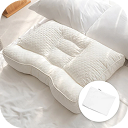
Up to 90% of people with allergic asthma are hypersensitive to dust mite proteins, yet most are sleeping on pillows that actively invite these triggers into their airways. If you wake up with chronic sinus pressure or interrupted breathing, your bedding is likely working against you. You've probably spent money on 'allergy-friendly' products that didn't deliver, leaving you frustrated and tired. We understand that cycle of disappointment. Finding a genuine hypoallergenic pillow for dust mite allergies is about more than just a label. It's about choosing materials that are scientifically proven to resist microscopic pests.
This 2026 guide will show you how the right pillow material can eliminate triggers and restore your sleep health. We'll break down the latest OEKO-TEX and GOLS certifications that define a truly clean sleep environment. You'll learn how to find a pillow that supports your neck while keeping your airways clear. It's time to stop relying on morning medication and finally experience the physical relief of restorative rest.
Key Takeaways
- Learn the critical difference between material-based resistance and surface barriers to ensure your bedding actually protects your airways.
- Discover why natural latex is the superior choice for a hypoallergenic pillow for dust mite allergies due to its high physical density and antimicrobial nature.
- Understand how an open-cell structure maintains constant airflow, eliminating the moisture and heat that allergens need to survive.
- Follow a practical 4-step checklist to build a complete allergy-free sleep environment, starting with the right foundation for your head and neck.
- Explore how specialized ergonomic designs provide deep physical relief without compromising on strict environmental and non-toxic standards.
What is a Hypoallergenic Pillow for Dust Mite Allergies?
A hypoallergenic pillow for dust mite allergies is more than a luxury. It is a functional tool designed to disrupt the lifecycle of indoor allergens. In the past, "hypoallergenic" was often used as a vague marketing term. In 2026, the standard is much stricter. A true hypoallergenic pillow uses materials that are inherently resistant to mold, mildew, and pests. This is different from "allergen-proof" products. While an allergen-proof cover acts as a physical barrier or shield, a hypoallergenic pillow relies on the physical properties of its core material to prevent infestation from the start. Choosing the right material ensures that your sleep surface remains a sanctuary rather than a breeding ground. It's about proactive prevention instead of just reactive blocking.
The Science of Dust Mite Triggers
Understanding the enemy is the first step toward relief. What are dust mites? They are microscopic arachnids that feed on dead human skin cells. The mites themselves don't cause your congestion. The real culprit is a potent protein found in their fecal matter and decaying exoskeletons. When you sleep, your head creates a microclimate of heat and humidity. This warmth fuels mite colonies, allowing them to multiply rapidly. If you wake up with itchy skin, watery eyes, or persistent morning sneezing, you are likely reacting to this accumulated biological waste. These symptoms are your body's inflammatory response to breathing in microscopic debris all night long. Clear airways require a sleep surface that stays cool and dry.
Why Your Current Pillow Might Be the Problem
Traditional pillows made of down or polyester fiberfill are essentially "dust mite hotels." These loose materials trap moisture and provide deep pockets for skin cells to collect. You might have heard the myth that pillows gain significant weight over several years due to mite accumulation. While the exact numbers vary, the reality of biological buildup is undeniable. Simple washing often fails to reach the dense center of fiberfill pillows where colonies hide. Without consistent airflow, these pillows remain damp and inviting. A high-quality hypoallergenic pillow for dust mite allergies solves this by using a dense, breathable core that refuses to host these triggers. It's about creating an environment where allergens simply cannot survive. By prioritizing breathability plus physical resistance, you can finally break the cycle of morning respiratory irritation.
Why Natural Latex is the Gold Standard for Allergy Relief
Natural latex isn't just a comfort choice; it's a biological shield. While many synthetic pillows rely on chemical coatings to repel allergens, 100% natural latex is inherently antimicrobial. It comes from the sap of rubber trees, which contains botanical proteins that are naturally inhospitable to microscopic pests. This means a hypoallergenic pillow for dust mite allergies made from latex doesn't just block triggers. It refuses to host them. According to this clinical overview of dust mite allergies, environmental control is a pillar of managing respiratory health. Latex provides that control through its very DNA. It's a permanent solution that doesn't rely on temporary surface treatments.
Naturally Resistant vs. Chemically Treated
Many 'allergy-friendly' polyester pillows are treated with antimicrobial sprays. These chemicals often wash away after a few cycles, leaving you unprotected. Even worse, these treatments can trigger reactions for those with multiple chemical sensitivities (MCS). Natural latex offers a cleaner path. It contains no volatile organic compounds (VOCs) and doesn't off-gas like synthetic foams. You get long-term protection without the chemical odor. If you want to experience this purity, our Premium Latex Pillow offers a 100% natural core that stays clean year after year. It's the difference between a chemical barrier and a naturally pure environment.
Breathability and Temperature Regulation
Dust mites crave two things: heat and moisture. Traditional foams often trap body heat, creating a warm incubator right under your face. Natural latex features an open-cell structure. This allows air to circulate constantly through the pillow's core. It wicks away moisture and keeps the surface cool. By maintaining a dry environment, you remove the primary resource mites need to survive. A dry pillow is a healthy pillow. This structural breathability also prevents the growth of mold and mildew, which are common secondary triggers for morning congestion. You stay cool; the mites stay away.
Most fiberfill pillows lose their shape and efficacy within six months. They flatten out and begin to accumulate the biological debris we discussed earlier. Latex is different. It's incredibly resilient, maintaining its physical density and hypoallergenic properties for years. It doesn't break down into dust or provide the pockets where skin cells collect. Investing in a high-quality latex core means you're buying a long-term health solution, not a disposable sleep accessory. You deserve a pillow that supports your breathing as reliably as it supports your neck. It's time to stop settling for pillows that expire before you've even broken them in.
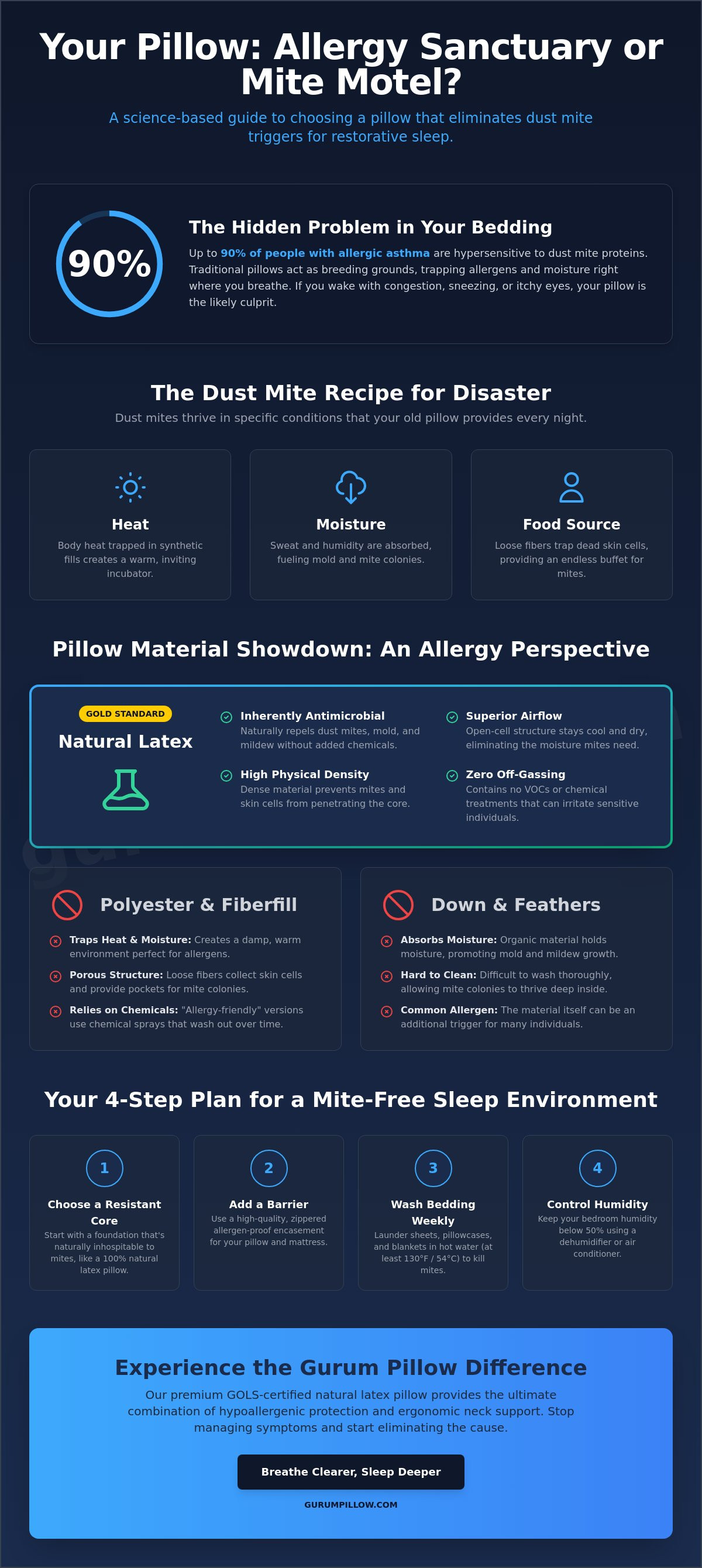
Pillow Material Comparison: Finding Your Best Match
Selecting a hypoallergenic pillow for dust mite allergies isn't just about softness. It's about structural integrity. Most people choose based on price or initial feel, but for allergy sufferers, the material's biological footprint is what truly counts. You need a surface that doesn't just feel good but actually protects your respiratory health. Let's compare the three most common materials across four key metrics:
- Dust Mite Resistance: Natural latex wins here. Its physical density and constant airflow make it a fortress. Memory foam often traps heat, while down alternative has gaps that invite mites to settle in.
- Longevity: You'll typically get 5 or more years out of a high-quality latex core. Synthetic options usually degrade and start trapping dust within 6 to 12 months.
- Support: Latex provides anatomical alignment for the neck. Memory foam can feel restrictive or "stuck." Down alternative often goes flat by midnight, leaving your neck unsupported.
- Washability: Latex is naturally clean. It doesn't require the frequent, aggressive washing that fiberfill needs to stay sanitary.
Latex vs. Memory Foam
Synthetic memory foam is a popular choice, but it has a hidden flaw. Its structure is designed to absorb and hold. This includes your body heat. This warmth creates a cozy incubator for the very triggers you're trying to avoid. Natural latex offers a different experience. It provides "instant" bounce-back support that keeps your head elevated and cool. You won't deal with the chemical off-gassing common in synthetic foams. If you're curious about the specific mechanics of this, read our guide on Latex vs. Memory Foam: Why Natural Support Wins. It's about choosing a material that works with your body, not against it.
The Down Alternative Trap
Down alternative pillows are often marketed as the "safe" choice because they don't use animal feathers. This is a half-truth. While the polyester fibers themselves aren't allergens, the way they're bundled is problematic. The spaces between the fibers act like tiny traps for dead skin and moisture. Every time you fluff your pillow, you're releasing a cloud of microscopic debris into your breathing zone. This is a major hurdle when controlling dust mites in your home. You might save money today, but the hidden cost of replacing these pillows every 6 months makes them an expensive habit that keeps you congested. True relief requires a solid, breathable core that refuses to harbor irritants.
How to Build a Dust-Mite-Free Sleep Environment
Creating a sanctuary for your respiratory health requires a multi-layered defense. While a hypoallergenic pillow for dust mite allergies is the most critical component, it works best as part of a holistic system. You deserve to wake up without the heavy weight of congestion or the irritation of itchy eyes. Transforming your bedroom into a clean-air zone involves four intentional steps that disrupt the environment mites need to thrive. By following this protocol, you can significantly reduce your reliance on morning allergy medications and reclaim your energy.
- Step 1: The Foundation. Start with a 100% natural latex core. As we discussed, its physical density and antimicrobial properties provide the first line of defense that synthetic fibers simply cannot match.
- Step 2: The Barrier. Encase your pillow in a high-thread-count anti-allergy cover. This adds a secondary layer of protection that traps even the smallest microscopic particles.
- Step 3: Maintenance. Wash all linens, including pillowcases and sheets, once a week in water that reaches at least 130°F. This specific temperature is required to effectively neutralize allergens.
- Step 4: Air Quality. Use a HEPA air purifier in the bedroom and maintain humidity levels below 50%. A dry, filtered environment is the greatest enemy of indoor triggers.
The Role of Anti-Allergy Pillow Covers
Pore size is the most important technical detail when selecting a barrier. To effectively block dust mite waste, a cover must have a pore size of less than 10 microns. This weave is tight enough to stop allergens while still allowing the natural breathability of your latex pillow to function. A quality cover doesn't just protect you; it protects your investment by keeping skin cells and moisture away from the pillow's core. The Gurum Pillow Anti-Allergy Pillow Cover is specifically designed to fit these dimensions perfectly, ensuring no gaps or loose fabric where irritants can settle. It's a simple addition that provides profound peace of mind.
Daily Habits for Allergy Sufferers
Small changes in your morning routine can lead to big improvements in air quality. Resist the urge to make your bed immediately after waking up. Leaving the covers pulled back for an hour allows the moisture from your sleep to evaporate, dehydrating any potential mite populations. Keep your bedroom as a dedicated sleep zone; avoid upholstered furniture or heavy drapes that act as dust magnets. When you clean, always use a vacuum equipped with a HEPA filter. This prevents the machine from simply blowing microscopic debris back into your breathing space. These habits, combined with a hypoallergenic pillow for dust mite allergies, create a sustainable path to clear airways and deeper rest. Protect your sleep with our specialized covers.
The Gurum Pillow Solution: Why Our Premium Latex Pillow Wins
The Gurum Pillow Premium Latex Pillow is our definitive answer to the cycle of morning congestion and chronic neck stiffness. In 2026, a truly effective hypoallergenic pillow for dust mite allergies must do more than just repel pests. It must provide the anatomical support your body needs to recover while you rest. Our solution is built on a foundation of 100% natural, breathable latex. We never use synthetic fillers or chemical additives that can irritate sensitive respiratory systems. This is a professional-grade tool for your home, designed to provide a dual-action benefit: allergen-free lungs and a pain-free neck. Our ergonomic 'Cloud' design specifically supports the cervical pillow needs of the sleeper by maintaining natural spinal curvature throughout the night.
We understand the frustration of wasting money on products that promise relief but fail to deliver. Most pillows lose their integrity within months, becoming flat, lumpy, and eventually, a habitat for allergens. Our latex maintains its shape and its protective properties for years. It's a single, perfected solution for those who refuse to let environmental sensitivities dictate their quality of life. You're not just buying a pillow; you're investing in a transformative experience where you wake up refreshed, clear-headed, and ready for the day.
Ergonomic Support Meets Clean Sleep
Better posture does more than just align your spine. It helps keep your airways open. When your head and neck are properly supported, your respiratory path remains unobstructed, which can further reduce the feeling of morning congestion. Our 100% natural latex is engineered for extreme durability. Unlike fiberfill, it won't flatten out or become a dense trap for skin cells and moisture. For a deeper look at how we balance comfort with anatomical health, explore our Best Latex Pillow for Neck Pain: The 2026 Guide. The Gurum Pillow team has perfected the balance between a soft, inviting feel and the firm support required for a healthy sleep posture.
Complete Protection with Anti-Allergy Covers
While the latex core is naturally resistant to triggers, our Anti-Allergy Pillow Cover provides an essential second layer of defense. It's crafted to be soft to the touch yet completely impermeable to microscopic particles. The fabric is highly breathable, allowing the open-cell latex to regulate your temperature effectively while maintaining a strict barrier against dust mite waste. This combination ensures that your sleep environment remains pristine from the inside out. You can experience the full restorative power of our hypoallergenic pillow for dust mite allergies by choosing our complete system. Shop the Premium Latex Pillow & Anti-Allergy Bundle to reclaim your respiratory health and finally enjoy the deep, uninterrupted rest you deserve.
Reclaim Your Rest and Breathe Freely Again
You've spent too many mornings struggling with congestion and fatigue. Restoring your sleep health starts with a fundamental shift in your bedroom environment. By moving away from synthetic "dust mite hotels" and embracing the antimicrobial power of natural latex, you're choosing a path of long-term respiratory relief. Finding the right hypoallergenic pillow for dust mite allergies is the cornerstone of this transformation. When you combine a dense, breathable core with consistent cleaning habits and specialized barriers, you create a sanctuary where irritants simply cannot survive.
The Gurum Premium Latex Pillow was designed by a chronic pain specialist to offer the precise balance of cervical support and allergen resistance. It features a 100% natural latex core that refuses to harbor triggers, ensuring your airways stay clear all night long. We're committed to your wellness, which is why we offer free shipping across the USA to help you start your journey toward better health without delay. Experience allergen-free rest with the Gurum Premium Latex Pillow. You don't have to accept morning irritation as your reality. A better night's sleep is finally within your reach.
Frequently Asked Questions
Can you be allergic to a latex pillow?
Yes, a small percentage of the population has a latex allergy, but it is rarely triggered by high-quality pillows. Most premium latex cores undergo an extensive washing process that removes the majority of allergenic proteins. Since your skin doesn't touch the core directly, reactions are highly unlikely for most people. If you have a known severe allergy, consult your doctor before switching.
How often should I replace a hypoallergenic pillow?
Replacement frequency depends entirely on the material. Traditional fiberfill pillows should be replaced every 6 to 12 months as they accumulate biological debris. A high-quality hypoallergenic pillow for dust mite allergies made of natural latex can last 5 years or more. Its resilient structure prevents the internal breakdown that creates dust and attracts pests over time.
Do anti-allergy pillow covers actually work?
Yes, they are highly effective if the pore size is small enough to block microscopic particles. You must look for covers with a pore size under 10 microns to ensure mite waste cannot pass through. Using a specialized cover adds a vital second layer of defense. It keeps your pillow core pristine and ensures your breathing zone remains clear of triggers.
Is a memory foam pillow good for dust mite allergies?
Memory foam is generally better than down, but it isn't the optimal choice. While the material is dense, it often traps body heat and moisture. This creates a warm, damp environment that dust mites find inviting. Natural latex remains the superior choice because it combines high density with an open-cell structure for constant, cooling airflow.
What is the best pillow material for someone with asthma?
Natural latex is widely considered the best material for asthma sufferers due to its antimicrobial properties. It doesn't off-gas harmful chemicals like synthetic foams and it naturally resists the mold and mites that trigger attacks. Choosing a hypoallergenic pillow for dust mite allergies ensures that your sleep surface doesn't contribute to nighttime respiratory distress or morning wheezing.
How do I know if my pillow has dust mites?
You can't see them, but your body will often signal their presence. If you wake up with a stuffy nose, itchy eyes, or a dry cough that clears up once you're out of bed, your pillow is likely infested. Older pillows that have lost their shape or have been used for more than two years are also high-risk environments for mite colonies.
Can I wash a natural latex pillow in the machine?
No, you should never put a natural latex pillow in a washing machine or dryer. The aggressive agitation and high heat will tear the delicate cell structure and ruin the support. Instead, spot clean the core with a damp cloth and mild soap. Always use a removable, machine-washable cover to keep the interior clean without risking structural damage.