


Most pillows are designed to fail. They leave you with a literal pain in the neck after just a few months of use. It's exhausting to invest in your rest only to wake up stiff, sneezing, or sinking into a sagging heap of foam. You deserve a solution that offers consistent spinal alignment without a constant cycle of replacement costs. If you're searching for a true "once-a-decade" investment, you've likely wondered: how long do latex pillows last? While polyester fills often flatten within a year, natural latex is engineered for entirely different results.
We understand the frustration of chronic discomfort and the need for a hygienic sleep environment. This guide explains exactly how many years of restorative rest you can expect from a premium natural latex pillow. You'll learn the specific signs that your current pillow is failing your anatomy. We will cover the 2026 OEKO-TEX safety standards and explain why latex maintains its shape long after memory foam has crumbled. By the end, you'll know how to secure a hypoallergenic sanctuary that supports your neck for five to ten years or more.
Key Takeaways
- Discover the 5-to-10-year lifespan of natural latex. It is a "once-a-decade" investment in your anatomical health and daily comfort.
- Understand how open-cell structures prevent sagging. Maintain perfect spinal alignment and consistent support from night one to night 3,000.
- Compare durability across all major bedding types. Learn exactly how long do latex pillows last and why they offer the lowest long-term cost-per-sleep.
- Identify the "Crumble Test" and other signs of oxidation. Know exactly when it is time to refresh your sleep surface for maximum hygiene.
The Real Lifespan of a Latex Pillow: What to Expect in 2026
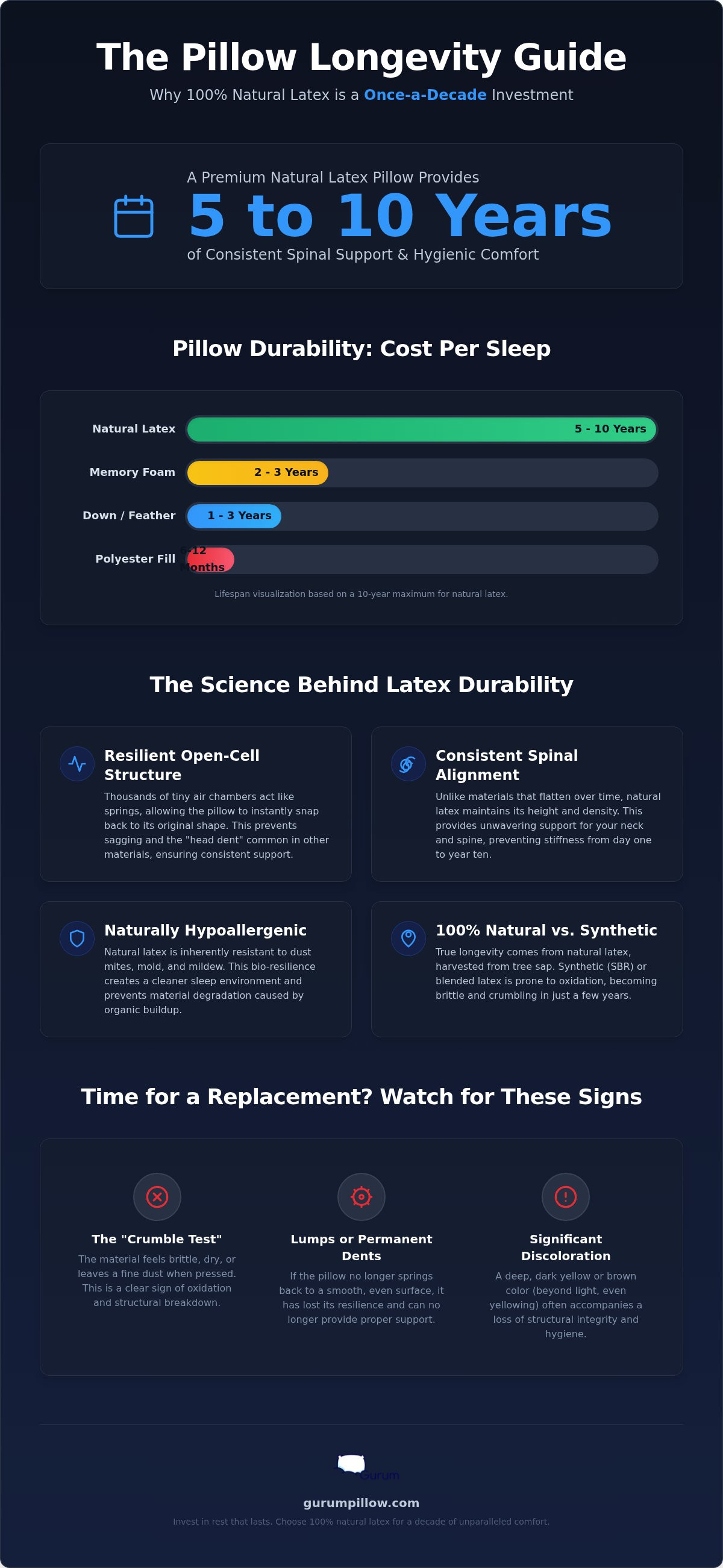
Investing in your sleep shouldn't be a yearly chore. Most people are used to the frustrating cycle of buying a cheap pillow, watching it flatten in six months, and waking up with a stiff neck. When you switch to natural materials, the timeline changes completely. On average, 100% natural latex pillows provide 5 to 10 years of consistent, high-quality sleep. This durability makes them a "Buy It For Life" staple in the bedding world. While polyester pillows often end up in a landfill after just 12 months, a quality latex pillow remains a reliable wellness partner for a decade.
It's helpful to distinguish between physical durability and functional support. You might wonder, how long do latex pillows last before they actually stop working? A pillow might stay in one piece for a decade, but its true value lies in its ability to hold your head in the correct position. Cheap materials lose their "loft" or height quickly, leading to chronic cervical strain. Natural latex maintains its structural integrity. It keeps your spine aligned on day 3,000 just as well as it did on day one. This is due to the inherent resilience of the harvested sap, which doesn't fatigue under the weight of your head like synthetic fibers do.
Natural vs. Synthetic Latex: The Longevity Gap
Not all latex is created equal. Many budget options use synthetic SBR (Styrene-Butadiene Rubber) or "blended" foam. These materials are prone to oxidative degradation. They turn yellow, become brittle, and eventually start to crumble into dust within just a few years. This is why natural latex pillows are the gold standard for durability. They are harvested from organic tree sap, which is naturally more elastic and resistant to the environment. Choosing 100% natural material ensures you aren't just buying a pillow; you're securing a hygienic, long-term solution for your neck health.
Why Latex Doesn't Sag Like Traditional Materials
Traditional fiberfill or down pillows rely on trapped air for fluffiness. Over time, those fibers compress and "bottom out." You end up with a flat pancake that offers zero neck support. Foam latex works differently. It features an open-cell structure that acts like thousands of tiny springs. When you lift your head, the material immediately snaps back to its original shape. It doesn't develop the permanent "dent" or sagging middle that plagues memory foam. This constant push-back response is the secret to its decade-long lifespan. It ensures that the pillow adapts to your movements without ever losing its core supportive strength.
The Science of Durability: Why Latex Outlasts the Rest
Understanding the molecular makeup of your bedding changes how you view a good night's rest. While most materials begin to degrade the moment you take them home, natural latex is biologically engineered for endurance. Its open-cell structure promotes constant airflow. This ventilation prevents the moisture buildup that typically leads to rot or internal mildew. When asking how long do latex pillows last, you have to look at the vulcanization process. This heat treatment creates a permanent, resilient bond between the rubber molecules. It ensures the material doesn't lose its "bounce" even after years of supporting your head weight.
Another factor in its longevity is temperature neutrality. Many synthetic foams soften and lose their shape as they absorb your body heat. Natural latex remains stable regardless of the room temperature. It doesn't "melt" or thin out over time. This scientific consistency is why experts often rank it at the top when discussing how long pillows last compared to traditional alternatives. It simply refuses to sag. By maintaining its density, it provides the same relief on year five as it did on night one.
Hypoallergenic Properties and Hygiene
A cleaner pillow is a longer-lasting pillow. Traditional pillows often double in weight over a few years because they accumulate dead skin, sweat, and dust mites. This organic buildup accelerates the breakdown of the material. Natural latex contains specific botanical proteins that inherently repel these irritants. Bio-resilience is the material's ability to resist organic breakdown from bacteria and fungi. To further protect this core, using an anti-allergy pillow cover creates an extra barrier against moisture. This keeps the internal structure pristine and extends the hygienic life of your investment. If you struggle with sensitivities, our Premium Latex Pillow offers the lasting purity your respiratory system needs.
Structural Memory vs. Memory Foam
The term "memory" is often misunderstood in bedding. Memory foam is viscoelastic, meaning it changes shape based on heat and pressure. Unfortunately, those chemical bonds break down every time they're warmed by your body. This leads to the "bottoming out" effect where you eventually feel the mattress or bed frame beneath you. Natural latex is resilient, not viscoelastic. It pushes back against pressure instantly. This creates the long-term orthopedic benefits of natural latex that users love. It holds your cervical spine in a neutral position for a decade. It doesn't rely on chemicals that evaporate or soften, making it the most reliable choice for chronic neck pain sufferers. When you consider how long do latex pillows last, remember that latex keeps its "memory" of your healthy alignment forever.
Latex vs. Memory Foam vs. Down: A Durability Comparison
Choosing a pillow based solely on the price tag is a trap that leads to a cycle of constant replacement. Most shoppers pick up a budget fiberfill or memory foam option because it feels soft in the store. However, these materials have a built-in expiration date that arrives much sooner than you think. To understand the true value of your bedding, you have to look at the replacement cycle. While a standard polyester pillow might only last 6 to 24 months, natural latex is in a different league entirely. This longevity is why many sleep experts consider it the only "Buy It For Life" material in the industry.
The data on durability is clear. Memory foam pillows typically begin to lose their structural integrity after 2 to 3 years. Down and feather options often last between 1 and 3 years before the clusters collapse and lose their loft. When you ask how long do latex pillows last, the answer is usually 5 to 10 years. This isn't just about the pillow staying in one piece; it's about the material's ability to provide the same level of support on night 3,000 as it did on night one. Lower-quality materials suffer from "fatigue," where they eventually fail to bounce back, leaving your neck unsupported during the night.
The Hidden Cost of Cheap Pillows
Initial price is a poor metric for value. Consider the math of a "cheap" $30 polyester pillow. If you have to replace it every six months to avoid a flat, lumpy surface, you will buy 20 pillows over a 10-year period. That is a $600 investment in mediocre sleep. When you calculate the "Cost Per Sleep," a single premium natural latex pillow is significantly more affordable. Beyond the financial cost, there is a heavy environmental impact. Choosing one durable pillow instead of 20 disposable ones keeps a massive amount of non-biodegradable waste out of our landfills. How long do latex pillows last? Long enough to save you hundreds of dollars and protect the planet.
When Support Fails: The Health Cost
Cheap materials don't just hurt your wallet; they impact your physical well-being. Down and synthetic foams lose their loft gradually. You might not notice the sag at first, but your body does. This inconsistent support is a primary driver for recurring neck pain issues and chronic morning stiffness. As a pillow "bottoms out," your cervical spine falls out of alignment, leading to tension headaches and restless nights. Natural latex provides "linear support." It maintains a consistent height and firm response throughout its entire lifespan. You won't have to worry about your pillow failing you in the middle of the night, ensuring you wake up refreshed for years to come.
How to Make Your Latex Pillow Last 10+ Years
Your pillow is a vital investment in your long-term health. To ensure it continues to protect your neck for a decade, you must treat the material with specific care. Natural latex is incredibly resilient, but it has a few unique vulnerabilities that can shorten its life if ignored. By following a consistent maintenance routine, you can easily push the lifespan of your pillow toward the 12-year mark. When people ask how long do latex pillows last, they are often surprised to learn that the answer depends heavily on their cleaning habits and environmental choices.
The most critical rule for latex care is to avoid direct sunlight at all costs. UV rays act as a destructive catalyst for oxidation. This process leads to a condition called "dusting," where the once-supple latex becomes brittle and crumbles into small, dry particles. If you want to freshen your bedding, avoid the temptation to leave it on a sunny windowsill or clothesline. Instead, place the core in a well-ventilated, shaded room. Natural fresh air is all the material needs to release any trapped scents without damaging its structural integrity.
The Golden Rule: Keep it Dry and Shaded
Water management is the second pillar of durability. You should never put a solid latex core in a washing machine or a tumble dryer. The mechanical agitation of a wash cycle can tear the delicate open-cell structure, while the high heat of a dryer will permanently warp the shape. If a spill occurs, spot clean the area immediately with a damp cloth and a very mild detergent. Always allow the material to air-dry completely in a cool spot before replacing the covers. Trapping moisture inside the pillow can lead to internal degradation, even in materials that are naturally mold-resistant.
Using Protective Layers Effectively
Protective layers serve as your first line of defense against the elements. While you sleep, body oils and sweat can slowly penetrate the surface of a pillow. Over several years, these organic fluids can begin to break down the botanical proteins in the latex. A dual-cover system is the most effective way to prevent this. We suggest using a thin, permanent inner cover to hold the shape and a high-quality, breathable outer protector for daily use. To maintain a pristine sleep surface, we recommend our Anti-Allergy Pillow Cover. It creates a hygienic barrier that blocks moisture while allowing the latex to breathe. This simple addition can add years of functional life to your Premium Latex Pillow.
A successful maintenance routine ensures your support never wavers. Follow these steps to keep your pillow in professional-grade condition:
- Weekly: Wash your outer protector and pillowcase in hot water to eliminate surface bacteria.
- Monthly: Remove all covers and let the latex core breathe in a shaded, well-ventilated area for three hours.
- Quarterly: Gently vacuum the surface of the core using a clean upholstery attachment to remove any stray dust.
- Immediately: Blot-never rub-any spills to prevent liquid from soaking into the center of the foam.
This proactive approach ensures that the question of how long do latex pillows last always results in a decade of pain-free rest. You aren't just cleaning a household object; you're preserving a specialized tool designed for your anatomical recovery. By keeping the core dry and protected, you ensure that the "push-back" support remains as effective on year ten as it was on night one.
Signs It’s Finally Time to Replace Your Latex Pillow
Even the most resilient materials eventually reach their limit. While you now know how long do latex pillows last in a general sense, your specific sleep environment and body chemistry dictate the actual expiration date. It's essential to differentiate between a pillow that is simply "old" and one that is actively harming your sleep quality. If you find yourself constantly adjusting a material that was once self-correcting, the internal structure has likely fatigued beyond repair. It's no longer about the age of the latex; it's about the safety of your cervical alignment.
One of the most definitive ways to check your pillow's health is the "Crumble Test." Over many years, exposure to ambient oxygen and moisture can cause the latex to oxidize. If you remove the cover and notice small, yellowed particles or a brittle texture, the core is breaking down. This is often accompanied by "support fatigue." You might notice that while the pillow looks fine, it feels softer than it used to. If you've started waking up with that familiar, nagging neck pain again, the material has lost the "push-back" response required to hold your head in a neutral position.
Hygiene also plays a role in the replacement cycle. Natural latex is bio-resilient, but after a decade, persistent odors can develop if oils have bypassed your protective covers. If a lingering scent remains despite airing it out in a shaded area, it may signal deep-core bacterial growth. At this stage, the material is no longer providing the hypoallergenic sanctuary you need for clear breathing and restorative rest.
Physical vs. Sensory Indicators
Physical changes in the pillow often mirror changes in your own body. After ten years, you might notice "pitting" or an uneven surface where your head rests most frequently. This structural decline creates pressure points that disrupt your sleep cycle. However, you should also consider your evolving anatomical needs. If you've gained muscle in your shoulders or changed your primary sleep position, the loft that worked for you five years ago might be insufficient today. Waking up with morning stiffness is the ultimate signal that your pillow's functional life has ended.
The Gurum Pillow Difference: Quality That Endures
At Gurum Pillow, we don't believe in disposable bedding. Our founder, Ji H. Won, started this mission to solve his own chronic neck pain, which means every product is built with an obsession for durability. We understand the frustration of pillows that quit on your neck after just a few months. That's why our Premium Latex Pillow is engineered specifically for a 10-year support cycle. We use 100% natural materials that resist sagging and maintain their density through thousands of sleep cycles. When you consider how long do latex pillows last, remember that a Gurum Pillow isn't just a purchase; it's a long-term commitment to your physical recovery. Invest in a decade of pain-free sleep with the Gurum Premium Latex Pillow.
Secure a Decade of Restorative Sleep
You no longer have to settle for the frustration of a pillow that fails within months. By choosing natural materials and following a simple maintenance routine, you can enjoy consistent orthopedic support for up to ten years. Understanding how long do latex pillows last is the first step toward ending the cycle of morning stiffness and unnecessary bedding waste. Whether you are performing the crumble test on an old favorite or upgrading for the first time, your neck deserves the unwavering "push-back" support of 100% natural sustainable latex.
Our Premium Latex Pillow is designed by experts specifically to heal chronic neck pain and provide a hygienic, hypoallergenic sanctuary. We prioritize your wellness with free national USA shipping on every order. Stop the cycle of sagging pillows, get the Gurum Premium Latex Pillow today. You deserve to wake up feeling refreshed and pain-free every single morning.
Frequently Asked Questions
Can a natural latex pillow really last 10 years?
Yes, natural latex is one of the most durable bedding materials available. Unlike fiberfill that flattens or memory foam that loses its "memory," the vulcanized rubber structure maintains its density. With proper care, such as avoiding UV light and moisture, a premium pillow can easily provide consistent support for a full decade. This longevity is why it is considered a sustainable, once-a-decade investment for your anatomical health.
Do latex pillows get softer over time?
No, high-quality latex is known for its resilience, which means it maintains its firm push-back response. While it may feel slightly more "broken in" after the first few weeks of use, it does not suffer from the significant softening or bottoming out seen in memory foam. If your pillow suddenly feels much softer, it may be a sign of internal structural fatigue or moisture damage rather than normal aging.
Why is my latex pillow turning yellow or crumbling?
Yellowing and crumbling are classic signs of oxidation, often caused by exposure to direct sunlight or high heat. UV rays break down the botanical proteins in the latex, making the material brittle and dry. This is why we emphasize keeping the core shaded and away from clothes dryers. If you see significant "dusting," the structural integrity is compromised, and it is time to look for a replacement to ensure proper neck support.
Is it worth spending more on a latex pillow?
Yes, because the cost per sleep is much lower than budget alternatives. A single premium pillow that lasts 10 years replaces roughly 10 to 20 cheap polyester pillows. You aren't just paying for the material; you're paying for a decade of guaranteed spinal alignment and hypoallergenic safety. When you calculate how long do latex pillows last compared to the recurring cost of cheap foam, the initial investment is clearly the more economical choice.
How do I know if my latex pillow has lost its support?
The most reliable indicator is waking up with new or returning neck stiffness. You can also perform a physical check by pressing into the center of the pillow. It should snap back to its original shape instantly. If there is a delay in the response or if you can feel the mattress surface through the pillow when lying down, the cell structure has fatigued. Your body's comfort is the ultimate guide for replacement.
Can you wash a latex pillow to make it last longer?
You should never submerge the latex core in water or put it in a washing machine. Excessive moisture can actually shorten the lifespan by promoting internal degradation. Instead, use a high-quality protector to keep the core clean. To freshen the pillow, remove the covers and let the core air out in a shaded, well-ventilated room. This keeps the material dry and preserves the resilient bonds of the natural rubber.
Do latex pillows attract dust mites as they age?
No, natural latex is inherently resistant to dust mites and mold throughout its entire life. The botanical proteins in the sap are naturally repellent to these irritants. While the outer covers will still need regular washing to remove surface skin cells, the internal core remains a hypoallergenic sanctuary. This makes it a superior choice for long-term respiratory health compared to down or traditional foam pillows.
Does Gurum Pillow offer a warranty on their latex pillows?
We stand behind the durability of our materials. While specific warranty details can be found on our product pages, our Premium Latex Pillow is engineered to meet the highest industry standards for longevity. We focus on providing a solution that doesn't quit on your neck. If you have questions about how long do latex pillows last or need help with your specific pillow, our team is here to support your journey to restorative sleep.