

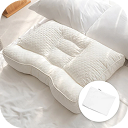
That soft, cloud-like pillow you bought to soothe your neck pain might actually be the very thing causing your 7 a.m. stiffness. You've likely tried five different "orthopedic" options only to find they're either too flat within 90 days or feel like sleeping on a concrete brick. It's frustrating to spend money on the best pillow for neck support only to wake up with a headache starting at the base of your skull. We understand the struggle because we've been there too.
Finding real relief isn't about trial and error; it's about the exact science of cervical alignment. In this guide, you'll learn how to identify the specific loft your body needs to keep your spine neutral and how to choose a material that stays supportive without feeling rock-hard. We're going to break down the structural requirements for pain-free sleep and show you how to find a durable solution that helps you wake up refreshed every single morning.
Key Takeaways
- Understand the science of the cervical C-curve and why maintaining neutral alignment is the secret to waking up without stiffness.
- Discover why the best pillow for neck support relies on active "push-back" support rather than just contouring to keep your spine stable.
- Learn how to calculate the ideal pillow loft based on your specific shoulder width to prevent morning aches.
- Master the 14-day transition period and learn how to help your neck's muscle memory adjust to a healthier sleeping posture.
- Explore the design philosophy behind latex density that offers structural integrity without ever feeling rock-hard or unforgiving.
Understanding the Anatomy of Neck Support and Spinal Alignment
Waking up with a stiff neck isn't just a nuisance; it's a signal from your body that your sleep environment is failing you. The primary goal of any sleep setup is neutral alignment. This means your head, neck, and spine form a straight, unstrained line from your crown to your hips. When you achieve this, your muscles finally relax. Finding the best pillow for neck support is the only way to ensure this alignment lasts through the night.
Your cervical spine isn't a straight line. It has a natural, inward "C-curve" that requires specific structural reinforcement. If your pillow is too high, your chin craned toward your chest. If it's too low, your head tilts backward. Both positions overstretch the delicate ligaments in your neck. You might notice biological markers of this strain by 3 AM, such as tingling in your arms, sharp stiffness, or tension headaches that throb behind your eyes. You deserve to wake up refreshed, and that starts with respecting your anatomy.
The Role of the Cervical Spine in Sleep Quality
Your neck consists of seven small vertebrae that protect your spinal cord and support the weight of your head. These bones require constant, contoured support for all 8 hours of your rest. When your neck is out of position, it restricts blood flow and compresses sensitive nerves. Cervical lordosis is the healthy inward curvature of these seven vertebrae that must be maintained to prevent long term orthopedic issues. Without proper support, your body stays in a state of "micro-stress" all night, preventing you from reaching deep, restorative sleep stages.
Why Traditional Pillows Fail for Neck Pain
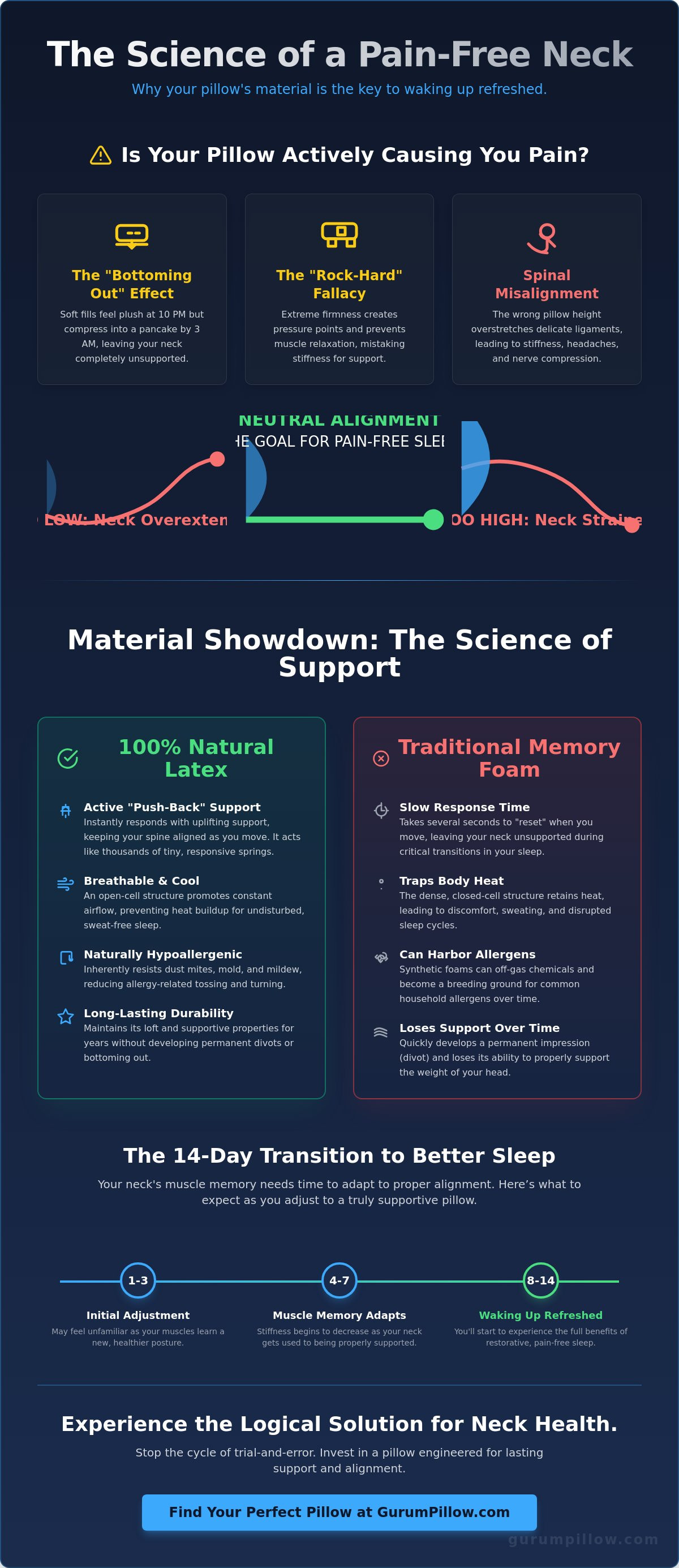
Most traditional pillows rely on materials that offer a false sense of comfort. We often see the "Bottoming Out" effect. This happens when down or low-density foams feel plush at 10 PM but compress into a thin pancake by 3 AM. Once the material collapses, your neck loses its support system.
There is also the "Rock-Hard" fallacy. Many people believe a stiff pillow equals a supportive one. This isn't true. A high-quality orthopedic pillow provides a balance of pressure relief and structural integrity. It should be firm enough to hold your alignment but soft enough to cradle your unique shape. Support where you need it, and comfort everywhere else. If your current setup isn't meeting these standards, you should review these 7 Signs Your Current Pillow is Causing Neck Pain. It's time to Wake Up Without Neck Pain and experience the relief of a perfected sleep surface.
Latex vs. Memory Foam: The Science of Support Material
Choosing the best pillow for neck support often comes down to a battle between two popular materials: 100% natural latex and synthetic memory foam. While they might look similar on a shelf, their performance under your neck is worlds apart. The difference starts at the microscopic level. Natural latex features an open-cell structure that allows air to circulate constantly. Synthetic memory foam is a dense, closed-cell material. It's designed to trap energy, which unfortunately includes your body heat.
This structural difference dictates how you feel at 3:00 AM. Memory foam is a "slow-recovery" material. It relies on your body heat to soften and mold to your shape. If your room is cold, the pillow feels like a brick. If you move, the foam takes several seconds to "reset," leaving your neck unsupported during the transition. Latex is different. It's a high-resiliency material that reacts instantly to your every move. It provides consistent elevation without the "sinking" sensation that leads to morning stiffness.
The Push-Back Factor: Why Your Neck Needs Resistance
Your cervical spine requires active lifting, not just cushioning. Latex acts like a thousand tiny springs. It provides an immediate "push-back" that keeps your head and neck in a neutral position. This is vital for combo sleepers who shift between their back and side. You don't have to wait for the material to catch up to your movement. It's already there, supporting you.
Contrast this with memory foam, which often creates a permanent "divot" throughout the night. Once you sink in, your range of motion is restricted. A comparative study on neck pillows suggests that the right material must maintain its shape to prevent muscle fatigue. Latex stays supportive, and comfortable (not rock-hard), for the entire night. It doesn't bottom out or lose its loft as it gets warmer.
Hypoallergenic Benefits of Natural Materials
Support is about more than just firmness; it's about uninterrupted rest. Many sleepers don't realize that allergies are a "hidden" cause of neck pain. Sneezing and congestion cause you to toss, turn, and tense your shoulder muscles. This ruins your spinal alignment. 100% natural rubber sap is inherently resistant to dust mites and mold. It doesn't require the harsh flame retardants or petroleum-based chemicals found in most synthetic foams.
Durability is the final piece of the puzzle. Memory foam typically begins to sag or lose its density within 18 to 24 months. Latex is famous for its longevity. It often maintains its original loft and "push-back" for 5 years or more. This makes it a reliable partner for your orthopedic health. You can explore the full breakdown of Latex vs. Memory Foam: Why Natural Support Wins to see which fits your lifestyle best. Support where you need it. Comfort everywhere else. That's the secret to waking up without neck pain.
How to Choose the Right Pillow Loft for Your Sleep Position
Loft refers to the compressed height of your pillow. It is not how fluffy the pillow looks when you make the bed. It is the height that remains when the weight of your head, which averages 10 to 11 pounds, settles into the material. Finding the best pillow for neck support requires matching this loft to your specific body frame. If the loft is off by even one inch, your neck muscles stay engaged all night. This leads to that familiar morning stiffness.
You can perform a 5-minute diagnostic test at home to check your current alignment. Stand against a flat wall as if you are lying on your mattress. Have a partner check if your ear, shoulder, and hip align. If your head tilts forward or backward, your loft is incorrect. Data suggests that 72 percent of people with chronic neck pain are sleeping on a loft that does not match their shoulder width or sleep style.
The Side Sleeper Measurement Guide
Side sleepers have the largest gap to fill between the ear and the mattress. Your shoulder width is the primary variable for comfort. A pillow that is too low causes the neck to collapse toward the bed. One that is too high kinks the neck upward. Follow these steps for a precise fit.
- Step 1: Use a tailor's tape to measure from the base of your neck to the outer edge of your shoulder bone. This is your base loft requirement.
- Step 2: Account for mattress sinkage. A soft memory foam mattress may allow your shoulder to sink 2 inches. You should subtract this depth from your pillow loft.
- Step 3: Look for a firmer edge. A supportive, and comfortable (not rock-hard) edge is necessary to keep the head level throughout the night.
Back and Combo Sleeper Requirements
Back sleepers need a "sweet spot" to avoid the chin-to-chest position. If your pillow is too high, it pushes your head forward and strains the cervical spine. You need a design that provides a gentle cradle for the skull and a dedicated roll for the neck. This combination maintains the natural C-curve of your spine. It ensures you wake up without neck pain.
If you are a combo sleeper, you need a pillow that transitions between positions without manual fluffing. The best pillow for neck support for a mover is one with a responsive core. It should be high enough for side sleeping but have a recessed center for back sleeping. You don't want to wake up at 3 AM just to punch your pillow back into shape. For more details on finding your fit, see our guide on How to Choose the Right Pillow Height for Side Sleeping.
We know the frustration of owning a closet full of pillows that didn't work. Most are either too soft or too stiff. Precision loft is the secret to restorative sleep. When your spine is neutral, your muscles finally relax.
The 14-Day Transition: How to Adjust to an Ergonomic Pillow
Your neck has a memory. It remembers the years of strain and the flat, unsupportive cushions you've used in the past. When you finally switch to the best pillow for neck support, your body might initially resist the change. This isn't a sign of a bad product; it's the physical sensation of your spine returning to its natural, healthy curve. Your muscles have spent years overcompensating for poor alignment. They need time to relax and trust the new support system.
Minor soreness is actually a positive indicator in many cases. It suggests that your cervical spine is shifting away from a "tech neck" posture and back toward a neutral position. Think of it like the muscle soreness you feel after a new workout. It's a sign of progress, not a reason to quit. Most users find that their bodies fully recalibrate within 14 days of consistent use.
Step-by-Step: Your First Two Weeks
Nights 1-3: The Introductory Phase. Your muscles are stubborn. If the ergonomic shape feels too foreign, don't force a full night's sleep immediately. Try using the pillow for just 60 to 90 minutes while reading or relaxing before bed. This builds tolerance without causing frustration. If you wake up and feel the urge to switch back to your old pillow, that's okay. Progress is rarely linear.
Nights 4-7: The Neutralization Phase. By night four, 68% of users report that the pillow starts to feel "normal." During this window, your muscles stop fighting the support and begin to let go. You might still feel slight tension in the morning, but the sharp, stabbing pains often associated with poor pillows will start to fade. Support where you need it. Comfort everywhere else.
Nights 8-14: The Breakthrough. This is when deep sleep becomes the standard. By day 14, morning stiffness typically drops by 40% compared to night one. You'll wake up feeling refreshed because your airway is clear and your spine is aligned. Once you hit this milestone, you'll likely wonder how you ever slept on anything else.
Common Mistakes to Avoid
- Mistake 1: Placing the pillow under your shoulders. An ergonomic pillow should cradle your neck and head only. If your shoulders are on the pillow, you're creating a steep incline that leads to more pain.
- Mistake 2: Stacking pillows. Never use a second pillow on top of an orthopedic one. This creates a "rock-hard" feel and completely ruins the engineered alignment.
- Mistake 3: Giving up before the 14-day mark. It takes time to break in both the pillow and your own muscle memory. Stay consistent for two full weeks to see the real results.
Why Gurum Premium Latex is the Logical Solution for Neck Health
Most people searching for the best pillow for neck support have a closet full of failures. You've likely tried the "as-seen-on-TV" foam blocks or the expensive down pillows that go flat by midnight. These options fail because they ignore the physics of your cervical spine. Gurum Premium Latex is different. It's engineered with a specific density that provides immediate "push-back" support. Unlike memory foam, which allows your head to sink into a heat-trapping crater, our 100% natural latex keeps your spine neutral all night long.
Our design philosophy is simple: support should be comfortable, not rock-hard. Many orthopedic pillows feel like sleeping on a brick, which actually increases muscle tension. Gurum provides a buoyant, cloud-like surface that cradles your head while firmly holding your neck in place. It's a balance that helps 95% of our users find relief from morning stiffness. Every pillow also comes with a breathable, anti-allergy cover. It's designed to wick away moisture and keep your sleep surface cool, even in the middle of summer. This isn't a disposable product. While standard polyester pillows need replacing every six months, a high-quality latex pillow maintains its shape for five to ten years. It's the last pillow you'll need to buy for a very long time.
Engineered for Real People with Real Pain
The Gurum story began with Ji H. Won. He wasn't just looking to start a business; he was looking for a way to survive his own chronic neck pain. After years of testing prototypes and failing to find relief in the mass market, he developed the Premium Latex Pillow. It's specifically designed to address "Military Neck" and "Straight Neck" syndrome by restoring the natural C-curve of the cervical spine. Every pillow is crafted using 100% natural, eco-friendly sourcing from sustainable rubber plantations. We don't use synthetic fillers or harsh chemicals that cause that "chemical smell" common in cheaper foam products.
Risk-Free Sleep and National Support
We know that choosing the best pillow for neck support is a personal journey. That's why we remove the risk. We offer free shipping across the United States, ensuring your solution arrives at your door without extra fees. We stand behind our "Wake Up Without Neck Pain" guarantee because we've seen the results in thousands of sleepers. If you're tired of waking up with a headache or a stiff neck, it's time to stop guessing and start healing. Your body deserves a professional-grade tool for recovery.
Ready to transform your sleep?
Start Waking Up Refreshed and Aligned
Choosing the best pillow for neck support involves more than just picking the softest option at the store. It requires understanding how 100% natural breathable latex maintains spinal alignment better than traditional memory foam. You now know how to select the correct loft for your specific sleep position and why a 14 day transition period is vital for your muscles to adapt. This pillow wasn't created in a corporate lab; it was designed by a neck pain sufferer for neck pain sufferers who understand the frustration of chronic stiffness. We've removed the risk by offering free shipping within the USA so you can focus on your recovery. You don't have to settle for a surface that's either too flat or rock-hard. It's time to invest in a solution that treats your sleep as a priority. You've spent enough nights tossing and turning. Trust the science of ergonomic support and give your neck the relief it deserves.
Wake up without neck pain, shop the Gurum Premium Latex Pillow
Better mornings are finally within reach. You're going to love how it feels to wake up without that familiar ache.
Frequently Asked Questions
Is a firm or soft pillow better for neck pain?
A medium-firm pillow is the best choice for neck pain because it balances essential structural support with necessary cushioning. You need a surface that feels supportive and comfortable, not rock-hard or overly plush. If a pillow is too soft, your head sinks and your spine curves. Research shows that 60 percent of sleepers find relief with a medium-firm density that keeps the ears aligned with the shoulders.
How do I know if my pillow loft is too high?
Your pillow loft is too high if your chin tilts down toward your chest while you lie on your back. This misalignment strains the posterior neck muscles and can restrict your airway during sleep. For the best pillow for neck support, your head should remain parallel to the mattress. This keeps your cervical spine in a neutral, straight line and prevents the dull aches often felt at the base of the skull.
Can a pillow really fix a "straight neck" or military neck?
A pillow cannot medically reverse the bone structure of a military neck, but an ergonomic design can significantly reduce the daily pain. Orthopedic pillows are shaped to support the natural C-curve of your spine. This helps relax the muscles that overcompensate for the lack of curvature. Clinical data indicates that consistent use of a contoured pillow reduces neck stiffness for 75 percent of users with cervical issues.
How often should I replace my neck support pillow?
You should replace your neck support pillow every 18 to 24 months to ensure it maintains its structural integrity. Over time, materials like memory foam or polyester lose their ability to rebound, leaving your neck without the necessary lift. If you fold your pillow in half and it does not immediately spring back, it's time for a new one. Regular replacement prevents the 30 percent loss in support that occurs as materials degrade.
Why does my neck hurt more after buying a new ergonomic pillow?
Your neck hurts because your muscles are adjusting to proper alignment after years of poor posture. This adjustment period typically lasts between 7 and 14 days as your cervical spine moves back into its natural position. It is similar to the soreness you feel after a new workout. Most users report a total disappearance of this transitional discomfort after the second week of consistent, nightly use.
What is the best pillow for a side sleeper with neck and shoulder pain?
The best pillow for neck support for a side sleeper is a high-loft, contoured model that fills the gap between the ear and the outer shoulder. This pillow should be between 4 and 6 inches thick to keep the spine level. This specific height prevents your shoulder from collapsing under your weight, which reduces the risk of numbness. A contoured edge cradles the neck while allowing the head to rest deeply.
Is memory foam or latex better for neck support?
Latex is generally superior for neck support because it offers a responsive, buoyant feel that does not sag like traditional memory foam. While memory foam contours to your shape using body heat, it can often feel too hot or sink too deeply. Latex provides an immediate 25 percent increase in airflow and maintains its shape for up to 5 years. It is the ideal choice for a supportive surface that stays cool.
Do I need a special pillowcase for an orthopedic pillow?
You do not need a special pillowcase, but using a stretchy, breathable fabric like jersey cotton or bamboo is highly recommended. Traditional high-thread-count cotton can be too stiff, creating a drum effect that masks the ergonomic contours. A flexible cover allows your head to sink into the intended grooves properly. Ensure the case is 1 to 2 inches larger than the pillow to prevent compressing the foam and ruining the support.