


Your premium latex pillow is a dedicated partner in your health. But one mistake in the laundry room can turn that 10-year support system into a crumbling, useless mess. It is a common fear. You want to eliminate dust mites and keep things fresh, yet you worry that water will ruin the very shape that prevents your morning neck pain.
We understand that confusion. You shouldn't have to choose between a hygienic bed and proper spinal alignment. This guide explains exactly how to wash a natural latex pillow without compromising its specialized open-cell structure. Since targeted cervical support can reduce neck discomfort by up to 60 percent, protecting that shape is our top priority. We want you to feel confident in your maintenance routine.
You'll learn the safe way to spot clean the core, the best way to handle your Anti-Allergy Pillow Cover, and how to ensure your pillow remains a sanctuary for deep, restorative sleep for a decade or more. Let's protect your investment in rest.
Key Takeaways
- Never machine wash the latex core. Heavy agitation destroys the delicate open-cell structure that provides your essential neck support.
- Master the precise steps of how to wash a natural latex pillow using gentle hand-washing and the "towel-roll" technique to extract moisture safely.
- Protect your investment from heat and UV rays. Direct sunlight acts as a catalyst for latex breakdown, leading to yellowing and structural crumbling.
- Prioritize prevention with an Anti-Allergy Pillow Cover. A high-quality barrier shields the core from dust and moisture, significantly reducing the need for deep cleaning.
- Ensure a full 10-year lifespan for your pillow. Proper maintenance preserves the ergonomic integrity that traditional polyester or down alternatives simply cannot match.
The Golden Rule: Why You Should Never Machine Wash Natural Latex
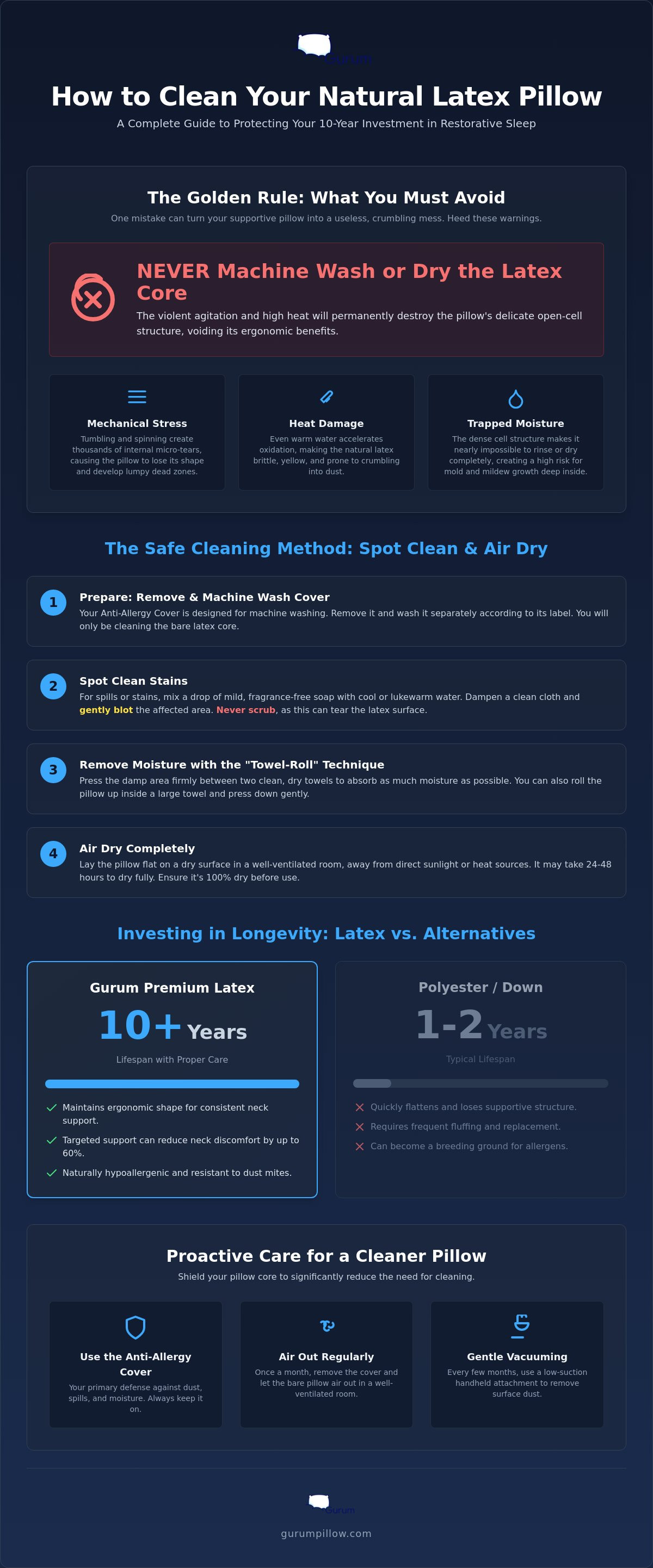
Natural latex is a resilient but heat-sensitive botanical product. It is the core of your Premium Latex Pillow, offering a level of support that traditional materials cannot match. While it feels sturdy, the internal architecture is surprisingly delicate. If you are searching for how to wash a natural latex pillow, the most important lesson starts with what to avoid. Placing the latex core into a washing machine is a mistake that often ends in total structural failure. Machine agitation creates violent internal micro-tears. These tears destroy the ergonomic support you rely on to wake up without neck stiffness. High heat is equally destructive. It triggers a chemical process called oxidation. This makes the latex brittle, causing it to yellow and eventually crumble into dust.
We see many customers try to "deep clean" their pillows after a spill, only to find the shape permanently warped. To protect your investment, you must respect the material's natural limits. Here is why the machine is your pillow's worst enemy:
- Mechanical Stress: The heavy tumbling and spinning of a washer pull the latex in multiple directions, snapping the internal bonds.
- Heat Damage: Even "warm" water settings can accelerate the breakdown of the natural rubber proteins.
- Chemical Sensitivity: Standard laundry detergents often contain harsh enzymes that are too aggressive for botanical latex.
Understanding the Cellular Structure of 100% Natural Latex
The comfort you feel every night comes from the specialized structure of latex foam. This material features a "pin-core" design, an open-cell network that allows for constant airflow and precise spinal alignment. This structure is why your pillow stays cool and bouncy for years. However, these tiny cells act like thousands of microscopic sponges. If you submerge the core, liquids become trapped deep within the cells. Unlike synthetic foams that are often treated with plasticizers, natural latex relies on its pure botanical state to function. When you understand this anatomy, you realize why heavy soaking and machine cycles are so dangerous. You aren't just cleaning a surface; you are potentially drowning a complex, breathable system.
The Dangers of Agitation: What Happens Inside the Washer
A washing machine's spin cycle creates intense centrifugal force. For a dense, supportive material like natural latex, this force is catastrophic. It pulls at the ergonomic contouring, often causing the pillow to lose its shape or develop lumpy "dead zones." Beyond the physical tearing, detergent residue presents a hidden threat. The dense cell structure makes it nearly impossible to rinse soap out completely in a standard machine cycle. This trapped soap can irritate your skin or cause the latex to become tacky and sticky. Perhaps most concerning is the risk of mold. Because the core holds onto moisture so effectively, a machine-washed pillow may stay damp in the center for days. Learning how to wash a natural latex pillow correctly means choosing methods that prioritize dryness and structural integrity over convenience.
Step-by-Step Guide: How to Safely Hand Wash Your Latex Pillow
Hand-washing is a ritual of care. It protects the botanical proteins from the violence of a machine. Before you begin, unzip and remove your Anti-Allergy Pillow Cover. Wash this cover separately in your machine according to its label. This leaves you with the naked latex core, which requires a gentle touch to maintain its supportive integrity.
The general rule for 100% natural materials is that "less is more." You should only deep-clean the core when a major spill occurs or once every few years. For everything else, spot cleaning is the superior choice. When you are learning how to wash a latex pillow, remember that lukewarm water is your absolute limit. Anything hotter can degrade the surface and lead to premature crumbling. You want to preserve that ergonomic shape, not dissolve it.
The Spot Cleaning Method for Daily Spills
Accidents happen. If you spill coffee or sweat through the cover, act fast. Use a clean cloth dampened with cool water and a single drop of fragrance-free, mild soap. Blot the area gently. Never scrub. Scrubbing tears the surface of the "pin-core" design. For lingering odors, a light dusting of baking soda works wonders. Let it sit for 15 minutes, then vacuum it away using a low-suction handheld attachment. This keeps the core dry and fresh without the risk of moisture getting trapped deep inside. It's a simple way to maintain a hygienic sleep surface without the stress of a full wash.
The Deep Refresh: Submersion Guidelines
Sometimes a spot clean isn't enough. If you must submerge the pillow, use a large basin or a clean bathtub. Fill it with cool water and a tiny amount of mild detergent. Submerge the pillow and use a gentle "pumping" motion with your hands. This pushes soapy water through the open cells without stretching the material. This technique is the safest way to tackle how to wash a natural latex pillow when a deep refresh is non-negotiable.
Rinsing is the most critical stage. You must press the pillow under fresh, running water until every trace of soap is gone. Trapped soap can cause skin irritation or make the latex feel tacky over time. Once the water runs clear, press down firmly with flat palms to expel excess liquid. Never wring or twist the core. This preserves the ergonomic contouring that supports your neck. To keep your core pristine for the long term, using a high-quality Anti-Allergy Pillow Cover is your best defense against frequent deep cleaning.
The Drying Dilemma: Protecting Your Pillow from Heat and Sunlight
Drying is the most dangerous stage of the maintenance process. While you have successfully navigated how to wash a natural latex pillow, one wrong move with a dryer or a sunlit windowsill can undo all your careful work. Heat and light are the primary enemies of botanical foam. They trigger oxidation, a process that turns your supportive, bouncy pillow into a brittle, crumbling mess. You must prioritize air circulation over temperature to preserve the material's structural integrity.
Before you set the pillow out to air dry, you need to remove the bulk of the water. Lay your pillow flat on a large, clean white towel. Roll it up tightly like a sleeping bag. Press your weight into the roll with your hands or knees. This "towel-roll" technique extracts roughly 50 percent of the moisture instantly. It does this without the twisting or wringing that snaps the delicate internal bonds of the foam core.
Why Direct Sunlight is the Enemy of Natural Latex
Sunlight is a silent killer for botanical rubber. UV rays act as a powerful catalyst for chemical breakdown. This reaction destroys the "memory" and elastic response of the foam, leading to permanent sagging. When you are Caring for your latex pillow, you must keep it in the shade at all times. A single afternoon in direct sun can age the latex by several years. Safe drying spots include shaded balconies, laundry rooms, or any indoor space with a steady breeze. If you can see the sun hitting the pillow, it's in the wrong place.
Air Drying Techniques for Maximum Freshness
Patience is your best tool for a fresh result. Use a flat drying rack rather than hanging the pillow with clips. Hanging creates heavy pressure points that distort the ergonomic shape while the foam is heavy with water. To speed things up, place an electric fan nearby. The moving air pulls moisture out of the pin-core cells much faster than stagnant air.
Plan for a 24-hour drying window. Natural latex is incredibly dense; it often feels dry on the surface while remaining damp in the center. Putting a cover back on a damp pillow is a recipe for mold growth. Check the core by pressing your palm firmly into the thickest part. If it feels cool or clammy, give it another six hours. You want to be absolutely certain it is bone-dry before it returns to your bed. This ensures your sanctuary remains allergen-free and supportive for the long haul.
Maintenance Hacks: Keeping Your Pillow Clean Without Washing
Prevention is the ultimate form of preservation. While knowing how to wash a natural latex pillow is vital for emergencies, your goal should be to keep the core as dry and undisturbed as possible. Natural latex is an investment in your physical health. Unlike cheap polyester alternatives that need replacing every two years, a well-maintained latex core can provide consistent ergonomic support for a decade. The secret to this longevity isn't frequent washing; it's a proactive maintenance routine that stops dirt before it reaches the foam.
While we've discussed how the right material supports your neck, keeping that material clean requires a consistent 'Shield' strategy. This approach focuses on external barriers and simple surface care. By spending five minutes a week on maintenance, you can reduce the need for a full deep clean to once every few years.
The Power of Anti-Allergy Pillow Covers
Your first line of defense is a high-quality Anti-Allergy Pillow Cover. These specialized covers feature a weave so tight that skin oils, sweat, and microscopic dust mites cannot penetrate through to the latex core. Think of it as a protective skin for your pillow. By washing this cover weekly in hot water, you eliminate the primary source of allergens and odors. This simple habit ensures that the breathable open-cell structure of the latex remains pristine. Choosing breathable, natural fabrics for your covers also prevents heat from becoming trapped, which protects the botanical proteins from the slow degradation caused by body warmth.
Daily and Weekly Care Routines
Natural latex doesn't require "fluffing" in the traditional sense. It's inherently resilient and returns to its original shape instantly. However, it does benefit from regular airflow. Every morning, pull back your blankets and let your pillow sit uncovered for 20 minutes. This allows any residual moisture from your sleep to evaporate. For weekly care, use a lint roller to quickly remove hair or pet dander that may have settled on the surface. You can also use a low-suction vacuum attachment to gently clear the surface of dust.
Rotation is another key hack for lasting support. Every time you change your sheets, rotate the pillow 180 degrees. This ensures that the support zones under your neck and head wear evenly over time. This prevents the formation of "soft spots" and keeps the ergonomic contouring effective for years to come. Investing in a dedicated Anti-Allergy Pillow Cover is the single most effective way to ensure your sleep remains restorative and allergen-free without the stress of frequent washing.
Investing in Longevity: Why Gurum’s Premium Latex Outlasts Alternatives
Choosing a pillow is more than a bedding decision; it's a commitment to your long-term physical health. Natural latex is inherently hypoallergenic and antimicrobial. It naturally resists the dust mites and mold that often plague traditional materials. While you now know the mechanics of how to wash a natural latex pillow, it's the material's durability that truly sets it apart. A standard polyester or down pillow typically loses its integrity within two years. In contrast, a high-quality latex core can provide consistent support for a full decade. Gurum pillows are designed for those who value sustainable, long-term health solutions.
Proper care preserves the specialized features that help with "military neck" or the need for precise cervical support. When the core remains clean and dry, the open-cell structure maintains its elastic response. This prevents the sagging that leads to morning stiffness. Unlike memory foam alternatives that often off-gas chemicals and break down rapidly, natural latex remains a professional-grade tool for your home for years. It is a reliable partner in your journey toward pain-free mornings.
Built for Resilience: The Quality of 100% Natural Materials
The Premium Latex Pillow is crafted with a focus on both your comfort and the planet. Our eco-friendly sourcing ensures you are sleeping on a botanical product, not a petroleum-based foam. This purity is why the pillow maintains its height and "bounce" even after years of nightly use. When you consider the cost-per-sleep over a 10-year lifespan, the value becomes clear. By utilizing a washable-cover system and understanding how to wash a natural latex pillow only when necessary, you maximize your investment in restorative rest.
When to Replace vs. When to Clean
Even the best materials eventually reach the end of their journey. You should look for specific signs of permanent breakdown. If you notice persistent odors that don't disappear after airing out the core, the latex may have reached its limit. A loss of "spring" or visible crumbling are clear indicators that the internal structure has failed. Perhaps the most telling sign is the return of chronic neck pain. If you find yourself waking up with the same frustrations you had before switching to latex, it is likely time for a replacement. Treat your sleep as the ultimate recovery tool. A fresh, supportive pillow is the foundation of a life lived without discomfort.
Secure Your Sanctuary for a Decade of Rest
Your journey to pain-free mornings starts with the right support, but it continues with the right care. You now have the precise knowledge needed for how to wash a natural latex pillow without risking its ergonomic integrity. By avoiding the washing machine and shielding your pillow from UV rays, you preserve the breathable, open-cell structure that keeps you cool and aligned. These simple routines ensure your 100% natural, hypoallergenic latex core remains a reliable partner in your health for years to come.
Restorative sleep shouldn't be a struggle. Designed by Ji H. Won to provide targeted relief for chronic neck pain, our pillows offer a professional-grade solution for your home. You deserve to wake up feeling transformed and ready for the day. Protect your sleep with a Gurum Premium Latex Pillow today and enjoy free shipping on qualifying US orders. Consistency is the key to lasting relief. We are here to support every night of your recovery.
Frequently Asked Questions
Can you put a natural latex pillow in the dryer?
No, you must never put a natural latex pillow in the dryer. High heat triggers a chemical process called oxidation that makes botanical rubber brittle and prone to crumbling. Even a "low heat" or "air fluff" setting can permanently damage the open-cell structure that provides your ergonomic neck support. Instead, always air dry the core in a shaded area with plenty of ventilation to preserve its 10-year lifespan.
How often should I wash my 100% natural latex pillow?
You should only deep-clean the core of the pillow once every few years or after a major spill. Frequent submersion can wear down the material and is rarely necessary if you use protection. However, you should wash your Anti-Allergy Pillow Cover once a week in hot water. This routine prevents skin oils from reaching the foam, making the process of how to wash a natural latex pillow a rare emergency task.
How do I get yellow sweat stains out of a latex pillow?
Treat yellow stains by spot cleaning with a damp cloth and a drop of mild, fragrance-free detergent. Gently blot the area without scrubbing to avoid tearing the delicate surface of the foam. If the staining is deep, it might be a sign of oxidation from age or heat exposure rather than just sweat. Using a high-quality protective cover is the best way to prevent these stains from forming in the first place.
Can I dry clean my ergonomic latex pillow?
No, you cannot dry clean an ergonomic latex pillow. The harsh chemicals used in the dry cleaning process can dissolve the natural rubber proteins and ruin the pillow's physical integrity. These chemicals can also become trapped in the pin-core cells, leading to potential skin irritation or respiratory issues for the sleeper. Stick to gentle hand-washing with cool water and mild soap for a safe, healthy, and restorative result.
Why does my latex pillow have a slight vanilla or rubber smell after washing?
A slight, sweet scent similar to vanilla or rubber is a natural characteristic of 100% botanical latex. This isn't a sign of chemical off-gassing; it's the natural aroma of the material. The scent often becomes more noticeable when the pillow is damp or fresh out of the packaging. It will naturally dissipate within 24 to 48 hours if you let the pillow air out in a well-ventilated, shaded room away from the sun.
How do you dry a latex pillow quickly without using a machine?
Use the towel-roll technique followed by an electric fan for the fastest safe results. Place the wet pillow on a thick white towel, roll it tightly, and press down firmly with your knees to expel moisture. Once you've removed the bulk of the water, lay the pillow flat on a drying rack. Point a high-speed fan directly at the core to keep air moving through the cells. This is the safest way to tackle how to wash a natural latex pillow without causing heat damage.
What is the best detergent for washing natural latex?
The best choice is a mild, pH-neutral, fragrance-free liquid detergent. Avoid any products containing harsh enzymes, bleach, or fabric softeners, as these can break down the natural rubber bonds. A tiny amount of gentle wool wash or a specialized delicate detergent is usually sufficient for a deep refresh. You only need a drop or two to get the job done without leaving behind a sticky residue that could irritate your skin.
Is it normal for a latex pillow to change color over time?
Yes, it is normal for the core to yellow slightly as it ages. This color change is caused by natural oxidation from exposure to air and ambient light. While a slight change in hue is expected and doesn't affect support, significant crumbling or a brittle texture means the pillow has reached the end of its journey. Proper care and keeping the core out of direct sunlight will slow this aging process down significantly.